If you want to capture stunning Milky Way shots in 2025, I recommend checking out the VILTROX 75mm f/1.2 EF PRO for Sony E-mount, the AstrHori 6mm fisheye, the compact 78 D Double Aspheric lens, and the versatile Sony E 16mm F2.8. These lenses offer wide angles, large apertures, and excellent low-light performance, making them perfect for night sky images. Keep exploring to learn how each lens can help you get the best shots possible.
Key Takeaways
- Choose lenses with large apertures (f/1.2–f/2.8) for optimal low-light performance and capturing faint Milky Way details.
- Opt for wide focal lengths (14–24mm) to maximize sky coverage and foreground inclusion in night sky shots.
- Prioritize manual focus for precise control in darkness, as autofocus is generally ineffective in astrophotography conditions.
- Consider optical quality and distortion, especially with ultra-wide and fisheye lenses, which can enhance or require correction in post-processing.
- Ensure lens durability and compatibility with your camera system for reliable outdoor shooting in challenging night environments.
VILTROX 75mm f/1.2 EF PRO Lens for Sony E-Mount
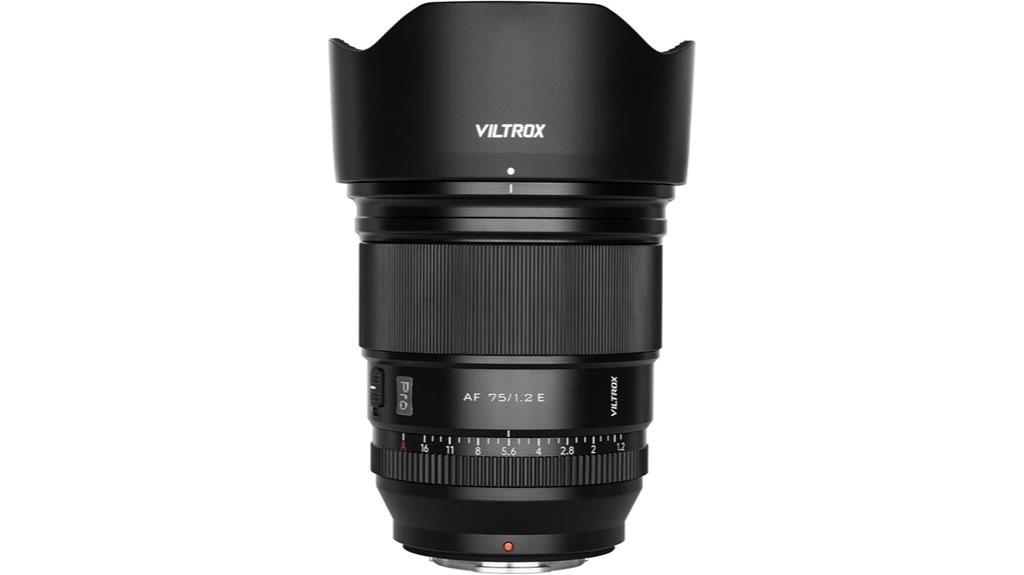
If you’re serious about capturing stunning Milky Way shots, the VILTROX 75mm f/1.2 EF PRO lens is an excellent choice, especially for Sony E-mount mirrorless cameras. Its ultra-wide-angle perspective pairs well with Sony’s A7 series, offering sharp, detailed images even in low light. The super-large f/1.2 aperture lets in maximum light, making night sky photography easier and more flexible. With fast autofocus and manual focus options, you can quickly lock onto stars or adjust for precise focus. Its advanced optical design ensures high resolution and minimal aberrations, giving you clear, crisp shots of the Milky Way’s intricate details.
Best For: photographers and videographers seeking a high-performance lens for low-light, portrait, and astrophotography with Sony E-mount mirrorless cameras.
Pros:
- Exceptional f/1.2 aperture for superior low-light performance and beautiful background blur
- Fast, accurate autofocus with manual focus override for versatile shooting
- High-resolution optical design ensures sharp, detailed images with minimal aberrations
Cons:
- Heavier and larger compared to standard 75mm lenses, which may affect portability
- Premium price point reflecting advanced features and optical quality
- Limited zoom capability, primarily designed for prime photography and videography
AstrHori 6mm F2.8 Circular Fisheye Lens for Nikon Z

The AstrHori 6mm F2.8 Circular Fisheye Lens for Nikon Z is perfect for photographers seeking an ultra-wide, immersive perspective that captures the vastness of the night sky. With a 220° field of view, it creates striking circular images that showcase the Milky Way and starry landscapes in a bold, artistic way. Its large F2.8 aperture ensures sharp images even in low-light conditions, making it ideal for nightscapes and indoor scenes. The all-metal, compact design is durable and portable, perfect for outdoor shoots. Manual focus gives you full control over your shot, enabling creative distortion and unique perspectives for astrophotography and beyond.
Best For: astrophotographers, night sky enthusiasts, and creative artists seeking immersive, full-frame circular fisheye images with excellent low-light performance.
Pros:
- Ultra-wide 220° field of view creates striking, immersive circular images suitable for artistic and astrophotography.
- Large F2.8 aperture enables sharp, clear images in low-light conditions like night skies and indoor scenes.
- Compact all-metal design offers durability and portability for outdoor and travel photography.
Cons:
- Manual focus requires precise adjustments, which may be challenging for some users.
- Compatibility limited to Nikon Z mount full-frame mirrorless cameras, restricting use with other systems.
- Produces bold edge distortion that, while creative, may not be suitable for all photography styles or clients’ preferences.
78 D Double Aspheric Lens
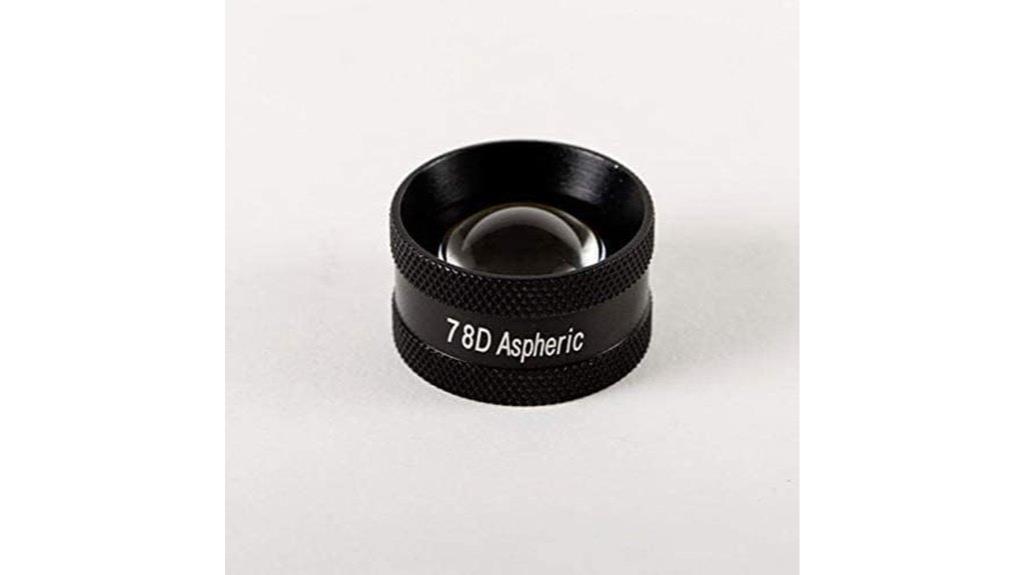
Designed with ideal balance in mind, the 78 D Double Aspheric Lens is perfect for those seeking detailed close-up views during slit lamp examinations or advanced clinical work. It offers a well-rounded combination of field and magnification, making it versatile for various clinical applications. The lens provides an extended working distance from the cornea, enhancing access and ease of use. Manufactured by KASHSURG, it’s lightweight at just 5 ounces and compact, measuring 2.95 x 2.76 x 1.65 inches. With a strong customer rating of 4.4 stars, it stands out in its category, offering reliable performance for medical and optical professionals.
Best For: medical and optical professionals seeking a high-quality, versatile lens for slit lamp examinations and detailed clinical work.
Pros:
- Offers an optimal balance of field and magnification for detailed views
- Provides extended working distance from the cornea for better access and ease of use
- Lightweight and compact design enhances maneuverability and comfort during procedures
Cons:
- Specifications and color may vary slightly due to ongoing research and development
- Limited information on specific compatibility with different slit lamp models
- Only available with a single model, which may not suit all specialized clinical needs
Sony E 16mm F2.8 Wide-Angle Prime Lens (SEL16F28)
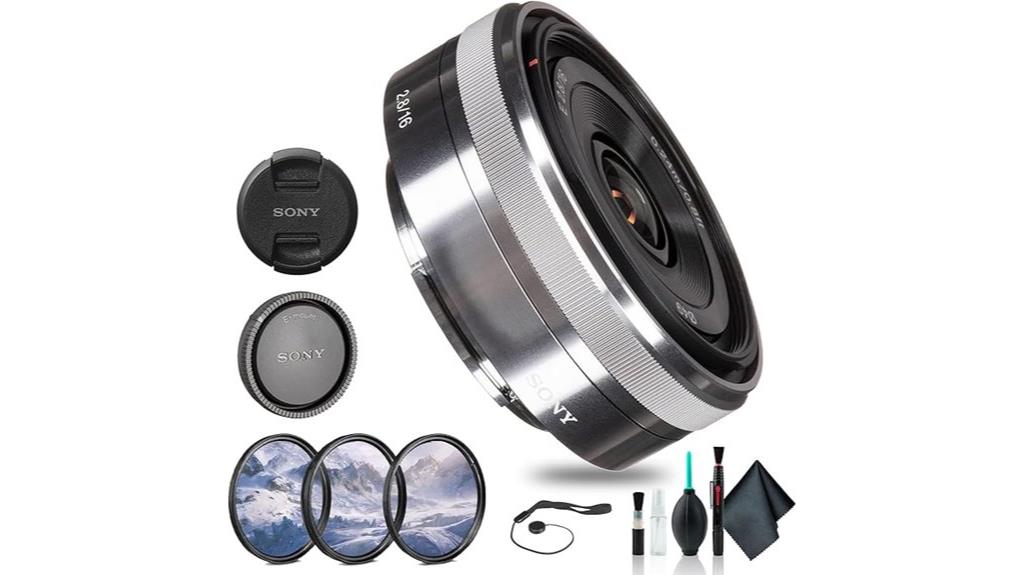
For astrophotographers seeking a compact, high-quality lens that can capture the expansive night sky, the Sony E 16mm F2.8 Wide-Angle Prime Lens (SEL16F28) is an excellent choice. Its slim pancake design measures just 22.5 mm and weighs only 67 g, making it perfect for travel and everyday use. Despite its small size, it delivers sharp images with minimal distortion thanks to aspherical elements. The responsive autofocus is quiet and smooth, ideal for both stills and videos. A short minimum focus distance of 0.24 m allows for creative close-ups, and compatibility with conversion lenses broadens your perspective options.
Best For: astrophotographers and travel enthusiasts seeking a compact, high-quality wide-angle lens for capturing expansive night skies and everyday scenes.
Pros:
- Ultra-compact and lightweight design, ideal for portability and travel
- Sharp image quality with minimal distortion thanks to aspherical elements
- Quiet, smooth autofocus suitable for both still photography and videography
Cons:
- Fixed focal length limits versatility compared to zoom lenses
- Limited close-up capability with a minimum focus distance of 0.24 m
- No built-in image stabilization, which may affect handheld low-light shooting
Factors to Consider When Choosing Wide-Field Lenses for Milky Way Photography

When selecting a wide-field lens for Milky Way photography, I consider factors like focal length, aperture size, and low-light performance to capture the night sky effectively. Autofocus capabilities and how much distortion the lens introduces also play vital roles in achieving sharp, clear images. Understanding these points helps me choose the right lens to get stunning astrophotography results.
Focal Length Range
Choosing the right focal length range is essential for capturing compelling Milky Way images, as it directly influences the scene’s composition and the amount of sky you can include. Wide-field lenses typically range from 14mm to 35mm, making them ideal for night sky photography. Shorter focal lengths, around 14mm to 20mm, offer a wider field of view, allowing more of the sky and foreground to fit in the frame, perfect for emphasizing the vastness of the Milky Way. Longer focal lengths, above 24mm, zoom in on specific galactic features, providing more detail and a more focused shot. Your choice depends on whether you want a broad scene or a detailed, zoomed-in view. Consider your scene size and framing preferences when selecting your focal length.
Aperture Size Importance
The size of a lens’s aperture plays a significant role in capturing clear, detailed images of the Milky Way. A larger aperture, like f/1.2 or f/2.8, lets in more light, which is essential for revealing faint stars and galactic details in low-light conditions. It also allows for shorter exposure times, reducing star trails and motion blur. An aperture of f/1.4 or wider improves image brightness and contrast, making your shots more vivid. Additionally, a wide aperture gives you manual control over depth of field and exposure, helping you fine-tune shots for maximum clarity. Most importantly, larger apertures enable higher shutter speeds while maintaining proper exposure, resulting in sharper, noise-free astrophotos. This makes aperture size a key factor in choosing the right lens for Milky Way photography.
Low-Light Performance
A wide-field lens with a large aperture is indispensable for low-light Milky Way photography because it allows more light to reach the sensor, revealing faint stars and galactic details that would otherwise stay hidden. Lenses with apertures of f/1.4 or f/1.8 significantly boost performance by enabling shorter exposures and reducing noise, which is essential in dark skies. Fast lenses also help counteract light pollution, making your images clearer even under less-than-ideal conditions. High-quality optics are necessary to minimize chromatic aberration and ensure sharpness across the frame, capturing the Milky Way with clarity. Additionally, low distortion and excellent edge-to-edge sharpness preserve the sky’s natural appearance, helping your shots look accurate and detailed from center to edges in low-light environments.
Autofocus Capabilities
While low-light performance is paramount in Milky Way photography, autofocus capabilities often take a backseat because manual focus is generally preferred for pinpoint accuracy. Most wide-field lenses designed for astrophotography feature high-precision manual focus rings, allowing for fine adjustments in dark conditions. Some modern lenses include quiet autofocus motors, but their usefulness is limited since autofocus struggles to lock onto stars or the night sky in darkness. Autofocus systems that support face or eye detection are ineffective when shooting the Milky Way because there are no nearby, well-lit subjects. Consequently, lenses with clear manual focus controls, smooth rotation, and precise distance markings are essential. These features enable accurate focus adjustments, vital for sharp star points and successful astrophotography.
Image Distortion Effects
When selecting a wide-field lens for Milky Way photography, understanding how image distortion affects your shots is essential. Wide-angle lenses, especially fisheye or ultra-wide options below 10mm, can create significant edge distortion, resulting in a spherical or bulging appearance. While this distortion can add artistic flair and immersive effects, it may also exaggerate celestial and landscape features, sometimes requiring post-processing to correct unwanted warping. Circular fisheye lenses produce a true circular image with pronounced distortion, perfect for dramatic astrophotography. Knowing a lens’s distortion characteristics helps you compose shots that either embrace these effects for artistic impact or minimize them for cleaner, more natural visuals. Balancing distortion with your creative goals is key when choosing the right lens.
Build Durability
Choosing a wide-field lens for Milky Way photography means considering how well it can withstand outdoor conditions. Durability is essential since shoots often happen in remote, unpredictable environments. A sturdy build with metal or high-quality plastic ensures the lens can handle dust, moisture, and minor impacts without losing performance. Weather-sealed lenses add extra protection against rain or humidity, indispensable during long exposures. Reinforced lens mounts help prevent damage from accidental drops or rough handling, especially when shooting in rugged terrain. Additionally, well-designed focusing rings and controls provide better handling in low-light situations, reducing the risk of errors. Overall, investing in a durable lens means fewer worries about weather or accidental mishaps, allowing me to focus fully on capturing stunning night sky images.
Compatibility With Cameras
Selecting a wide-field lens that’s compatible with your camera system is essential for successful Milky Way photography. First, make sure the lens mount matches your camera, whether it’s Sony E-mount, Nikon Z, or another system. Next, check if the lens supports manual focus, autofocus, or both, depending on your preference. Compatibility also depends on sensor size; ensure the lens covers your camera’s full-frame or APS-C sensor to avoid vignetting or unwanted cropping. Additionally, verify that the lens works with your camera’s firmware to prevent operational issues. Finally, consider the lens’s physical size and weight, especially if you plan to shoot handheld or travel. Proper compatibility guarantees smooth operation and suitable image quality, making your astrophotography sessions more enjoyable and successful.
Portability and Size
Opting for a wide-field lens that’s portable and compact can substantially improve your Milky Way photography experience. Smaller, lightweight lenses are easier to carry and handle during outdoor night shoots, reducing fatigue and making setup more manageable. Compact lenses save space in your camera bag, allowing for easier transportation to remote locations where the night sky is best observed. Travel-friendly sizes enable quicker setup and pack-up, which is perfect for spontaneous astrophotography sessions. Portability also means less equipment to manage, minimizing the risk of damage or loss in challenging environments. Additionally, lightweight lenses can be mounted on smaller, more portable tripods or mounts, enhancing overall ease of use in the field. Prioritizing size and weight makes your shooting experience more flexible and enjoyable.
Frequently Asked Questions
Which Lens Offers the Best Combination of Speed and Sharpness for Milky Way Shots?
I’d recommend the Sigma 14mm f/1.8 DG HSM Art lens. It strikes an excellent balance between speed and sharpness, perfect for Milky Way shots. Its wide aperture lets in lots of light, reducing star trails, while the sharpness across the frame keeps your night sky crisp. I’ve found it to be reliable and versatile, making it my go-to lens for capturing stunning astrophotos.
How Do Lens Coatings Impact Night Sky Photography Quality?
Lens coatings act like a shield, reducing reflections and glare that can wash out the delicate glow of stars. When I shoot at night, I notice that coated lenses deliver crisper, darker backgrounds, letting the Milky Way’s colors pop. They also minimize lens flare from moonlight or nearby light pollution, ensuring my images stay sharp and clear. Coatings truly help me capture the night sky’s magic in stunning detail.
Are Manual Focus Lenses Preferable for Astrophotography?
I prefer manual focus lenses for astrophotography because they give me precise control over focus, which is essential in low-light conditions. Autofocus often struggles in the dark, causing missed shots or blurry images. Manual lenses allow me to fine-tune focus on stars or the Milky Way itself, ensuring sharp, clear results. Plus, many manual lenses are often faster and more affordable, making them a great choice for night sky photography.
What Is the Ideal Aperture for Capturing Star Detail Without Star Trails?
Did you know that most astrophotographers recommend an aperture of f/2.8 or wider? I find that an aperture around f/2.8 strikes the perfect balance, capturing enough light for star detail while minimizing star trails during long exposures. If you open it wider, like f/1.8, you’ll get even more light but risk losing sharpness. So, I suggest sticking to f/2.8 for clear, detailed night sky photos.
How Does Lens Distortion Affect Milky Way Image Quality?
Lens distortion can really impact the clarity of your Milky Way images, causing stars to appear stretched, bent, or warped, especially near the edges of the frame. This distortion reduces the sharpness and natural look of your night sky shots. To minimize this, I recommend choosing lenses with low distortion specs and shooting in RAW so you can correct any issues in post-processing, ensuring your celestial photos remain crisp and stunning.
Conclusion
Choosing the right wide-field lens can truly transform your Milky Way shots. Remember, a good tool is only as useful as the eye behind it—so pick what fits your style and needs. Like they say, “The best camera is the one you have with you,” and with these lenses, you’ll be ready to capture the night sky’s magic, no matter where your stargazing takes you. Happy shooting!