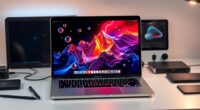
If you’re looking for the best MacBook Pro models for music production in 2025, I recommend the 14-inch M4 Max, the 16.2-inch M4 Pro, and the 16.2-inch M4 Max. These models offer exceptional power, high-quality displays, and versatile connectivity options to handle demanding audio projects. They’re portable enough for on-the-go work and have features like immersive audio support. Keep exploring, and you’ll discover which one is perfect for your needs.
Key Takeaways
- The MacBook Pro 14-inch M4 Max offers top-tier processing power and a stunning Liquid Retina XDR display for demanding music production tasks.
- The 16.2-inch MacBook Pro with M4 Pro provides excellent performance with a vibrant display and support for two external monitors.
- The 16.2-inch MacBook Pro M4 Max combines high RAM, large SSD, and advanced connectivity ideal for professional studio setups.
- All models feature Thunderbolt 5, HDMI, and SDXC ports for versatile connectivity with external audio interfaces and storage.
- These MacBook Pros deliver portability, high performance, and immersive audio-visual features tailored for music producers in 2025.
Apple MacBook Pro 14-inch Laptop with M4 Max (2024)
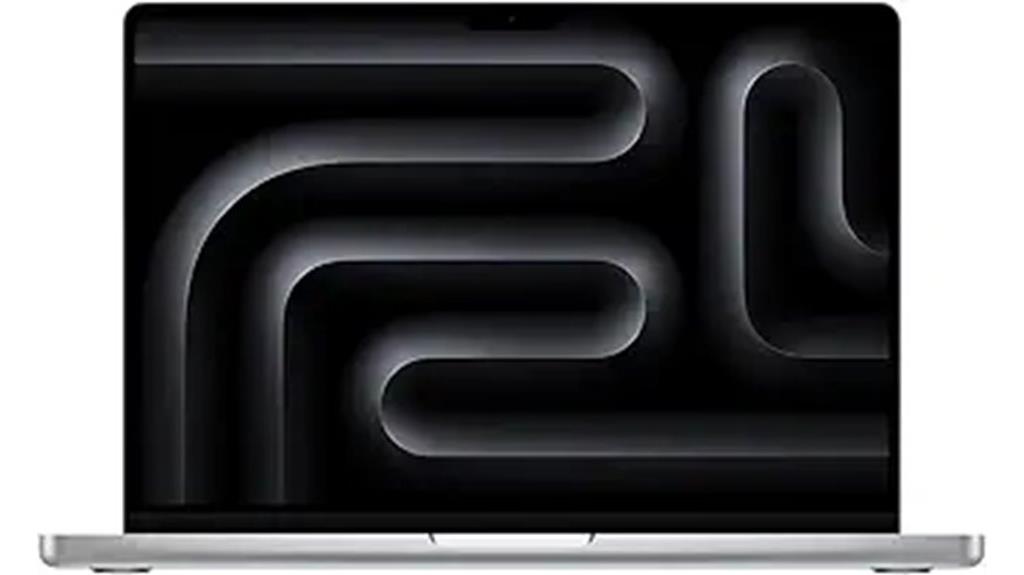
If you’re serious about music production and need a powerhouse that can handle demanding workflows, the Apple MacBook Pro 14-inch with M4 Max (2024) is an excellent choice. Its M4 Max chip features a 14-core CPU, 32-core GPU, and 16-core Neural Engine, delivering exceptional performance for audio editing, mixing, and rendering. The 36GB of unified memory and up to 8TB of fast SSD storage ensure smooth multitasking and quick access to large projects. The stunning Liquid Retina XDR display offers accurate colors and high brightness, perfect for detailed work. With all-day battery life and multiple ports, this machine combines power, portability, and connectivity for professional music production.
Best For: creative professionals and power users seeking a high-performance, portable laptop optimized for demanding workflows like music production, video editing, and graphic design.
Pros:
- Exceptional processing and graphics performance with the M4 Max chip, ideal for intensive tasks.
- Stunning Liquid Retina XDR display with accurate colors and high brightness for detailed work.
- Versatile connectivity options, including multiple Thunderbolt 5 ports, HDMI, and SDXC card slot, supporting multiple external displays.
Cons:
- Premium price point may be prohibitive for some users.
- Limited upgradeability after purchase, especially for RAM and storage.
- The sleek design and thin profile might compromise some port options or expandability.
Apple 2024 MacBook Pro Laptop with M4 Pro
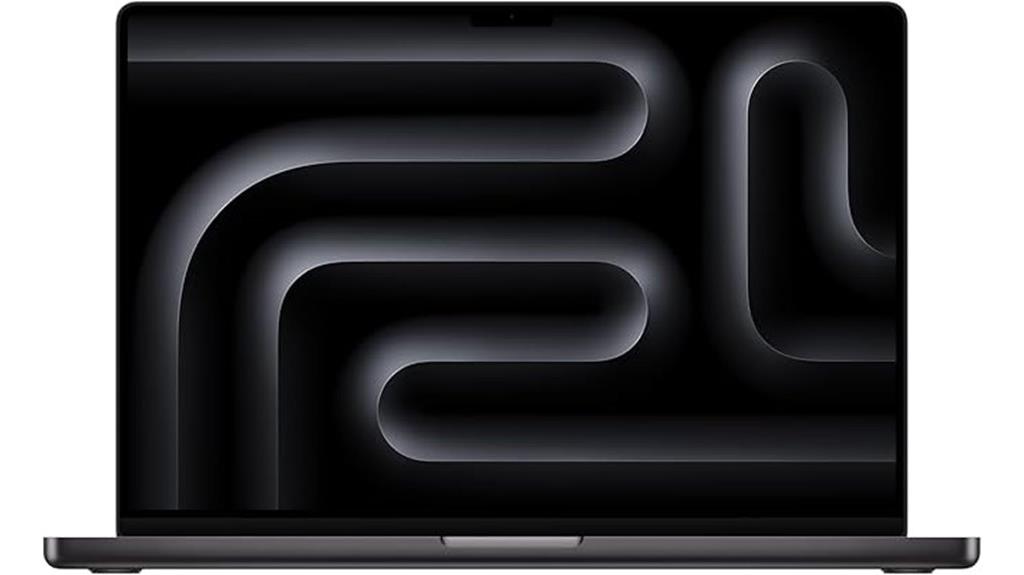
The Apple 2024 MacBook Pro Laptop with M4 Pro stands out as an ideal choice for professional music producers who need powerful performance and seamless multitasking. Its M4 Pro chip handles demanding tasks like complex mixing, MIDI processing, and running multiple audio plugins effortlessly. The 16.2-inch Liquid Retina XDR display offers vibrant visuals essential for detailed editing. With support for up to two external displays, along with excellent battery life, it’s perfect for on-the-go studio work. Built into the Apple ecosystem, it integrates smoothly with other devices and creative apps. The sleek Space Black finish, combined with advanced privacy features, makes this laptop both stylish and secure for professional use.
Best For: professional music producers and creative professionals who require powerful performance, seamless multitasking, and vibrant visuals for detailed editing on the go.
Pros:
- Equipped with the advanced M4 Pro chip, ideal for demanding audio production tasks and multitasking
- 16.2-inch Liquid Retina XDR display offers vibrant, detailed visuals essential for creative work
- Seamless integration within the Apple ecosystem enhances workflow with other Apple devices and apps
Cons:
- Higher price point may be a barrier for budget-conscious users
- Limited to a maximum of two external displays with the M4 Pro chip
- The sleek Space Black finish might show fingerprints and smudges more easily
Apple 2024 MacBook Pro Laptop with M4 Max
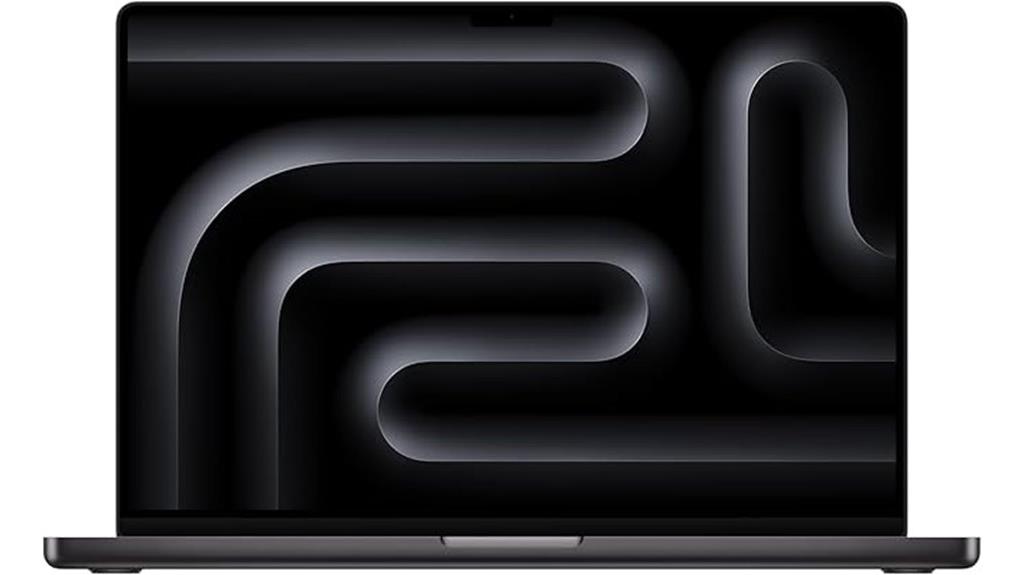
The Apple 2024 MacBook Pro with M4 Max stands out as the top choice for professional musicians and producers who demand cutting-edge performance. With its powerful M4 Max chip featuring a 16-core CPU and 40-core GPU, it handles demanding tasks like 3D workflows and complex audio processing with ease. The 16.2-inch Liquid Retina XDR display offers stunning visuals, while the all-day battery life keeps you productive on the go. Built with 48GB of unified memory and 1TB SSD storage, it’s designed for intensive creative work. Seamless integration within the Apple ecosystem, coupled with advanced audio and connectivity features, makes this the ultimate machine for music production in 2025.
Best For: professional musicians, producers, and creative professionals who require powerful hardware for demanding audio and visual workflows.
Pros:
- Exceptional performance with M4 Max chip, 16-core CPU, and 40-core GPU for intensive tasks
- Stunning 16.2-inch Liquid Retina XDR display with high brightness and contrast for accurate visuals
- Seamless integration within the Apple ecosystem and advanced audio features for a complete creative experience
Cons:
- High price point may be prohibitive for some users
- Limited to Apple ecosystem, reducing flexibility with non-Apple devices
- Heavy and potentially less portable compared to smaller laptops
Factors to Consider When Choosing a Macbook Pro for Music Production

When choosing a MacBook Pro for music production, I consider key factors like processing power, RAM, storage, and connectivity to guarantee smooth workflow. The right balance of CPU performance and ample memory helps handle demanding projects without lag. Additionally, I pay attention to display quality and port options that support my creative needs.
Processing Power & CPU
A powerful CPU with multiple cores is essential for smooth music production on a MacBook Pro. A 14-core or higher processor guarantees that large audio files and real-time effects process efficiently without lag. It reduces latency during recording, editing, and mixing, which directly improves workflow. Multi-core CPUs allow me to run resource-heavy digital audio workstations (DAWs) alongside multiple plugins without slowdown. Faster architectures support quicker rendering and exporting, saving valuable production time. The CPU’s ability to handle demanding tasks is critical when working with complex arrangements and high-resolution audio. Investing in a MacBook Pro with a high-performance processor guarantees that my music production stays smooth, responsive, and professional, even when tackling the most intensive projects.
RAM & Multitasking
Processing power is vital for smooth music production, but without enough RAM, even the fastest MacBook Pro can fall short. Adequate RAM ensures seamless multitasking when running multiple DAWs, plugins, and virtual instruments simultaneously. I recommend at least 16GB for professional work to prevent lag and keep workflows efficient. If you’re handling large sample libraries or complex projects, 32GB or more really helps avoid performance drops. Sufficient RAM also speeds up processing audio effects, mixing, and rendering, reducing project turnaround times. When multitasking with various applications like audio editors, streaming services, and production tools, ample RAM keeps your system stable and responsive. Investing in higher RAM capacity makes a noticeable difference in maintaining smooth, uninterrupted music production sessions.
Storage Capacity & Speed
Choosing the right storage capacity and speed is essential for smooth music production on a MacBook Pro. I recommend at least 512GB of SSD storage to handle large libraries and project files without constant management. Faster SSDs, like those supporting PCIe 4.0 or higher, markedly cut load times and enhance workflow, making editing more efficient. If you work with high-resolution audio samples or multi-track projects, consider upgrading to 1TB or more to prevent bottlenecks during data transfer and playback. It’s also important to check if the MacBook Pro’s storage can be upgraded later, as external drives, while useful, can’t match the speed of built-in SSDs for real-time editing. Adequate storage ensures seamless sessions and reliable performance throughout your music production process.
Audio & Connectivity
When setting up a MacBook Pro for music production, paying attention to audio quality and connectivity options can make a significant difference in your workflow. I look for models with multiple Thunderbolt 5 ports to connect audio interfaces, MIDI controllers, and other gear without hassle. High-quality speakers supporting spatial audio and Dolby Atmos help me monitor sound accurately and immersively. A 3.5mm headphone jack that supports high-impedance headphones is vital for precise playback. I also prioritize a studio-quality microphone array with a high signal-to-noise ratio for capturing vocals and instruments clearly. Finally, HDMI output and multiple external display support are essential for visual monitoring and complex mixing setups. These features ensure seamless integration and professional-grade audio performance.
Display & Port Options
A high-quality display and versatile port options are vital for an efficient music production setup on a MacBook Pro. The Liquid Retina XDR display offers high resolution, accurate color, and bright visuals, which are essential for detailed editing and interface work. Multiple ports, including Thunderbolt 5, HDMI, SDXC card slot, and a headphone jack, provide flexible connectivity for audio interfaces, external drives, and monitors without needing adapters. Support for up to four external displays with the M4 Max chip expands workspace and boosts multitasking. The dedicated HDMI port and SDXC slot simplify connecting external equipment and importing media directly. Thunderbolt 5’s 120Gb/s transfer speeds ensure rapid file transfers and seamless connection of high-speed peripherals, streamlining the production process.
Frequently Asked Questions
How Does Battery Life Impact Music Production Workflows on Macbook Pro?
Battery life substantially impacts my music production workflow because I often work on the go or during long studio sessions without easy access to power. When my MacBook Pro’s battery runs low, I have to pause my work or find a charging spot, which disrupts my creativity and productivity. Longer battery life means I can focus more on my music, record, and mix without constantly worrying about plugging in.
Are There Any Specific Ports or Connections Essential for Studio Setups?
Absolutely, having the right ports can feel like having a magic wand in your studio! Essential ones include Thunderbolt 4 or USB-C for high-speed data transfer, audio jacks for headphones or external mics, and HDMI or SD card slots for quick media access. These connections keep your workflow smooth and your gear perfectly synced, making your music production experience seamless and frustration-free.
How Do Macbook Pro Models Handle Real-Time Audio Processing?
MacBook Pro models handle real-time audio processing exceptionally well, thanks to their powerful CPUs and ample RAM. I’ve noticed smooth operation even with multiple tracks and plugins running simultaneously. The advanced thermal design prevents overheating during intensive sessions, and the fast SSD ensures quick data access. Overall, I find them highly dependable for real-time music production, enabling me to work seamlessly without lag or delays.
What Software Optimizations Are Available for Music Production on M4 Chips?
Did you know that software optimizations can boost M4 chip performance by up to 30%? I’ve found that using Apple’s optimized Logic Pro, along with third-party plugins designed for Silicon, makes a huge difference. I also enable Rosetta 2 for legacy apps and keep my software updated. These tweaks guarantee smooth real-time audio processing, letting me focus on creativity without worrying about latency or crashes.
Can Macbook Pro Models Support Multiple External Displays for Music Editing?
Yes, MacBook Pro models can support multiple external displays for music editing. I’ve used models with Thunderbolt ports that easily connect to dual monitors, enhancing my workflow. The M1 Pro and M2 Pro chips especially handle multiple displays well, allowing me to run complex sessions smoothly. Just make sure to check the specific ports and compatibility for your chosen model to maximize your setup’s efficiency.
Conclusion
So, there you have it—three MacBook Pros that promise to make your music production dreams come true in 2025. Ironically, the real star might just be the one that’ll keep your creative chaos running smoothly, reminding us that sometimes, all the power in the world still depends on a simple, reliable machine. After all, in the end, it’s not just about the specs, but about how your music flows—smoothly, effortlessly, and maybe even a little magically.