
For deep sky imaging in 2025, I recommend the SVBONY SV605CC and the Astromania SGCMOS series. Both offer high QEs above 80%, effective TEC cooling that reduces thermal noise, and fast USB 3.0 transfer for quick data handling. These cameras are compatible with common software and setups, making them ideal choices for clearer, detailed images of faint objects. Continue exploring to discover how these cameras can transform your astrophotography experience.
Key Takeaways
- Look for cameras with high-resolution sensors (e.g., 3008×3008) and QE above 80% for detailed deep sky imaging.
- Prioritize models with efficient TEC cooling systems that reduce sensor temperatures by at least 30°C to minimize noise.
- Ensure fast data transfer via USB 3.0 or higher and compatibility with popular astrophotography software like ASCOM and INDI.
- Select cameras offering versatile mounting options (C-mount, 1.25-inch) for seamless integration with various telescopes.
- Consider models with robust software support for calibration, live viewing, and stacking to enhance image clarity and processing.
SVBONY SV605CC Cooled Astrophotography Camera
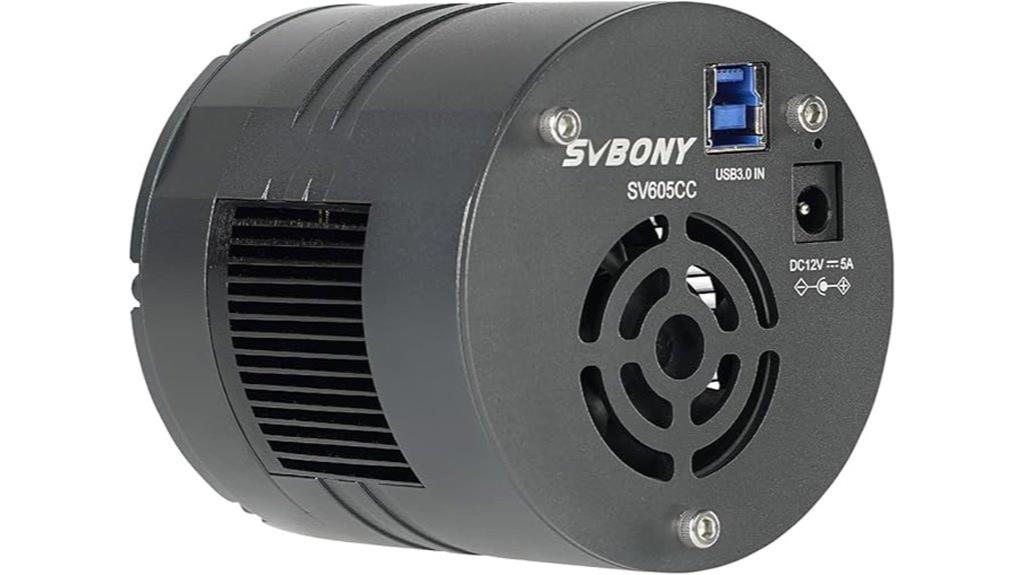
If you’re serious about deep sky imaging and need a camera that delivers high-quality images with minimal noise, the SVBONY SV605CC is an excellent choice. It features a 1-inch IMX533 color sensor with a 3008×3008 resolution and 80% quantum efficiency, boosting efficiency and detail. The double-layer TEC cooling system can lower the temperature by up to 30°C, considerably reducing thermal noise during long exposures. Its glow suppression ensures clearer, sharper images. With USB 3.0 connectivity, data transfer is fast and reliable. Overall, this camera combines advanced cooling and high performance, making it ideal for capturing stunning celestial details.
Best For: serious deep sky astrophotographers seeking high-resolution, low-noise images with efficient data transfer and advanced cooling capabilities.
Pros:
- High-resolution 3008×3008 CMOS sensor with 80% quantum efficiency for detailed imaging
- Double-layer TEC cooling system that reduces sensor temperature by up to 30°C to minimize thermal noise
- USB 3.0 connectivity ensures fast, reliable data transfer during long exposure sessions
Cons:
- May require additional filters or accessories for optimal astrophotography performance
- Slightly higher cost compared to basic or non-cooled cameras
- Learning curve for beginners unfamiliar with astrophotography equipment and settings
Astromania SGCMOS Series Telescope CMOS Camera
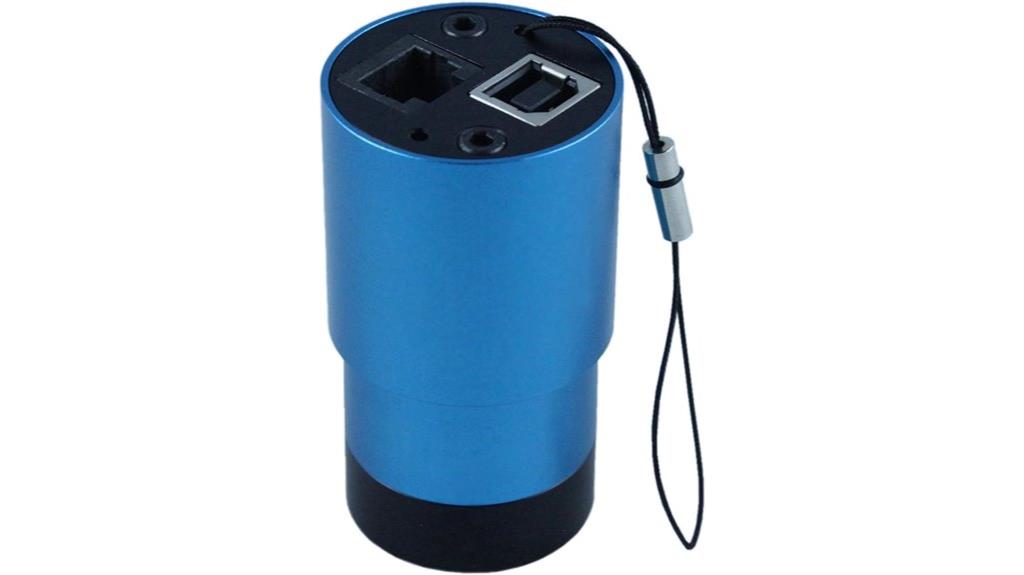
The Astromania SGCMOS Series Telescope CMOS Camera stands out as an excellent choice for astrophotographers seeking versatile, high-performance imaging. Its sensor delivers high sensitivity, fast frame rates, and long exposures, perfect for auto-guiding and multicolour imaging. The aluminum CNC housing ensures durability and efficient heat transfer during extended sessions. With a standard 1.25-inch interface and C-mount compatibility, it accommodates various lenses and filters. The camera’s seamless integration with ASCOM, WDM, and native drivers makes it easy to connect with different software. Plus, its dedicated software supports live preview, dark field correction, and raw data output, making it a reliable, all-in-one solution.
Best For: amateur and professional astrophotographers looking for a versatile, high-sensitivity CMOS camera for auto-guiding and multicolour astrophotography.
Pros:
- High sensitivity, fast frame rate, and long exposure capabilities ideal for detailed astrophotography.
- Durable aluminum CNC housing with efficient heat transfer ensures reliable performance during extended use.
- Seamless compatibility with ASCOM, WDM, and native drivers allows easy integration with various software and equipment.
Cons:
- Relatively heavy weight (approximately 0.8-1.0kg), which may require sturdy mounting solutions.
- Requires external software and drivers for full functionality, potentially complicating setup for beginners.
- Limited to 1.25-inch interface; may necessitate additional adapters for other optical accessories.
Factors to Consider When Choosing Cooled CMOS Astro Cameras for Deep Sky Imaging
When selecting a cooled CMOS astro camera, I consider factors like sensor sensitivity and QE to guarantee I capture faint details, along with cooling efficiency to minimize noise. I also watch for data transfer speeds to prevent bottlenecks and check compatibility with my existing equipment for seamless operation. These points help me choose a camera that meets my deep sky imaging needs effectively.
Sensor Sensitivity and QE
Sensor sensitivity, particularly quantum efficiency (QE), plays a essential role in selecting a cooled CMOS astro camera for deep sky imaging. A higher QE means the sensor absorbs more photons, which translates into better sensitivity in low-light conditions. Cameras with QE above 80% can capture more photons quickly, resulting in brighter, more detailed images with shorter exposures. The spectral response also matters, as it determines how well the sensor detects different wavelengths, fundamental for capturing specific astronomical phenomena. Increased sensitivity reduces the need for extremely long exposures, minimizing tracking errors and boosting efficiency. Cooled CMOS sensors help maintain high sensitivity by lowering thermal noise, enabling the camera to fully leverage its QE. This combination is indispensable for achieving clear, detailed deep sky images.
Cooling Efficiency
Choosing a cooled CMOS astro camera with high cooling efficiency is essential because it directly impacts the quality of your deep sky images. Effective cooling lowers sensor temperatures, which greatly reduces thermal noise during long exposures, resulting in clearer, more detailed images. Cameras with advanced cooling systems, like TEC secondary refrigeration, can typically cool sensors 20°C to 40°C below ambient temperatures, notably enhancing image quality. Better cooling efficiency also minimizes heat-induced signal corruption, leading to higher contrast and sharper details. Additionally, a well-designed cooling system maintains stable low temperatures over extended sessions, preventing fluctuations that could affect data quality. Ultimately, ideal cooling efficiency maximizes the sensor’s quantum efficiency and boosts the signal-to-noise ratio, making your deep sky imaging more successful and rewarding.
Image Noise Reduction
Effective cooling systems not only lower sensor temperatures but also play an essential role in reducing image noise. By cooling the sensor, thermal noise—caused by dark current—is minimized, leading to clearer, more detailed images during long exposures. TEC cooling can decrease sensor temperatures by up to 30°C below ambient, substantially cutting dark current noise and improving the signal-to-noise ratio. This enhancement allows faint celestial objects to come into sharper focus, revealing details that would otherwise be lost. Consistent temperature regulation is also crucial; fluctuations can introduce noise artifacts that compromise image quality. For high-resolution astrophotography, especially in low-light conditions, effective noise reduction is critical. Choosing a camera with robust cooling capabilities ensures your deep sky images are cleaner, sharper, and more vibrant.
Data Transfer Speed
Fast data transfer speeds are essential for getting high-resolution images from cooled CMOS astro cameras without delays. USB 3.0 or higher interfaces are standard, providing speeds up to 5 Gbps, which markedly cuts down image download times. This is imperative when capturing large files or high frame rate videos, preventing bottlenecks during astrophotography sessions. When choosing a camera, I always check that both the software and hardware support the maximum transfer rate of the connection. Efficient data transfer isn’t just about speed; it also affects live viewing, image stacking, and real-time processing, making it a pivotal factor in my deep sky imaging workflow. Ensuring fast, reliable data transfer helps me work smoothly and get the best possible results from my equipment.
Compatibility With Equipment
When selecting a cooled CMOS astro camera, guaranteeing compatibility with your existing equipment is essential for a smooth imaging experience. First, check that the camera’s mounting options, like 1.25-inch or C-mount interfaces, fit your telescope or guiding gear. Next, verify that it supports standard connectivity protocols such as USB 3.0 or USB 2.0 for easy integration with your computer. It’s also important to confirm that the auto-guiding port, like ST4, works with your mount’s guiding system for precise tracking during long exposures. Additionally, ensure the camera’s software drivers and control software are compatible with your operating system and preferred astrophotography software. Finally, match the sensor specifications and power requirements with your current setup to avoid operational issues.
Software Support Options
Choosing a cooled CMOS astro camera that supports popular imaging software is essential for a smooth astrophotography experience. I look for cameras that are compatible with software like ASCOM, INDI, or proprietary control programs, ensuring seamless operation. It’s also crucial that the camera offers drivers for Windows, Mac, and Linux, maximizing flexibility. Dedicated software for image capture, processing, and dark frame subtraction helps streamline my workflow, saving time and effort. I also check for regular software updates and firmware support to keep my camera compatible with evolving applications. Features like real-time preview, stacking, and calibration are vital for producing high-quality deep sky images. Good software support ultimately makes astrophotography more enjoyable and less frustrating, helping me capture clearer, more detailed night sky photos.
Frequently Asked Questions
How Does Cooled CMOS Technology Improve Deep Sky Imaging Quality?
Cooled CMOS technology enhances deep sky imaging by reducing thermal noise, which is vital for capturing faint celestial objects. I’ve found that cooling the sensor lowers the temperature, allowing for longer exposures without introducing unwanted noise. This results in clearer, more detailed images. Plus, CMOS sensors are fast and versatile, making them perfect for deep sky astrophotography, especially when combined with cooling to improve overall image quality.
What Is the Typical Lifespan of Cooled CMOS Astro Cameras?
A stitch in time saves nine, they say, and that’s true for cooled CMOS astro cameras too. Typically, I find they last around 5 to 10 years with proper care, though some high-quality models can go even longer. Regular maintenance, avoiding extreme temperatures, and careful handling can prolong their lifespan. Ultimately, investing in a good camera and caring for it ensures you get the most out of your astrophotography adventures.
Are Cooled CMOS Cameras Compatible With All Telescope Mounts?
Cooled CMOS cameras are generally compatible with most telescope mounts, but it’s important to check the camera’s connection type and your mount’s interface. I always verify the camera’s compatibility with my mount’s software and port options before purchasing. Most modern mounts support standard connections like USB or Ethernet, making integration straightforward. If unsure, consulting the manufacturer’s specifications or a knowledgeable dealer can save you time and hassle.
How Much Does Cooling Increase the Camera’s Power Consumption?
Cooling can triple or even quadruple a camera’s power consumption, turning a modest power draw into a hefty drain on your system. I’ve seen cooled CMOS cameras that normally sip power suddenly demand a massive boost when cooling kicks in. It’s like giving your camera an energy shot, making sure it stays cold and clear, but you better be prepared for the extra power needs and a bigger power supply!
Can Cooled CMOS Astro Cameras Be Used for Planetary Imaging?
Yes, cooled CMOS astro cameras can be used for planetary imaging. I’ve found that their high frame rates and good sensitivity make them excellent for capturing detailed planetary images, especially when paired with proper filters and focus. Cooling helps decrease noise, giving clearer, sharper shots. While they excel at deep-sky imaging, I recommend checking specific models’ specifications to make sure they suit planetary detail requirements.
Conclusion
If you’re serious about deep sky imaging, investing in a cooled CMOS astro camera is a game-changer. Did you know that cooled sensors can reduce image noise by up to 80%, revealing more detail in your shots? The SVBONY SV605CC and Astromania SGCMOS Series stand out for their performance and reliability. Choosing the right camera can elevate your astrophotography to new heights, making those clear night skies even more breathtaking.