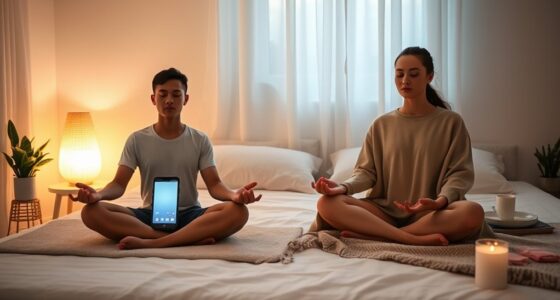
To boost your sleep, try combining warm baths infused with calming herbs like chamomile or lavender with modern sleep tech like trackers and smart alarms. Adding aromatherapy or herbal infusions creates a soothing environment, while apps and devices monitor and optimize your sleep patterns for better rest. Establishing a consistent nighttime routine with these traditional and modern tricks can markedly improve your sleep quality—exploring more options can help you find the perfect balance for peaceful nights.
Key Takeaways
- Combine warm herbal baths with aromatherapy to create a calming environment that relaxes muscles and calms the mind before sleep.
- Use sleep-tracking devices and apps to monitor sleep patterns and adjust your bedtime routines accordingly.
- Incorporate traditional relaxation techniques like herbal infusions and herbal teas alongside modern sleep technology for enhanced rest.
- Create a sleep-friendly environment with blackout curtains, controlled lighting, and temperature adjustments, supported by research-based insights.
- Establish consistent routines that blend calming natural remedies with technological tools to optimize sleep quality and duration.
The Calming Power of Warm Baths and Herbal Infusions

Warm baths and herbal infusions have long been cherished for their ability to promote relaxation and reduce stress. When you soak in a warm bath infused with herbal infusions, you activate your body’s natural relaxation response, easing tension from your muscles. Combine this with aromatherapy blends, and you create a calming environment that signals your brain it’s time to unwind. Herbal infusions like chamomile or lavender can enhance this effect, offering soothing properties that calm your mind. Aromatherapy blends, whether added to your bathwater or diffused nearby, amplify the calming sensation. Incorporating natural relaxation techniques into your routine can further enhance these benefits, especially when paired with air quality improvements that support restful sleep. Regularly assessing your sleep environment and making adjustments can also contribute to better sleep quality. Together, these traditional practices help you shift from a busy day to a restful night, making it easier to fall asleep and enjoy restorative sleep.
Innovative Sleep Devices and Apps to Enhance Rest

In today’s tech-savvy world, innovative sleep devices and apps are transforming how you achieve restful nights. Smart alarms wake you during the lightest sleep phase, helping you feel more refreshed. Sleep trackers monitor your sleep patterns, providing insights into duration, quality, and disturbances. These devices sync with apps that analyze data and suggest personalized tips to improve your sleep hygiene. Some trackers even detect environmental factors like room temperature and noise, offering actionable recommendations. Using these tools can help you identify patterns, avoid disruptions, and establish better sleep habits. They’re simple yet powerful additions to your nightly routine, giving you greater control over your rest and ensuring you wake up feeling more energized and ready for the day. Incorporating connected appliances into your bedtime routine can further optimize your sleep environment by automatically adjusting lighting and temperature for ideal sleep conditions. Additionally, understanding sleep science can help you make informed choices about your sleep practices and technology use. Knowing more about sleep environment factors—such as light, sound, and temperature—empowers you to create an optimal sleep setting tailored to your needs, and staying informed about sleep research can keep you updated on the latest advancements and recommendations. Recognizing the importance of luxury craftsmanship in sleep technology can also guide you toward high-quality, durable devices that enhance your overall sleep experience.
Creating a Nighttime Routine That Combines Tradition and Technology

Combining traditional practices with modern technology can create a balanced and effective nighttime routine. To start, incorporate dream journaling before bed to process your day and clear your mind. Use blackout curtains to block out light and signal your body it’s time to sleep. Limit screen time an hour before bed, replacing it with calming activities like reading or meditation. Consider using a smart alarm or sleep tracker to monitor your rest and adjust accordingly. You might also blend in relaxing teas or warm baths to wind down. Additionally, establishing a consistent bedtime routine can help signal to your body that it’s time to rest. Incorporating sleep hygiene habits can further enhance your sleep quality. Creating a comfortable and restful environment can significantly impact sleep effectiveness. Being mindful of circadian rhythms and aligning your routine with natural light patterns can optimize your sleep-wake cycle. Understanding biological clocks and how they influence sleep can help you fine-tune your routine for better results. By integrating these elements, you create a routine that leverages time-tested habits and innovative tools, promoting better sleep and overall well-being.
Frequently Asked Questions
How Do Temperature Changes Affect Sleep Quality During Baths?
Temperature changes during baths markedly impact your sleep quality by aiding temperature regulation. A warm bath before bed raises your body temperature temporarily, which then drops afterward, signaling your body it’s time to sleep. Timing your bath about 1-2 hours before bed helps optimize this effect. Proper bath timing and temperature regulation can make falling asleep easier and improve overall sleep quality, ensuring you wake up refreshed.
Are Herbal Teas Safe for Everyone Before Bedtime?
Herbal teas are generally safe for most people before bedtime, but herbal safety varies depending on individual health conditions and medications. You should check for tea interactions, especially if you’re on prescriptions or have allergies. Some herbs like chamomile and valerian are calming, but others may cause adverse effects. Always consult your healthcare provider if you’re unsure about herbal safety or potential interactions to ensure a restful, safe sleep.
Can Sleep Apps Replace Professional Medical Advice?
You might wonder if sleep apps can replace medical advice, but they can’t. While apps help track your sleep hygiene and provide useful tips, they lack the expertise to diagnose underlying issues. Relying solely on them could delay essential medical consultation. To truly improve your sleep, use apps as a supplement, not a substitute, and consult a healthcare professional for personalized guidance and treatment.
What Are the Best Gadgets for People With Sleep Disorders?
You should consider smart mattresses and sleep trackers if you have sleep disorders. Smart mattresses can automatically adjust firmness and temperature to improve your sleep environment, while sleep trackers monitor your sleep patterns, helping you identify issues and optimize your routine. These gadgets provide valuable data and personalized insights, making them excellent tools to complement medical advice and enhance your overall sleep quality.
How Long Should a Traditional Bedtime Routine Be for Optimal Rest?
A traditional bedtime routine should last around 30 to 60 minutes for ideal rest. Skipping this relaxation period can make it harder to unwind and fall asleep. You might think less time is better, but a consistent routine helps signal your body it’s time to sleep. Focus on calming activities like reading or gentle stretches during this period, ensuring your relaxation period length effectively prepares you for restful sleep.
Conclusion
Think of your sleep journey as a delicate garden, where tradition’s gentle waters and modern tools serve as nourishing sunlight and fertile soil. By blending warm baths, herbal teas, and innovative tech, you craft a vibrant oasis of rest amid life’s chaos. Embrace this harmony, tending your nighttime routine with mindful care. With patience and balance, you’ll watch your restful garden flourish, inviting peaceful dreams to bloom each night.