
When choosing between meditation apps or no-tech methods for mindful sleep, both can effectively calm your mind and promote restful rest. Apps offer guided visuals, soothing sounds, and personalized routines, making it easier to relax quickly. No-tech techniques like deep breathing, visualization, or gentle stretching provide a distraction-free way to unwind and build habits. To find what suits you best and create a calming bedtime ritual, take a closer look at your preferences and routines.
Key Takeaways
- Guided apps provide structured visualization and biofeedback tools that can quickly induce relaxation before sleep.
- No-tech methods like deep breathing and muscle relaxation foster personalized, distraction-free relaxation routines without device dependence.
- Apps often include customizable settings, timers, and soothing sounds, enhancing consistency and engagement for sleep preparation.
- No-tech techniques rely on personal discipline and mindfulness, offering sustainable options that eliminate screen exposure before bedtime.
- Both approaches can effectively promote restorative sleep when practiced regularly, with choice depending on individual preferences and lifestyle.
The Rise of Meditation Apps for Sleep
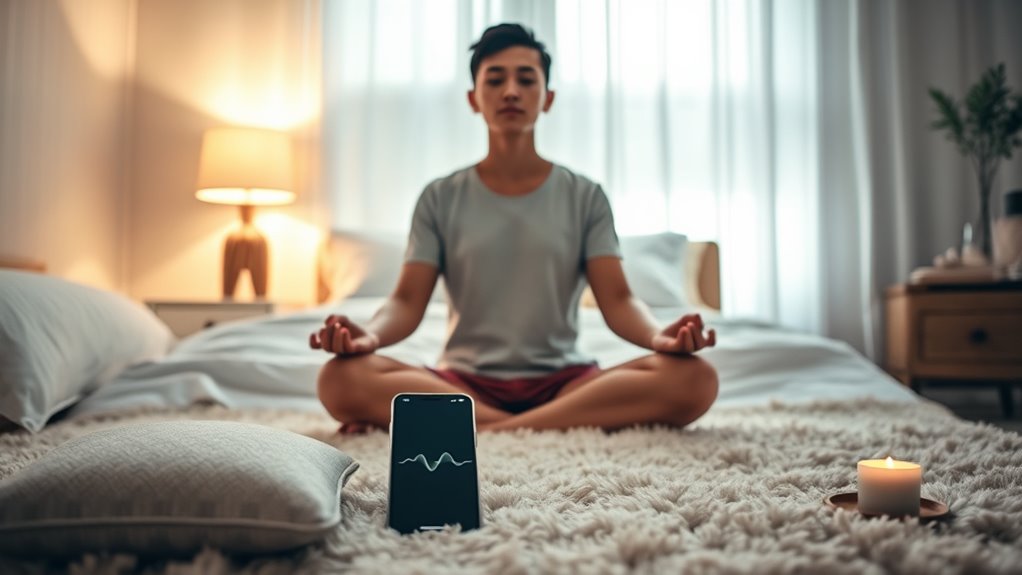
In recent years, meditation apps have become increasingly popular as a tool to improve sleep quality. These apps often feature guided imagery exercises that help you visualize calming scenes, making it easier to relax your mind. Alongside guided imagery, they incorporate breathing exercises designed to slow your breathing and reduce stress. You might find yourself following a soothing voice guiding you through deep breaths or imagining peaceful landscapes, all from the comfort of your bed. The convenience and accessibility of these apps make them a popular choice for those struggling to unwind after a busy day. By focusing on calming imagery and controlled breathing, these tools aim to prepare your mind and body for restful sleep, providing an effective way to wind down without leaving your home. Incorporating techniques like Free Floating can enhance relaxation and support a natural transition into sleep. Additionally, some apps include biofeedback features that monitor your heart rate and breathing patterns to optimize relaxation techniques. These advanced features leverage modern technology to personalize your sleep routines and improve overall sleep quality, often utilizing neurofeedback to further refine relaxation responses. Furthermore, the integration of wearable health monitors can help track physiological responses and tailor the experience to your individual needs.
Benefits of No-Tech Relaxation Techniques

While meditation apps offer a convenient way to relax before bed, practicing no-tech relaxation techniques can provide equally powerful benefits. These methods help you reduce stress without relying on screens or devices, creating a calming environment that promotes better sleep. Techniques like deep breathing, progressive muscle relaxation, or gentle stretching activate your body’s relaxation response, lowering cortisol levels and easing tension. As you engage in these practices, you’ll notice improved mental clarity, helping clear your mind of racing thoughts. No-tech approaches also encourage mindfulness and self-awareness, fostering a deeper connection with your body and breath. Incorporating deep breathing techniques into your bedtime routine can enhance your ability to relax naturally and reduce reliance on external aids. Additionally, engaging in mindfulness practices can deepen your awareness of the present moment, further supporting restful sleep. By doing so, you can experience a natural, tech-free path to relaxation and restful sleep.
Comparing Effectiveness: Apps Versus No-Tech Methods
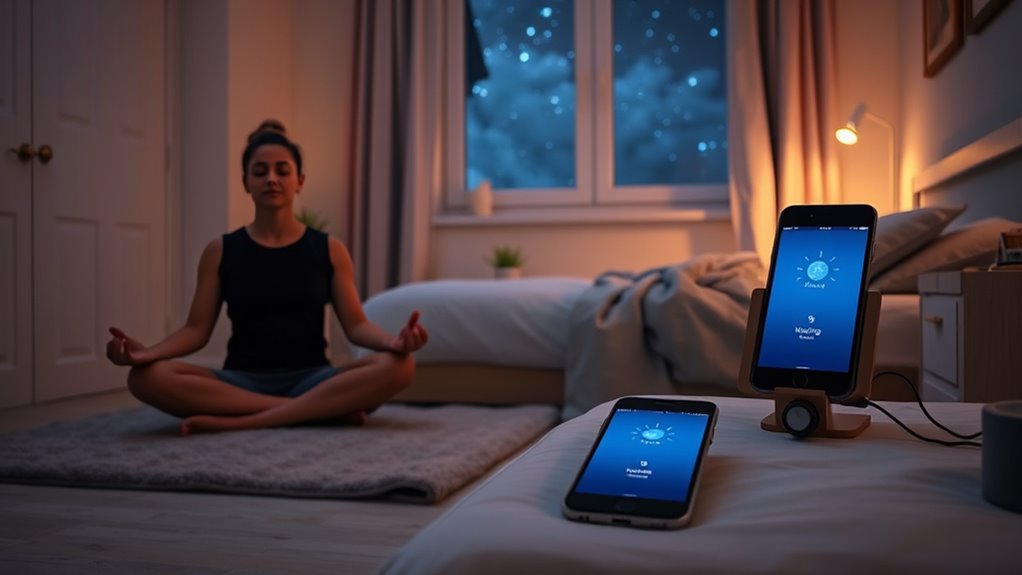
Apps and no-tech methods each offer distinct advantages for bedtime relaxation, and their effectiveness often depends on individual preferences and needs. Apps often utilize guided imagery and brainwave entrainment techniques, helping you relax through audio cues and visualizations. A new sentence with visualization techniques and the rest of the sentence. No-tech approaches, like deep breathing or meditation, rely on personal focus and experience. To compare effectiveness: 1. guided imagery via apps provides structured visualization, easing your mind swiftly. 2. brainwave entrainment in apps helps synchronize your brainwaves for deeper relaxation, often faster than no-tech methods. 3. No-tech techniques demand active engagement, which can foster a more personalized, lasting calm. Incorporating mindfulness practices can enhance the benefits of both approaches by encouraging present-moment awareness. Ultimately, whether you prefer tech-driven tools or traditional practices, consistency and personal comfort determine which method helps you achieve mindful sleep.
Factors to Consider When Choosing Your Sleep Routine
Choosing the right sleep routine depends on understanding your unique preferences, lifestyle, and sleep challenges. Consider what activities help you relax and whether you prefer tech-based tools like apps or no-tech methods such as breathing exercises. Your personal preferences play a big role—if you enjoy using your phone, an app might suit you better; if you value simplicity, no-tech approaches could be ideal. Make sure your routine is compatible with your lifestyle, fitting comfortably into your evening schedule without causing stress. Think about your environment, time constraints, and how consistent you can be. Ultimately, selecting a routine that aligns with your habits and preferences increases the likelihood of maintaining it and achieving restful sleep. Incorporating effective sleep strategies can further enhance your chances of success.
Tips for Incorporating Meditation Into Your Bedtime

Incorporating meditation into your bedtime routine can be a simple yet effective way to unwind and prepare your mind for restful sleep. To do this effectively, consider these tips:
- Create a calming sleep environment by dimming lights, minimizing noise, and removing distractions.
- Practice breathing exercises, such as slow, deep breaths, to relax your body and clear your mind.
- Dedicate a specific time each night to meditate, making it a consistent part of your routine.
- Incorporate sleep hygiene techniques to further support your ability to fall asleep peacefully. Additionally, maintaining a comfortable sleep environment can significantly enhance the benefits of your meditation practice.
- Using mindful awareness of your body sensations can enhance relaxation and deepen the meditation experience. Recognizing the importance of mental clarity can also help prevent racing thoughts from disrupting your sleep.
- Incorporating practices that promote relaxation response can help your body transition into restful sleep more smoothly.
Keep your space cozy and free of electronic devices to avoid interruptions. Focus on your breath and sensations in your body to deepen relaxation. Over time, these small adjustments can enhance your ability to drift off peacefully and improve overall sleep quality.
Finding the Right Approach for Your Sleep Needs
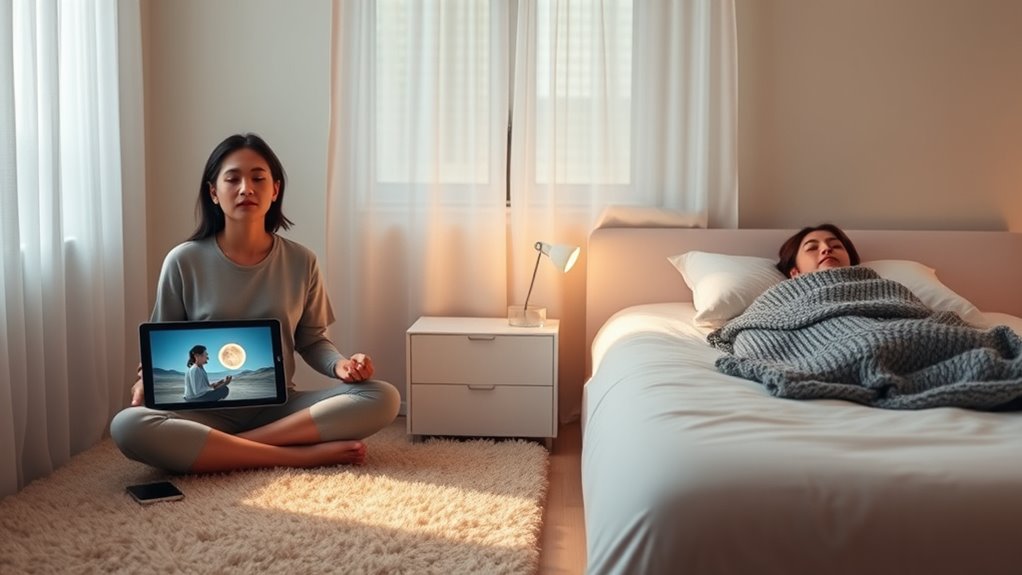
Finding the right meditation approach for your sleep needs involves understanding what techniques help you relax and what may distract or overstimulate you. Your sleep environment plays a vital role—ensure it’s quiet, dark, and comfortable to foster calmness. Adjust your bedtime rituals to suit your preferences, whether that’s listening to calming music, practicing deep breathing, or using no-tech methods like progressive muscle relaxation. Some people find guided meditations helpful, while others prefer silent mindfulness practices. Pay attention to how your body responds to different approaches, and don’t hesitate to experiment. Incorporating firewood techniques such as adaptive lighting or ambient sound systems can further enhance your bedtime environment. Establishing a consistent routine helps signal your mind and body that it’s time to wind down, which is crucial for effective sleep. The goal is to create a routine that works for you and ensures your sleep environment and bedtime rituals work together for restorative rest.
Frequently Asked Questions
How Do Meditation Apps Personalize Sleep Routines for Different Users?
Meditation apps personalize sleep routines by using personalization features that adapt to your user preferences. You input details like sleep goals, stress levels, or preferred meditation styles, and the app tailors sessions accordingly. It tracks your progress and adjusts recommendations over time, ensuring your sleep routine evolves with your needs. This personalized approach helps you relax more effectively and develop a consistent, mindful bedtime habit.
Are There Any Potential Downsides to Using Meditation Apps for Sleep?
Like Icarus flying too close to the sun, over reliance on meditation apps for sleep can lead to dependency, reducing your ability to relax naturally. Privacy concerns also loom, as sensitive data may be collected and shared without your full knowledge. While these apps offer convenience, they might hinder your mindfulness by creating a crutch, so it’s wise to balance their use with no-tech approaches to maintain genuine sleep hygiene.
Can No-Tech Techniques Be as Effective as App-Guided Meditation?
Yes, no-tech techniques can be just as effective as app-guided meditation if you practice mindfulness consistently. Using sensory techniques like focusing on your breath, listening to calming sounds, or progressive muscle relaxation helps you stay present and relaxed. With regular practice, these methods strengthen your ability to unwind naturally, making it easier to fall asleep without relying on technology. Consistency is key to experiencing the full benefits of no-tech mindfulness techniques.
How Long Should I Practice Meditation Before Bedtime for Best Results?
For best results, aim to meditate for about 10 to 20 minutes before bed, following duration guidelines that promote relaxation without causing fatigue. The ideal timing is 30 minutes to an hour before you plan to sleep, helping your mind unwind and shift seamlessly into rest. Consistency is key, so make it a regular part of your nightly routine to enhance sleep quality and reduce stress effectively.
Is There a Recommended Combination of App and No-Tech Methods?
Yes, you can combine tech integration with traditional practices for ideal sleep. Use meditation apps for guided sessions, then switch to no-tech methods like deep breathing or gentle stretching to wind down. This blend helps you stay consistent while embracing mindful sleep techniques. Experiment to find the right balance, ensuring technology enhances your routine without causing overstimulation, so you wake refreshed and relaxed each morning.
Conclusion
Whether you choose meditation apps or no-tech techniques, the key is consistency. Apps offer convenience and guidance, but no-tech methods foster a deeper connection with yourself. It’s not about one being better than the other; it’s about finding what fits your lifestyle and needs. Sometimes, technology can enhance your relaxation, and other times, unplugging can bring more peace. Experiment, stay patient, and trust that your ideal mindful sleep approach will emerge.