

Binaural beats create auditory illusions that can influence your brainwaves, potentially easing you into sleep by promoting relaxation and neural entrainment. While some studies suggest they may reduce sleep latency and improve sleep quality, the scientific evidence is mixed, and individual responses vary. They can help mask distractions and calm your mind, but aren’t a guaranteed fix. To discover more about whether binaural beats truly support your sleep, keep exploring the latest insights.
Listen free for 30 days with Audible
Thousands of audiobooks and originals — cancel anytime.
As an affiliate, we earn on qualifying purchases.
Key Takeaways
- Scientific studies suggest binaural beats can promote relaxation and potentially improve sleep onset, but evidence remains limited.
- Binaural beats may help synchronize brainwaves to sleep-related frequencies like delta or theta.
- Auditory stimulation can mask disturbances and support smoother transitions between sleep stages.
- Effectiveness varies among individuals and depends on frequency selection, session duration, and personal expectations.
- More rigorous research is needed to confirm binaural beats’ definitive impact on sleep quality and duration.
As an affiliate, we earn on qualifying purchases.
What Are Binaural Beats and How Do They Work?

Have you ever wondered how your brain can synchronize with specific sounds? Binaural beats are a fascinating example of auditory illusions used in sound therapy. When you listen to two slightly different frequencies in each ear, your brain perceives a third tone—a beat that isn’t actually there. This phenomenon helps your brain align its wave activity to specific frequencies, influencing your mental state. Many believe binaural beats can promote relaxation, focus, or sleep, making them popular in sound therapy. The unique way they trick your brain into creating new perceptions showcases how powerful auditory illusions can be. By engaging your auditory system, binaural beats offer a compelling tool for calming the mind and potentially aiding sleep. Additionally, understanding the neuroscientific basis of these auditory tricks can help optimize their use for mental health benefits. Research into how brain waves entrain to specific frequencies further supports their potential effectiveness in altering mental states. Integrating smart audio devices that deliver binaural beats into a sleep routine may enhance their benefits through consistent, personalized sound therapy.
As an affiliate, we earn on qualifying purchases.
The Science Behind Brainwave Frequencies and Sleep Cycles

Understanding how brainwave types correspond to different sleep stages helps you see why binaural beats can influence your rest. When your brain synchronizes with specific frequencies, it fosters smoother progressions through sleep cycles. Scientific research supports these connections, showing how targeted brainwave activity can enhance sleep quality. Additionally, some studies suggest that floating on water can promote relaxation and improve sleep by reducing stress levels. Furthermore, engaging with Gold IRA markets and understanding the various investment options can provide peace of mind and financial stability, indirectly supporting better sleep due to reduced financial stress.
Brainwave Types and States
Brainwave frequencies are the electrical patterns your brain produces as you shift through different states of consciousness, including wakefulness, relaxation, and sleep. Different brainwave types—delta, theta, alpha, beta, and gamma—correspond to specific mental states. Binaural beats use auditory stimulation to promote neural entrainment, encouraging your brain to synchronize with desired frequencies. For example, delta waves dominate deep sleep, while alpha waves are linked to relaxation. When you listen to binaural beats, your brain can entrain to these frequencies, potentially influencing your sleep quality and mental state. Additionally, some research suggests that brainwave types can be influenced by various external stimuli, including sound therapy, to enhance sleep and relaxation. This process is often supported by understanding sleep cycles and how different brainwave patterns facilitate transitions between sleep stages. External stimuli like auditory stimulation may help reinforce these natural transitions, leading to improved sleep experiences. The effectiveness of binaural beats may also depend on individual differences in brainwave entrainment responsiveness, which varies from person to person.
Sleep Cycle Synchronization
Since your brain naturally cycles through different states during sleep, aligning binaural beats with these cycles can enhance sleep quality, making it easier to reach and maintain restorative stages. By syncing sound therapy with your sleep stages, you may optimize your body’s ability to shift smoothly between light, deep, and REM sleep. This process relies on your auditory perception to subtly influence brainwave frequencies, encouraging your brain to follow natural patterns. Proper synchronization can improve sleep efficiency and help you wake up feeling more refreshed. Additionally, understanding brainwave frequencies can deepen your appreciation of how sound therapy impacts your sleep. Recognizing the sleep cycle stages can help you better tailor binaural beats to support each phase of sleep effectively. Incorporating knowledge of Free Floating concepts can further optimize personalized sleep strategies, ensuring a holistic approach to restful slumber. Moreover, being aware of auditory perception can enhance your ability to select the most effective binaural beats for your unique sleep cycle. Understanding how brainwave entrainment works can further empower you to choose binaural beats that align precisely with your sleep needs.
Scientific Evidence Review
Research shows that binaural beats can influence brainwave activity in ways that support better sleep. These auditory illusions occur when your brain perceives a sound frequency created by two different tones played separately in each ear. Studies suggest that specific sound frequencies can induce brainwaves associated with relaxation and sleep, like theta and delta waves. While some research supports their effectiveness, others find limited evidence, making it a mixed picture. Here’s a quick comparison:
| Effectiveness | Evidence Level |
|---|---|
| Promotes sleep | Some studies show improved sleep quality |
| No effect | Others report no significant change |
| Relaxation | Many users experience calming auditory illusions |
| Sleep cycles | Possible synchronization with natural sleep stages |
Additionally, understanding brainwave frequencies can help clarify how these auditory stimuli might influence sleep patterns. The brainwave synchronization caused by binaural beats may enhance the transition into deeper sleep stages. Some researchers also explore how neural entrainment might play a role in facilitating this process and how it relates to overall sleep architecture. Moreover, the degree of individual variability can influence how effectively these beats impact different users.
brainwave entrainment audio devices
As an affiliate, we earn on qualifying purchases.
As an affiliate, we earn on qualifying purchases.
Review of Scientific Studies on Binaural Beats and Sleep Quality

Although studies on binaural beats and sleep quality are still emerging, several have shown promising results. Researchers suggest that these auditory illusions may enhance relaxation and promote better sleep through sound therapy. Some studies indicate that listening to binaural beats can reduce sleep latency and improve overall sleep quality. For example, certain frequencies seem to synchronize brain activity, fostering a calm state conducive to sleep. Additionally, understanding foraging techniques can help in exploring natural sound environments that may complement sound therapy practices. However, more rigorous research is needed to confirm these effects definitively. You might find that your response varies based on individual differences and the specific frequencies used. While evidence is preliminary, these findings hint at binaural beats’ potential as a non-invasive sleep aid. Keep in mind, sound therapy’s effectiveness depends on consistency and personal sensitivity to auditory illusions.
As an affiliate, we earn on qualifying purchases.
The Role of Auditory Stimulation in Sleep Onset and Maintenance
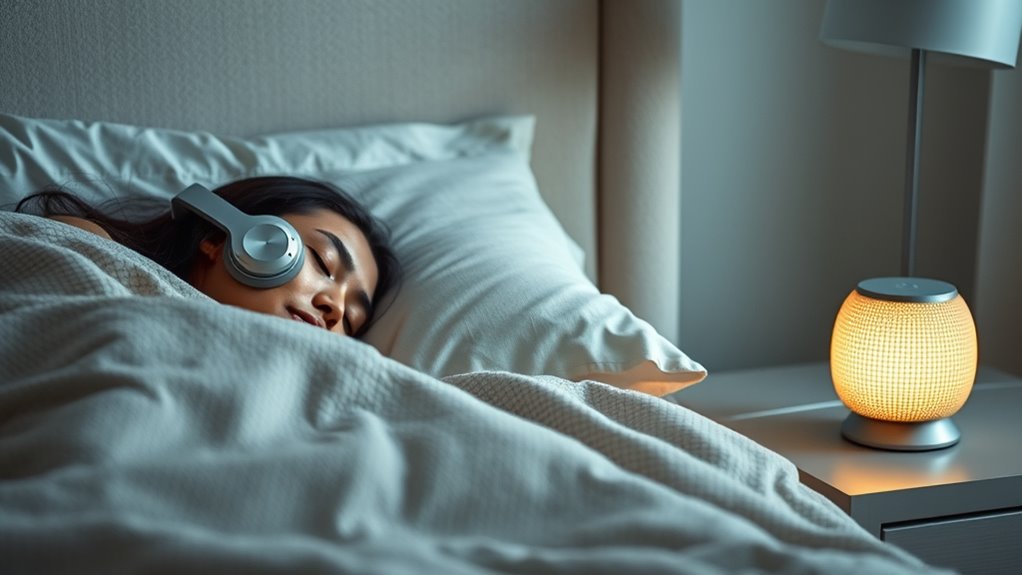
Auditory stimulation, like binaural beats, can help synchronize your brainwaves, making it easier to fall asleep and stay asleep. It also can distract you from noises or disruptions that might wake you up. Understanding how these sounds influence your sleep can help you create a more restful environment. Additionally, brainwave synchronization plays a crucial role in the effectiveness of these auditory tools for sleep. Research indicates that the quality of sound calibration and color temperature adjustments can further optimize the calming effects of auditory stimulation on sleep. Moreover, paying attention to sound quality can significantly enhance the overall impact of binaural beats on your sleep experience. Ensuring that your environment minimizes urban pollutants can also support better sleep quality by reducing external disturbances and promoting a healthier atmosphere.
Neural Synchronization Effects
Neural synchronization plays a crucial role in how sound stimulation, like binaural beats, influences your sleep process. When your brain experiences auditory entrainment, it aligns its neural activity with the frequencies of the beats, promoting neural coherence. This coordination can help your brain shift smoothly into sleep states and sustain them. As your neural circuits entrain, they foster a calmer, more ordered brain pattern, making it easier to fall asleep and stay asleep. The effects are subtle but impactful, encouraging your brain to operate in harmony with the auditory stimulus. By enhancing neural coherence, binaural beats may facilitate natural sleep rhythms and improve sleep quality overall.
- Improved shift into sleep stages
- Reduced brainwave chaos at night
- Support for deep, restorative sleep
- Enhanced overall sleep stability
Distraction From Disruptions
Distractions from environmental noises or internal thoughts can easily interrupt your journey into sleep, making it harder to fall asleep or stay asleep through the night. Sound therapy, including binaural beats, can help mask disruptive sounds and create a calming environment. This auditory stimulation may also promote meditation benefits, helping you relax and reduce mental chatter that keeps you awake. By providing a consistent, soothing background, sound therapy minimizes the impact of sudden noises or intrusive thoughts, supporting smoother sleep onset and maintenance. While distractions are natural, integrating calming sounds can improve your overall sleep quality. This approach leverages auditory stimulation to create a more favorable environment, making it easier for your mind and body to shift into restful sleep.
Comparing Binaural Beats to Other Relaxation Techniques

While binaural beats are often touted for their relaxation benefits, they are just one of many techniques you can try to unwind. Compared to music therapy or mindfulness meditation, binaural beats may offer a different approach to relaxation, but their effectiveness varies. Music therapy involves carefully curated sounds that can evoke specific emotional responses, often providing a more engaging experience. Mindfulness meditation encourages focused awareness, reducing stress through mental clarity. Binaural beats aim to entrain brainwaves, but scientific support remains limited. Here are some options to contemplate:
- Listening to calming music during therapy sessions
- Practicing mindfulness meditation regularly
- Combining binaural beats with other relaxation methods
- Using guided imagery to reduce anxiety
Finding what works best depends on your preferences and needs.
Potential Psychological Effects and Placebo Influence

Many people turn to binaural beats expecting specific psychological effects, but research shows that the mind’s response can be highly subjective. Your belief in their effectiveness may enhance relaxation or sleep, driven by the placebo effect. This influence often overlaps with practices like mindfulness meditation, where mental focus shapes outcomes. The expectation of better sleep may improve sleep hygiene indirectly. To understand this dynamic better, consider the following:
| Effect Type | Explanation | Example |
|---|---|---|
| Psychological | Mind’s perception influences outcomes | Feeling more relaxed |
| Physiological | Actual brain or body changes | Reduced heart rate |
| Placebo Influence | Expectations shape results | Improved sleep due to belief |
Ultimately, your mindset plays a vital role in how binaural beats impact your psychological state.
Limitations and Challenges in Binaural Beat Research

Research on binaural beats faces several challenges, especially with methodological issues that make results hard to interpret. You also need to contemplate how placebo effects and expectations can influence outcomes, often muddying the true effects. These limitations highlight the need for more rigorous, controlled studies to draw clearer conclusions.
Methodological Difficulties in Studies
Studying the effects of binaural beats presents several methodological challenges that can impact the reliability of findings. Variability among participants, such as differences in brainwave activity and responsiveness, makes it hard to draw firm conclusions. Measurement inconsistency adds another layer of difficulty, as different studies often use varied tools and protocols, which hampers comparability. Additionally, controlling for external factors like ambient noise or individual sleep patterns is tough. The placebo effect can also skew results if participants’ expectations aren’t carefully managed. These issues highlight the need for standardized procedures and larger sample sizes to improve study validity. Without addressing these challenges, it’s difficult to determine whether binaural beats truly influence sleep or if observed effects are coincidental.
Placebo and Expectation Effects
Could placebo effects be quietly shaping the outcomes of binaural beat studies? It’s likely, given how expectation influence impacts results. When you believe binaural beats will help you sleep, your mind may produce positive changes regardless of the actual sound. This placebo effect complicates research, making it hard to distinguish genuine benefits from psychological ones. Researchers face the challenge of controlling for expectation influence, which can skew findings. To illustrate, consider the table below:
| Factor | Impact | Explanation |
|---|---|---|
| Expectation influence | Alters perceived effectiveness | Believers often report better results |
| Placebo effect | Creates real psychological changes | Mind’s power can mimic treatment effects |
| Blinding limitations | Difficult to prevent bias | Participants know or guess the treatment |
| Subjective reporting | Affects outcome validity | Personal beliefs shape responses |
This highlights the challenge in isolating true binaural beat effects.
Practical Tips for Using Binaural Beats Safely

To use binaural beats safely, it’s important to start with low-volume settings and gradually increase the intensity as you become comfortable. This helps prevent ear strain and guarantees a relaxing experience. Incorporate sound therapy and meditation techniques carefully, paying attention to how your body reacts.
- Use headphones designed for comfort and sound quality
- Limit sessions to 20-30 minutes to avoid overstimulation
- Choose binaural beats with frequencies suited for relaxation or sleep
- Create a calm environment free of distractions
Always listen to your body and adjust volume or duration as needed. If you experience headaches, dizziness, or discomfort, stop immediately. Following these tips ensures a safe, effective experience with binaural beats.
Future Directions in Binaural Beat Sleep Research

As research into binaural beats and sleep continues to advance, scientists are exploring more personalized and precise applications to enhance sleep quality. Future studies aim to optimize neural entrainment by tailoring auditory therapy to individual brainwave patterns. This approach could lead to more effective sleep interventions, moving beyond generic beats. Imagine a table illustrating potential research directions:
| Personalized protocols | Real-time brain monitoring | Adaptive auditory therapy |
|---|---|---|
| Custom sound frequencies | EEG-guided adjustments | Dynamic beat modulation |
| Individual sleep patterns | Wearable tech integration | Feedback-driven improvements |
| Targeted symptom relief | Machine learning analysis | Enhanced sleep outcomes |
Making an Informed Decision: Do Binaural Beats Really Help Sleep?
Determining whether binaural beats genuinely improve sleep requires examining the scientific evidence carefully. While some studies suggest they may influence auditory perception and help relax your mind, results are mixed. You might notice improved mental focus during listening, but translating that into better sleep isn’t guaranteed. To decide if they’re right for you, consider these points:
- Scientific studies vary, with some showing benefits and others finding no effect
- The influence on auditory perception can create a calming environment
- Binaural beats may help reduce mental chatter before bed
- Personal experiences often differ, so try them yourself to see if they work
Ultimately, binaural beats could be a helpful tool, but they aren’t a universal sleep solution. Use your judgment and pay attention to how your body responds.
Frequently Asked Questions
Can Binaural Beats Cause Adverse Side Effects During Sleep?
Binaural beats can cause adverse side effects during sleep, but it’s rare. You might experience a placebo effect, making you think they’re helping or harming you. Some people also report auditory fatigue, where listening too long causes ear discomfort or headaches. If you notice any negative effects, it’s best to stop use and consult a healthcare professional. Listening in moderation can help minimize potential risks.
How Long Should I Listen to Binaural Beats for Effective Sleep?
You should aim to listen to binaural beats for about 30 to 60 minutes before sleep. This duration aligns with typical sleep cycles and helps establish a calming listening habit. Keep in mind, your sleep duration and individual responses vary; some find shorter or longer sessions more effective. Experiment to find what works best, and avoid overdoing it, so your listening habits enhance your sleep without disrupting it.
Are There Specific Binaural Beat Frequencies Best for Sleep?
Yes, specific binaural beat frequencies can enhance sleep by promoting brainwave synchronization. For better sleep, try listening to delta waves around 1-4 Hz, as they match the brain’s natural sleep state. Frequency specificity matters because different frequencies influence different mental states. By choosing the right beats, you help your brain shift smoothly into deep sleep, making your rest more restful and effective.
Do Binaural Beats Work Differently for Individuals With Sleep Disorders?
Imagine using binaural beats to improve sleep, but noticing different results than others. You might find that binaural beats work differently for individuals with sleep disorders due to personalized responses and neurodiverse effects. While some may experience deep relaxation, others might not benefit as much. It’s essential to tailor your approach, as individual brain responses vary, making binaural beats more effective for some than for others with specific sleep challenges.
How Do Binaural Beats Compare to Pharmaceutical Sleep Aids?
Binaural beats often provide a more natural alternative to pharmaceutical sleep aids, and you might find they work through the placebo effect or sound quality. Unlike medications, they don’t carry risks of dependency or side effects. However, their effectiveness varies, and you should consider that some benefits could stem from your expectations. For better results, guarantee the sound quality is high and use them consistently as part of your sleep routine.
Conclusion
Think of binaural beats as a gentle lullaby for your brain, guiding you toward restful sleep. While some studies suggest they can help, the science isn’t definitive yet. Like a compass, they may point you in the right direction, but you still need good sleep habits. Use them wisely and stay open-minded. Ultimately, finding what helps you drift off peacefully is a personal journey—binaural beats could be your helpful guide or just one piece of the puzzle.
Fall Picks
fall essentials
As an affiliate, we earn on qualifying purchases.