
To stop nighttime anxiety and clear your mind for sleep, establish a calming routine by sticking to a consistent schedule and creating a relaxing environment. Practice mindfulness techniques like body scans or deep breathing to soothe your nervous system. Manage overthinking by journaling worries or scheduling worry time during the day. Gentle movement and physical relaxation help release tension. Keep exploring effective tools and habits to help quiet your mind and enjoy restful sleep.
Key Takeaways
- Establish a calming bedtime routine with relaxing activities and a consistent sleep schedule.
- Practice mindfulness, body scans, and deep breathing to reduce racing thoughts and promote relaxation.
- Use journaling or worry scheduling to clear mental clutter before sleep.
- Perform gentle stretches and progressive muscle relaxation to ease physical tension.
- Optimize your sleep environment with dim lighting, comfortable temperature, and calming sounds or scents.
Understanding Nighttime Anxiety and Its Effects

Have you ever wondered why nighttime anxiety can feel so overwhelming? It’s often linked to sleep deprivation, making it harder for your brain to relax and process stress effectively. When you don’t get enough restful sleep, your body’s hormonal balance gets thrown off, increasing stress hormones like cortisol. This hormonal imbalance can intensify feelings of worry and make it difficult to calm down at night. Sleep deprivation also impacts your emotional regulation, leaving you more vulnerable to anxious thoughts. Recognizing how these physical factors contribute to your nighttime anxiety helps you understand that it’s not just in your mind but rooted in your body’s response to lack of rest and hormonal shifts. Hormonal imbalance is a critical factor that exacerbates anxiety symptoms during the night, highlighting the importance of managing stress and sleep hygiene. Addressing these issues is key to finding relief and improving your sleep quality. Additionally, emerging AI detection methods can help identify underlying causes of stress-related sleep disturbances, guiding more targeted interventions. Understanding the role of sleep deprivation in disrupting hormonal and emotional regulation can empower you to adopt better sleep habits and reduce nighttime anxieties. Recognizing the importance of physical health in mental well-being can further support your efforts to improve sleep and reduce anxiety.
Recognizing Triggers That Worsen Your Worries
Recognizing these elements helps you address the root causes of your worries. Here are three common triggers to watch for:
- Emotional triggers—stress from daily events or past experiences, which can be amplified by sleep environment issues. Studies suggest that astrological signs may influence how individuals respond to stress, potentially impacting sleep quality. Incorporating wellness technology such as calming sound machines or smart lighting can help mitigate these effects.
- Environmental factors—disruptive noise, clutter, or poor sleep setup.
- External stimuli—news updates or social media notifications before bed. Incorporating smart home technology can help create a more calming and controlled sleep environment.
Creating a Consistent Bedtime Routine

Establishing a consistent bedtime routine can considerably reduce nighttime anxiety by signaling to your body and mind that it’s time to wind down. Consistency in your bedtime helps regulate your sleep environment, making it easier to *shift* into restful sleep. Choose calming activities like reading, gentle stretching, or listening to soothing music to create a reliable pre-sleep pattern. Keep your sleep environment comfortable, cool, and dark to reinforce your routine’s effectiveness. Going to bed at the same time each night trains your body to recognize when it’s time to sleep, reducing uncertainty and worry. Incorporating sleep cues into your nightly routine can further enhance relaxation and make it easier to fall asleep. Establishing these cues, such as dimming the lights or practicing deep breathing, can create a predictable sleep pattern that signals your brain it’s time to rest. Over time, these habits strengthen your sleep cues and make it easier to relax, helping clear your mind and lessen nighttime anxiety. Maintaining a consistent schedule can also support your body’s natural circadian rhythms, promoting better sleep quality. Additionally, integrating smart home automation to adjust lighting and temperature can create an optimal sleep environment automatically, further reducing potential disturbances. Moreover, avoiding stimulating activities or screens before bed can ensure your sleep environment remains conducive to winding down.
Practicing Mindfulness and Deep Breathing Exercises
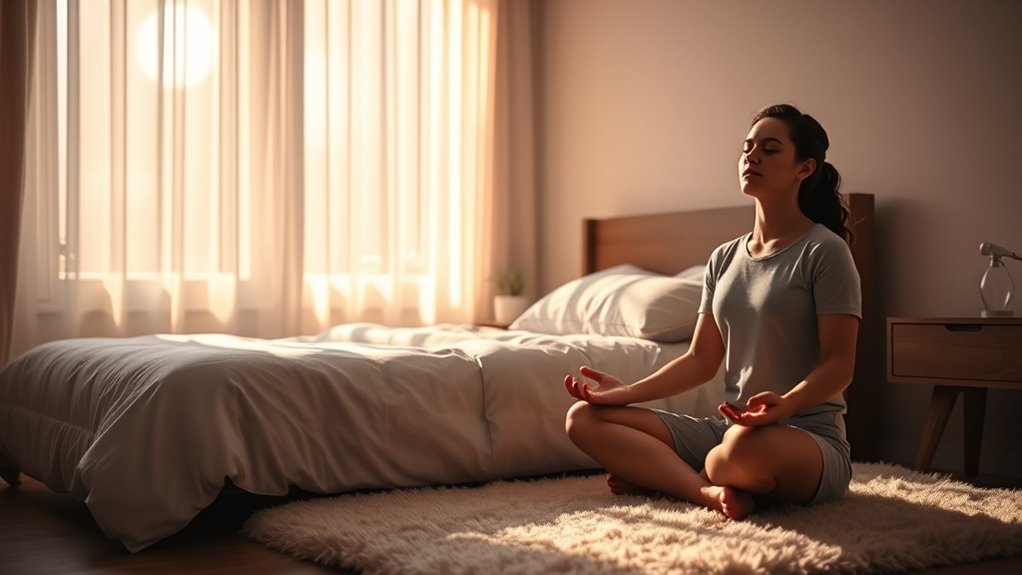
Practicing mindfulness and deep breathing can help calm your mind before bed. Focus on your breath awareness to slow racing thoughts, and try engaging in body scans to release physical tension. These simple techniques can make a big difference in reducing nighttime anxiety. Incorporating evidence-based insights into your routine can enhance your ability to find calm amidst the noise. Additionally, understanding different relaxation techniques can provide more tools to ease your mind at night. Cultivating a mind-body connection through these practices can deepen your sense of relaxation and support overall well-being. Recognizing anxiety triggers can also help you develop personalized strategies to manage nighttime stress effectively. Exploring support options like bed and breakfast experiences that emphasize comfort and tranquility can further promote restful sleep.
Focus on Breath Awareness
Focusing on your breath is a simple yet powerful way to calm nighttime anxiety. By practicing breath awareness, you anchor yourself in the present moment, reducing racing thoughts. Start with diaphragmatic breathing, where you breathe deeply into your belly, not your chest, fostering relaxation and reducing stress. To deepen this practice, consider these steps:
- Place a hand on your belly, feeling it rise and fall with each inhale and exhale.
- Breathe slowly, aiming for a count of four seconds in and out.
- Focus on belly awareness, letting your attention drift solely to the sensation of your breath.
- Incorporate air quality awareness by ensuring your sleeping environment has purified air, which can further support relaxation and reduce nighttime discomfort.
- Recognizing the importance of preventive maintenance in health, maintaining a clean and healthy sleeping environment can significantly enhance your ability to relax and fall asleep easily. Regularly engaging in sound therapy or listening to calming sounds can also promote a peaceful mind before bed. Additionally, integrating gentle sleep routines can promote overall family well-being and improve sleep quality.
Enhancing your environment with essential oils like lavender or eucalyptus can create a calming atmosphere that supports relaxation and sleep. This mindful breathing resets your nervous system, easing anxiety and helping you drift into restful sleep.
Engage in Body Scans
Engaging in body scans combines mindfulness with deep breathing, making it a powerful tool to ease nighttime anxiety. Focus your attention on different parts of your body, cultivating body awareness and encouraging muscle relaxation. As you scan, breathe deeply and slowly to enhance relaxation, helping your mind let go of racing thoughts. Use the table below to guide your body scan:
| Body Part | Action | Focus Area |
|---|---|---|
| Feet | Feel sensations or tension | Relax muscles |
| Abdomen | Observe breath movement | Calm the nervous system |
| Shoulders | Notice tightness | Release tension |
This practice grounds you in the present, reducing anxiety and preparing your mind for sleep.
Engaging in Relaxing Activities Before Bedtime

Before bed, try engaging in relaxing activities like reading a gentle book or listening to soothing music to calm your mind. Incorporate mindful breathing exercises to further ease tension and prepare for restful sleep. These simple habits can make a big difference in reducing nighttime anxiety.
Gentle Reading Choices
Reading a calming book or magazine can help ease your mind and signal to your body that it’s time to wind down. Choose gentle stories or soothing images that promote relaxation. To enhance this calming routine, consider these options:
- Explore book recommendations focused on mindfulness or positivity.
- Select reading material with calming visuals, such as nature scenes or soft illustrations.
- Avoid suspenseful or stimulating content that might increase your alertness.
Soothing Music Options
Listening to soothing music can markedly reduce nighttime anxiety by calming your mind and body. Opt for instrumental melodies, which lack distracting lyrics and promote relaxation. Many find that gentle tunes help slow your heart rate and ease racing thoughts. Nature sounds, like rainfall, ocean waves, or forest ambiance, also create a peaceful atmosphere that encourages sleep. These sounds mimic calming environments and can drown out intrusive noises, making it easier to unwind. Play these sounds softly in the background as you prepare for bed, allowing your mind to shift from stress to serenity. Incorporating calming music or nature sounds into your nightly routine can establish a soothing pre-sleep environment, helping you clear your mind and drift into restful sleep more effortlessly.
Mindful Breathing Exercises
After filling your space with calming sounds, focusing on mindful breathing can deepen your relaxation and ease nighttime anxiety. Breath control helps slow your heart rate and calm your mind, making it easier to drift into sleep. Practicing mindful breathing exercises before bed reduces anxiety by shifting your focus away from racing thoughts. To enhance your practice, try these techniques:
- Deep diaphragmatic breathing to activate your relaxation response.
- Counting breaths to maintain focus and promote calmness.
- Slow exhale techniques to release tension and foster anxiety reduction.
Engaging in these simple steps helps you regain control over your breath and quiets your mind, preparing you for restful sleep. Consistent practice can make mindful breathing an effective tool for nighttime anxiety relief.
Managing Overthinking and Racing Thoughts
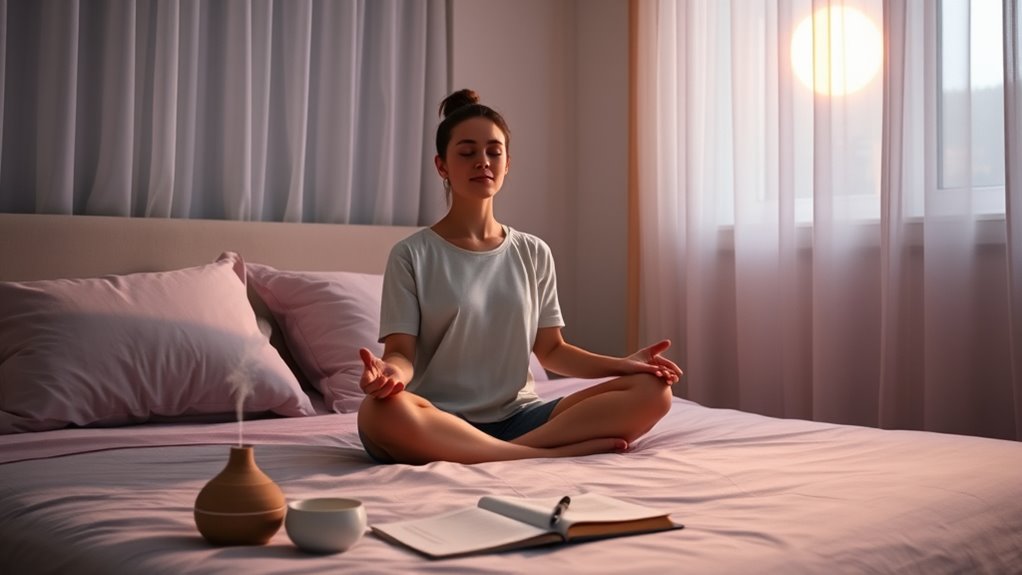
When your mind races with endless thoughts at night, it can feel overwhelming and impossible to quiet. To manage overthinking, try thought journaling—write down your worries to get them out of your head. This helps you process your emotions and create mental space. Additionally, consider worry scheduling: set aside a specific time during the day to address your concerns. Knowing you’ll handle these thoughts later can reduce their urgency at bedtime. Keep a notepad nearby to jot down lingering thoughts, so you don’t carry them into sleep. These techniques break the cycle of racing thoughts, giving your mind a clear boundary between daytime worries and nighttime rest. Over time, they can help you establish a calmer, more restful bedtime routine.
Incorporating Gentle Movement and Physical Relaxation

Incorporating gentle movement and physical relaxation into your bedtime routine can considerably ease nighttime anxiety. Gentle stretching helps release tension built up during the day, promoting a calmer mind. Progressive muscle relaxation guides you to systematically tense and release muscle groups, signaling your body it’s time to wind down. To maximize benefits, try these strategies:
- Do gentle stretching exercises focusing on your neck, shoulders, and back.
- Practice progressive muscle relaxation, contracting and relaxing muscle groups from your toes to your forehead.
- Incorporate slow, deep breaths to enhance physical relaxation and reduce stress levels.
Utilizing Tools and Techniques to Clear Your Mind

Once you’ve engaged in gentle movement and physical relaxation, your body starts to unwind, making it easier to quiet your mind. To achieve mental decluttering, use calming rituals like deep breathing, meditation, or progressive muscle relaxation. These tools help slow racing thoughts and create a sense of calm. Journaling before bed can also clear your mind by transferring worries onto paper, preventing them from circling in your head. Visualizations or guided imagery can transport you to peaceful places, reducing anxiety. Establishing a consistent bedtime routine with these techniques signals your brain that it’s time to relax. By integrating calming rituals into your nightly routine, you foster mental clarity and set the stage for restful sleep, free from nighttime anxiety.
Frequently Asked Questions
Can Dietary Changes Help Reduce Nighttime Anxiety?
Yes, dietary adjustments can help reduce nighttime anxiety. You might consider increasing your intake of magnesium-rich foods like nuts, seeds, and leafy greens, as magnesium supplementation can also promote relaxation. Avoid caffeine and sugar before bed, and opt for calming herbal teas. These changes support your nervous system, helping you unwind and clear your mind, making it easier to fall asleep peacefully.
How Long Does It Typically Take to See Improvement?
You’ll start noticing progress within a few weeks when you track your lifestyle adjustments and stay consistent. Remember, Rome wasn’t built in a day—so patience is key. By monitoring how dietary changes and relaxation techniques impact your nighttime anxiety, you can fine-tune your approach. Stick with it, and over time, your mind will become clearer at night, making restful sleep more achievable.
Are There Specific Sleep Aids Recommended for Anxiety?
You might consider medication options like prescribed anxiolytics or antidepressants, but always consult your doctor first. Herbal supplements such as valerian root, melatonin, or chamomile can also help promote relaxation and improve sleep quality. Remember, individual responses vary, so it’s best to discuss these options with a healthcare professional to find what works best for your anxiety and sleep needs, ensuring safe and effective use.
Can Therapy Effectively Address Nighttime Anxiety?
Yes, therapy can effectively address your nighttime anxiety. Cognitive restructuring helps you challenge and change negative thoughts that keep you awake, while emotional regulation techniques teach you to manage stress and calm your mind. By working with a therapist, you’ll develop personalized strategies to reduce anxiety before bed, making it easier to relax and fall asleep. Consistent therapy can lead to long-term improvements in your sleep quality and overall mental well-being.
What Are Signs That Anxiety Is Becoming Chronic?
You might notice signs of chronic anxiety if stress management becomes difficult, and you frequently feel overwhelmed or hopeless. You could also experience persistent physical symptoms like tense muscles or rapid heartbeat, even without immediate stressors. When breathing techniques no longer provide relief and anxiety interferes with daily life or sleep, it signals that your anxiety might be becoming chronic. Recognizing these signs early helps you seek appropriate support.
Conclusion
By implementing these strategies, you can tame your nighttime anxiety and restore peaceful sleep. Think of your mind as a garden—regular care and gentle tending help weeds of worry fade away. Remember, consistency is your best friend, turning restless nights into calm, restful ones. With patience and practice, you’ll find your nights become a sanctuary of serenity, where worries drift away like leaves on a gentle stream. Sleep awaits, peaceful and ready for you.