
To use your sleep tracker effectively beyond just recording data, analyze your sleep patterns to identify disruptions and trends. Adjust your bedtime, wake time, and environment—like room temperature and lighting—to support your natural rhythms. Incorporate relaxation techniques when data shows restlessness, and set achievable goals to track progress. Make lifestyle changes such as diet and stress management, then review and refine your routine regularly for better rest every night. Keep exploring for even more personalized tips.
Key Takeaways
- Analyze sleep stages and patterns to identify disruptions and optimize your sleep environment accordingly.
- Adjust bedroom temperature, lighting, and noise based on tracker insights to create a sleep-conducive setting.
- Use data to align your sleep schedule with your natural circadian rhythms for more restorative rest.
- Set specific sleep goals and monitor progress, making targeted lifestyle changes supported by your tracker data.
- Incorporate relaxation techniques and environmental adjustments informed by your sleep patterns to enhance sleep quality.
Analyze Your Sleep Patterns to Identify Trends

To effectively improve your sleep, you need to understand your current patterns. Using your sleep tracker, review your sleep cycle to see how long you spend in each stage—light, deep, and REM sleep. This detailed analysis can help you identify if your sleep is fragmented or uneven. Pay attention to your sleep efficiency, which reflects how much of your time in bed is actually spent sleeping. Low sleep efficiency indicates restless nights or frequent awakenings. Tracking these details over several nights reveals trends, such as consistent disruptions or periods of restful sleep. Recognizing these patterns allows you to pinpoint areas for improvement. By understanding how your sleep cycle and efficiency fluctuate, you set a solid foundation for making targeted changes to enhance your overall rest. Monitoring sleep efficiency regularly can provide valuable insights into the effectiveness of your sleep habits and interventions. Additionally, being aware of your natural sleep rhythms helps in scheduling sleep times that align with your body’s biological clock. Incorporating sleep pattern analysis into your routine enables you to identify specific factors that may be affecting your rest, such as stress or environmental disturbances. Paying attention to sleep disruptions can help you implement strategies to minimize awakenings and improve overall quality.
Recognize and Address Sleep Disruptors

Recognizing these helps you target specific issues. Use your sleep tracker data to spot patterns, such as waking up frequently or restless nights. Consider these common disruptors:
| Sleep Disruptors | Environmental Factors |
|---|---|
| Noise | Loud neighbors or traffic |
| Light | Streetlights or screens |
| Uncomfortable temperature | Too hot or cold bedroom |
Addressing these can profoundly enhance your rest. For example, using blackout curtains or white noise machines minimizes environmental disturbances. Being aware of how air quality impacts sleep can also help you create a healthier sleeping environment. Improving sleep hygiene by maintaining a consistent sleep schedule and avoiding screens before bed further supports restful sleep. Incorporating sleep environment optimization strategies can make a significant difference. Understanding the influence of indoor air quality allows for better control over potential sleep disruptors. Additionally, paying attention to bedroom ergonomics can help reduce discomfort that interferes with sleep. Pinpointing and tackling sleep disruptors leads to more restful, uninterrupted sleep.
Adjust Your Bedtime and Wake Time for Optimal Rest

Adjusting your bedtime and wake time helps maximize your sleep schedule and aligns with your natural rhythms. When you set consistent times, your body adapts more easily, leading to better rest. Use your sleep tracker to find the optimal schedule that fits your lifestyle and enhances your sleep quality. Incorporating personalized sleep insights can further tailor your routine for improved overall wellness.
Optimize Sleep Schedule Timing
Finding the right sleep schedule can make a considerable difference in how rested you feel each day. To optimize your sleep timing, consider your natural circadian rhythms, which regulate your sleep-wake cycles. Adjust your bedtime and wake time to align with these internal clocks, making it easier to fall asleep and wake up refreshed. Consistency is key; sticking to a regular sleep schedule helps reinforce your circadian rhythms, leading to better sleep quality. Use your sleep tracker data to identify patterns and determine the ideal times for you to go to bed and wake up. Small adjustments based on your tracker insights can markedly enhance your rest, helping you wake up more energized and ready for the day. Understanding sleep hygiene practices can further support your efforts to improve sleep quality. Incorporating sleep environment improvements, such as reducing noise and light, can also contribute significantly to better sleep. Additionally, paying attention to light exposure during the day can help regulate your circadian rhythm and improve overall sleep quality. Engaging in consistent routines can further reinforce your sleep-wake cycle and optimize your rest. Furthermore, understanding how ambient factors like room temperature and humidity influence sleep can help create an ideal sleeping environment.
Align Natural Rhythms Effectively
Have you ever wondered why some nights you fall asleep easily while others feel restless? Your body’s natural rhythms, called circadian alignment, play a key role. When your bedtime and wake time match your internal clock, your hormonal balance stays steady, making it easier to fall asleep and wake refreshed. To enhance this, adjust your schedule gradually, aiming to go to bed and wake up at consistent times that suit your natural tendencies. Avoid irregular sleep patternss which can disrupt your hormones responsible for sleep regulation. Proper sleep hygiene is essential for supporting your body’s circadian rhythms and promoting better rest. By aligning your sleep schedule with your body’s rhythms, you support better hormonal balance, resulting in more restorative rest. Use your sleep tracker data to identify your ideal times and stay consistent for optimal sleep quality. Understanding industry trends, like networking, can also help you optimize your sleep routines for better overall health.
Use Data to Personalize Your Sleep Environment

Using your sleep data, you can tailor your bedroom environment for better rest. Adjusting the temperature to your ideal level and dimming the lights can make a big difference. Small changes like these help create a sleep-friendly space based on your personal needs. Incorporating exfoliation strategies can also promote healthier skin, which contributes to overall well-being and restful sleep. Being aware of your privacy preferences when using sleep tracking apps ensures your personal information remains protected. Additionally, integrating adaptive lighting systems that respond to your circadian rhythms can further enhance your sleep quality.
Optimizing Bedroom Temperature
Since temperature plays an essential role in your sleep quality, adjusting your bedroom environment based on personal data can make a noticeable difference. Your sleep comfort depends on finding the ideal bedroom temperature, which varies from person to person. Use your sleep tracker data to identify patterns and refine your environment. To ensure optimal performance, consider the best heat pump options that can efficiently regulate your room temperature without excessive energy consumption.
Consider these steps:
- Set your thermostat to a temperature that aligns with your data, typically between 60-67°F (15-19°C).
- Use fans or space heaters to fine-tune the room temperature overnight.
- Invest in breathable bedding that matches your preferred sleep environment.
- Monitor how changes impact your sleep quality, making adjustments as needed.
Personalized control over bedroom temperature enhances sleep comfort and helps you wake refreshed.
Adjusting Light Brightness
Adjusting the brightness of your bedroom lights based on your sleep data can considerably improve your sleep quality. Your circadian rhythms regulate your sleep-wake cycle, so aligning ambient lighting with these rhythms helps signal your body when to wind down or wake up. In the evening, dim your lights or use warm, low-intensity ambient lighting to promote melatonin production, making it easier to fall asleep. Conversely, in the morning, increase light brightness to signal wakefulness and help reset your internal clock. Using your sleep tracker data, you can identify patterns and tailor your lighting environment accordingly. Properly adjusting light brightness not only supports your natural circadian rhythms but also creates a sleep-friendly environment that encourages restorative rest. For example, integrating smart lighting systems that adjust automatically based on your sleep patterns can streamline this process and enhance your overall sleep quality. Additionally, understanding light exposure and its influence can help you optimize your sleep environment even further. Recognizing the importance of light timing can further refine how you synchronize your lighting with your sleep cycle, leading to better rest.
Incorporate Relaxation Techniques Based on Sleep Data
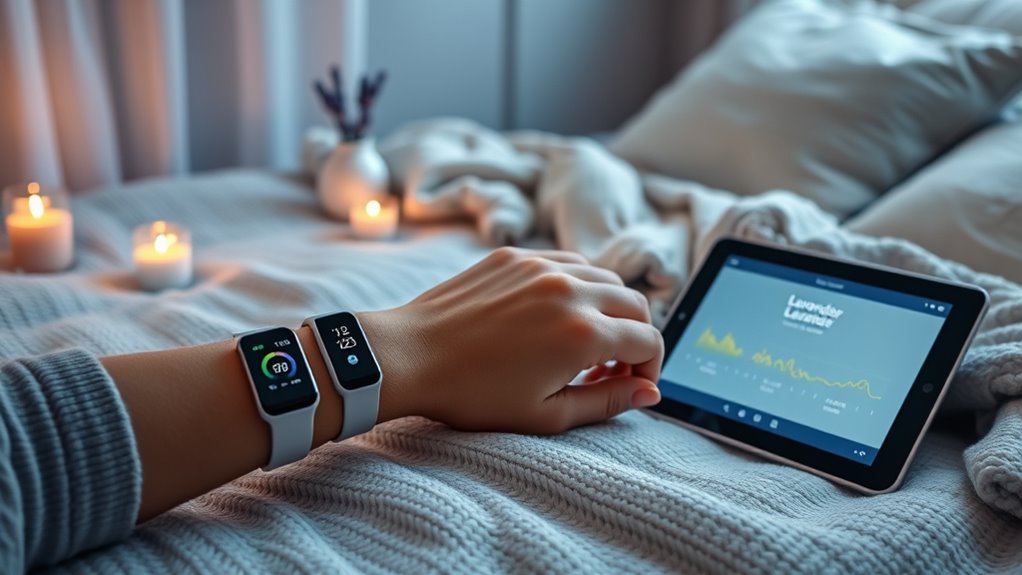
By analyzing your sleep data, you can identify patterns that signal restlessness or difficulty falling asleep. Use this insight to tailor relaxation techniques and enhance your bedtime routines. For example, if your data shows trouble falling asleep after screens, consider these steps:
Analyzing sleep data helps identify patterns and personalize relaxation techniques for better, more restful nights.
- Practice deep breathing exercises to calm your mind.
- Incorporate gentle stretches or yoga before bed.
- Try progressive muscle relaxation to ease tension.
- Establish a consistent bedtime routine that signals your body it’s time to wind down.
These techniques create a peaceful environment, helping you shift smoothly into sleep. Adjust your relaxation methods based on your data, making your bedtime routines more effective and personalized. Over time, you’ll notice improved sleep quality and a more restful night.
Set Realistic Goals and Track Your Progress
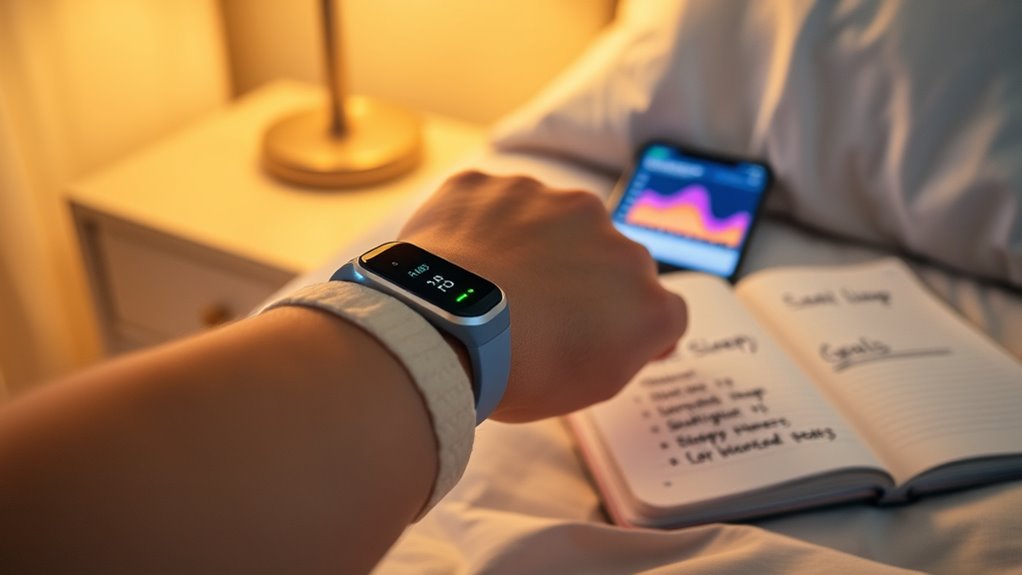
Setting realistic goals is essential for making meaningful progress with your sleep improvement efforts. When you set achievable targets, you stay motivated and avoid frustration. Focus on specific, measurable goals like increasing your sleep duration by 15 minutes or reducing bedtime variability. Tracking progress helps you see how well you’re meeting these goals and highlights patterns or setbacks. Use your sleep tracker data to evaluate whether your efforts are paying off, and adjust your goals accordingly. Remember, progress may be gradual, so celebrate small wins along the way. By setting goals that challenge yet remain attainable, and consistently tracking your progress, you’ll build sustainable habits that improve your sleep quality over time.
Make Lifestyle Changes Supported by Your Data

Using your sleep tracker data as a guide allows you to identify specific habits that may be affecting your rest. Once you see patterns, you can make targeted lifestyle changes. Here are four ways to improve your sleep:
Using your sleep data helps identify habits to improve your rest and overall health.
- Adjust your diet to include sleep-friendly foods and avoid heavy meals before bedtime.
- Manage stress through relaxation techniques like meditation or deep breathing, reducing nightly arousal.
- Create a consistent sleep schedule that supports your natural rhythms, making it easier to fall asleep and stay asleep.
- Limit screen time before bed to reduce blue light exposure, which can interfere with melatonin production.
Implementing these changes based on your data can lead to more restful nights and better overall health.
Combine Sleep Data With Other Health Metrics

Integrating your sleep data with other health metrics provides a more all-encompassing view of your overall well-being. By tracking factors like physical activity, nutrition, and stress levels alongside sleep quality, you gain insights into how these elements influence each other. For instance, poor sleep quality might correlate with higher stress or irregular exercise patterns. Additionally, dream analysis can reveal patterns or emotional states that impact rest. Combining these data points helps you identify root causes of sleep disruptions and develop targeted strategies. This holistic approach enables you to make informed adjustments to your routines, ultimately promoting better sleep, improved mental health, and enhanced daily performance. Using all available data streamlines your efforts toward sustained, healthier sleep habits.
Review and Refine Your Sleep Routine Regularly
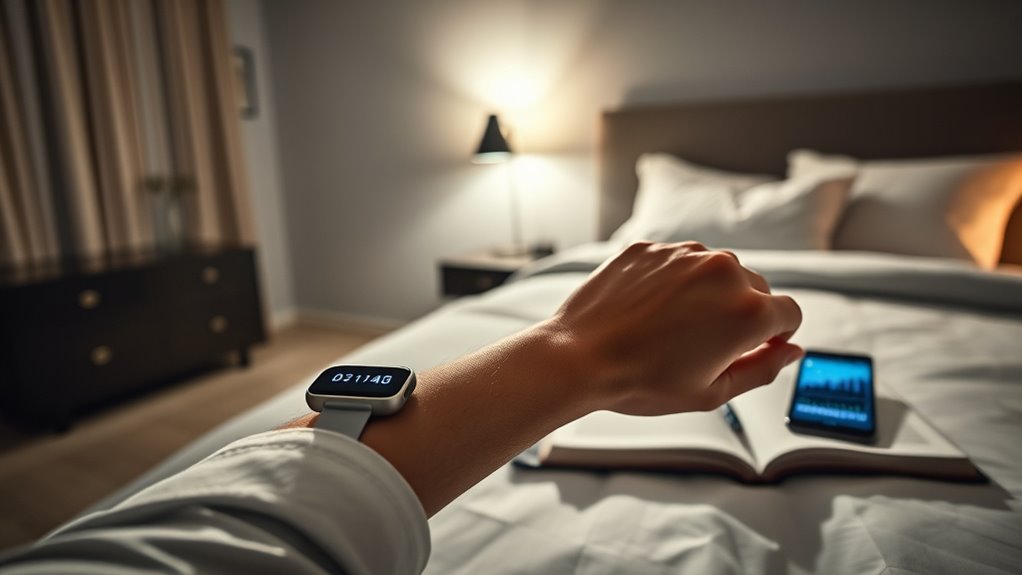
Regularly reviewing and refining your sleep routine is essential for maintaining ideal rest. Your sleep hygiene and bedtime routines are dynamic; what worked months ago might not today. Use your sleep tracker data to identify patterns and areas for improvement. Adjust your routines to reduce screen time before bed, create a calming environment, or set a consistent sleep schedule.
Regularly update your sleep routines by analyzing data and making adjustments for better rest.
Consider these steps:
- Recognize when your sleep quality dips and identify triggers.
- Experiment with relaxing bedtime routines to enhance sleep hygiene.
- Track how changes affect your sleep duration and restfulness.
- Refine your routines until you find what consistently promotes restorative sleep.
Frequently Asked Questions
How Accurate Are Sleep Trackers Compared to Clinical Sleep Studies?
Sleep trackers are generally less accurate than clinical sleep studies, but device calibration and data consistency matter. You can trust your tracker for general trends, but it may not capture detailed sleep stages precisely. Factors like movement and environmental conditions affect accuracy. Use your device as a helpful guide, but remember that clinical studies provide the most reliable data for diagnosing sleep disorders.
Can Sleep Trackers Detect Underlying Sleep Disorders Accurately?
Sleep trackers can help identify signs of sleep disorders, but they aren’t always accurate due to device limitations. While some trackers detect irregular breathing or movement, they can’t replace professional diagnosis. If you suspect a sleep disorder, use tracker data as a guide and consult a healthcare provider for proper testing. Relying solely on a device might miss critical issues, so professional evaluation remains essential for accurate diagnosis and treatment.
How Often Should I Review My Sleep Data for Best Results?
You should review your sleep data weekly to establish an ideal frequency for tracking progress. Regular data review helps you identify patterns, track improvements, and spot issues early. By staying consistent, you can adjust your habits effectively. Don’t wait too long; frequent reviews ensure you stay aware of your sleep health and make timely changes for better rest. This approach maximizes your sleep management and overall well-being.
Are There Privacy Concerns With Sharing My Sleep Data?
You should be aware that sharing your sleep data raises privacy concerns. Always check the app’s privacy policies and data security measures before sharing or syncing your information. Some companies might store or share your data with third parties, risking your privacy. To protect yourself, choose apps with transparent privacy policies and strong data security practices, and limit sharing unless you’re comfortable with how your sleep data is handled.
Can Sleep Trackers Help Improve Sleep for Shift Workers?
Yes, sleep trackers can help you navigate shift work challenges. They monitor your sleep patterns and reveal insights about your rest quality, enabling you to make targeted sleep schedule adjustments. By understanding your body’s responses, you can optimize your sleep even with irregular hours. This real-time feedback keeps you alert to changes needed, helping you break through exhaustion and reclaim better rest amidst unpredictable shift schedules.
Conclusion
Think of your sleep journey as charting a vast, starry sky. Your sleep tracker is the guiding constellation, revealing hidden patterns and guiding you toward brighter mornings. By reading these signals and adjusting your course—your routine, environment, and habits—you’ll steer toward better rest. Keep exploring, refining your approach, and soon, restful nights will become your guiding stars, illuminating a healthier, more energized you. Your voyage to ideal sleep is just beginning.