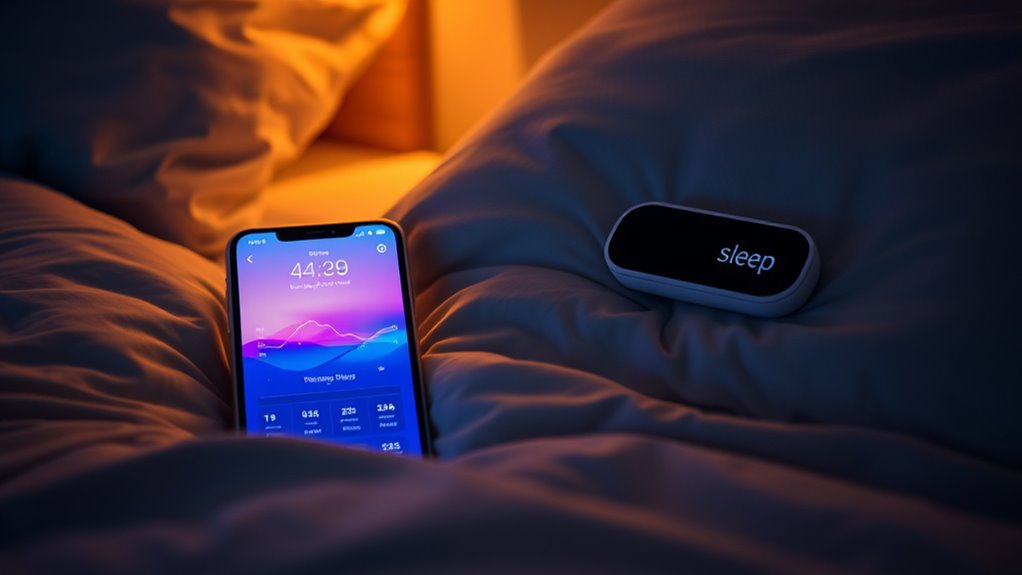

If you want an affordable, easy way to track your sleep, apps on your phone are convenient and quick, but they may lack accuracy and detailed insights. Dedicated devices use advanced sensors for better data, but they can be more expensive and less comfortable to wear. Your choice depends on whether you prioritize simplicity or precision. Keep exploring to understand how each option can fit your sleep tracking needs better.
Key Takeaways
- Sleep tracker apps are cost-effective and easily accessible, while dedicated devices offer higher accuracy with advanced sensors.
- Apps depend on phone sensors and placement, which may reduce data reliability; dedicated devices use specialized sensors for better precision.
- Apps provide quick, simple insights suitable for beginners; dedicated devices deliver detailed sleep analysis but involve more setup.
- Apps lack physiological monitoring, limiting detection of subtle sleep issues; dedicated devices often include biometric sensors for comprehensive data.
- Long-term health tracking is easier with dedicated devices due to their in-depth analysis capabilities, whereas apps are ideal for quick, initial assessments.
Advantages and Disadvantages of Sleep Tracker Apps

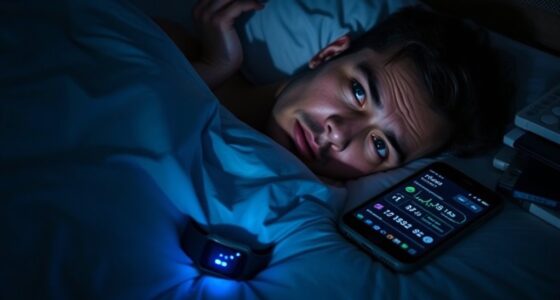
Sleep tracker apps are popular because they’re affordable and easy to access on your smartphone. They can give you quick insights into your sleep quality without extra equipment. However, their accuracy can vary, affecting how well they reflect your actual sleep patterns. One advantage is that they don’t require frequent charging, so battery life isn’t usually a concern. But, since they rely on sensors in your phone or microphone, they might miss subtle sleep disruptions. Additionally, apps depend on your phone’s placement, which can impact data accuracy. Despite their convenience and cost-effectiveness, they may not provide the detailed insights that dedicated devices offer, and their sleep quality assessments might not always be precise. Still, they’re a handy starting point for tracking your rest. Sound vibrations and the science behind how different frequencies influence sleep quality suggest that dedicated devices might deliver more nuanced data. Furthermore, sensor technology improvements in dedicated devices allow for more comprehensive sleep analysis compared to general app-based solutions. For example, dedicated devices often incorporate advanced algorithms that better interpret sleep stages and disturbances. Moreover, the integration of biometric sensors in dedicated devices enables more accurate tracking of physiological signals during sleep, enhancing overall data reliability. Additionally, understanding the cryptid mysteries related to nocturnal creatures can shed light on why some people experience unusual sleep disturbances or vivid dreams.
Benefits and Drawbacks of Dedicated Sleep Devices

While sleep tracker apps offer convenience and affordability, dedicated sleep devices often provide more in-depth insights into your rest. These devices typically feature higher sensor accuracy, capturing detailed data on your sleep stages, breathing, and movement. This precision helps you better understand sleep patterns and identify issues. Additionally, dedicated devices often include specialized sensors that enhance data quality beyond what smartphone cameras or microphones can detect. The use of advanced sensor technology can significantly improve the reliability of sleep measurements. Moreover, many dedicated devices incorporate sleep scoring algorithms that analyze data more comprehensively, leading to more precise assessments. Some dedicated devices also utilize clinical-grade sensors, which are designed to meet higher standards of accuracy and reliability. Furthermore, these devices may integrate long-term health tracking features, providing insights into how sleep impacts overall wellness. However, dedicated devices may sacrifice some user convenience; they often require wearing a device or placing sensors on your bed, which can feel intrusive or inconvenient. They’re usually more expensive and less portable than apps. Despite this, many users find the detailed data and improved accuracy worth the extra effort. Ultimately, dedicated sleep devices excel in providing comprehensive sleep analysis, but their setup and cost can be drawbacks for those seeking simplicity and affordability.
Frequently Asked Questions
How Do Sleep Tracker Apps Handle Privacy and Data Security?
Sleep tracker apps prioritize your privacy by using data encryption to protect your information. They typically require your explicit user consent before collecting or sharing data, ensuring transparency. However, it’s important to review their privacy policies, as some apps might share data with third parties. You should stay informed about how your sleep data is handled, and always opt for apps that emphasize strong security measures and clear user consent protocols.
Can Dedicated Sleep Devices Improve Sleep Quality More Than Apps?
Did you know dedicated sleep devices often have 90% accuracy compared to apps? Yes, they can improve your sleep quality more because they provide precise data and insights. Plus, their user convenience means you don’t need to carry your phone or remember to open an app. This accuracy helps you identify issues like sleep apnea or restless nights, so you can make better adjustments for truly restorative sleep.
Are Sleep Tracker Apps Suitable for People With Sleep Disorders?
Sleep tracker apps can be helpful, but if you have a sleep disorder, they might not be enough for an accurate diagnosis. You should consult a healthcare professional for proper assessment. While apps can give you general insights, concerns about app accuracy mean they shouldn’t replace medical tests. For serious issues, a sleep specialist can provide extensive evaluation and tailored treatment options.
What Is the Long-Term Cost Difference Between Apps and Dedicated Devices?
You’ll find that the long-term expenses for sleep tracker apps are generally lower since you don’t need to worry about device maintenance or replacements. Apps usually require a one-time purchase or subscription, making them more budget-friendly over time. Dedicated devices, however, can incur ongoing costs for updates, repairs, or replacements, which can add up. So, if you’re budget-conscious, apps tend to be more cost-effective long-term.
Do Sleep Devices Require Professional Setup or Calibration?
Most sleep devices don’t require professional setup, but you might need to do some device calibration to guarantee accuracy. Calibration usually involves following the manufacturer’s instructions, such as placing sensors correctly or syncing with your app. While professional setup isn’t necessary, taking the time to calibrate your device properly can improve data quality. If you’re unsure, check the user manual or contact customer support for guidance.
Conclusion
Choosing between sleep tracker apps and dedicated devices depends on what you value most: convenience, accuracy, or insights. Apps offer ease and affordability, while dedicated devices provide precision and detailed data. Consider your priorities—simplicity or depth, flexibility or consistency. Ultimately, whether you prefer the quick check or the extensive analysis, both options aim to improve your sleep. Decide which suits your lifestyle, embrace your choice, and take control of your sleep health today.