Smart glasses with light therapy can be a natural, convenient way to improve sleep and mood. They use specific wavelengths of blue light to help regulate your circadian rhythm, boosting alertness during the day and promoting sleep at night. Wearing these glasses during daily activities offers a portable alternative to traditional therapy boxes. If you want to discover how these devices can fit into your routine, there’s plenty more to explore.
Key Takeaways
- Light therapy glasses can deliver controlled blue light pulses to improve alertness and regulate circadian rhythms, aiding sleep and mood.
- They offer a portable, non-bulky alternative to traditional light therapy devices for SAD and insomnia management.
- Wearing these glasses during daily routines provides a natural way to boost mood and energy, especially in darker months.
- Managing blue light exposure in the evening with glasses helps enhance melatonin production and sleep quality.
- These smart glasses leverage circadian biology to support sleep, mood, and overall well-being naturally and conveniently.
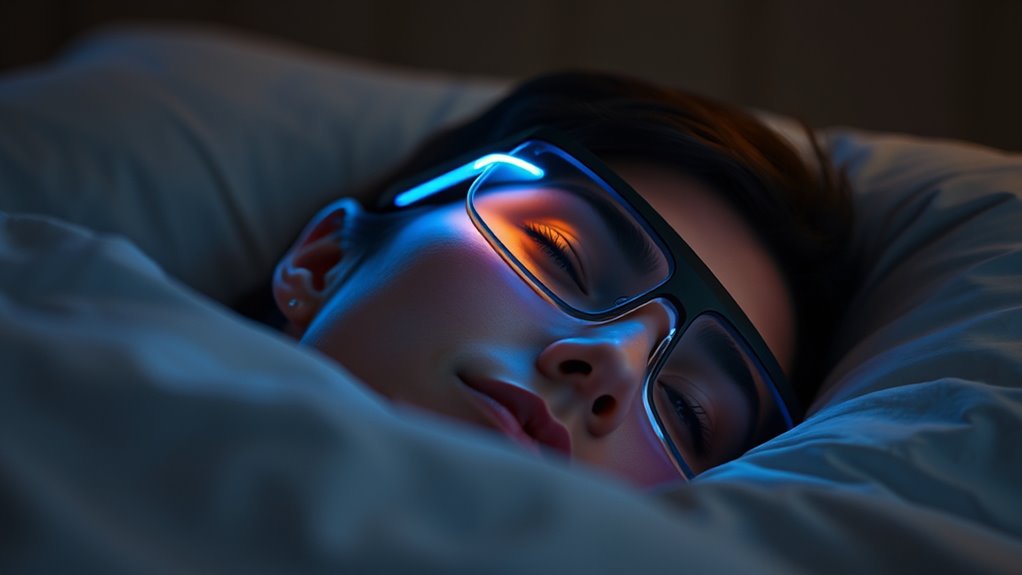
Have you ever wondered if your glasses could do more than just correct your vision? Today’s smart glasses are venturing into new territory, especially when it comes to improving sleep and combating issues like SAD and insomnia. These innovative devices often incorporate light therapy features, harnessing specific wavelengths of light to influence your body’s internal clock. One of the key elements in this technology is managing blue light exposure, which plays a pivotal role in regulating your circadian rhythm—the natural cycle that tells your body when to sleep and wake.
During the day, exposure to blue light from screens and natural sunlight helps keep you alert and awake, but at night, too much blue light can hinder your ability to fall asleep. Smart glasses designed for sleep address this by filtering out or reducing blue light exposure in the evening, helping your circadian rhythm stay aligned with natural day-night cycles. Alternatively, some models emit carefully controlled pulses of blue light in the morning, mimicking natural sunlight to signal to your brain that it’s time to wake up. This targeted light therapy can be especially beneficial if you experience SAD or seasonal depression, as it provides a gentle boost of light that can elevate your mood and energy levels without the need for bulky lightboxes.
Smart sleep glasses reduce blue light at night and mimic sunlight in the morning to regulate your circadian rhythm.
Using these glasses is straightforward. In the morning, you might wear them for a few minutes to simulate sunlight, which helps reset your internal clock and improves your alertness throughout the day. In the evening, you can wear them to block or filter blue light emitted by screens—laptops, phones, tablets—which otherwise suppress melatonin production, the hormone responsible for sleepiness. By regulating blue light exposure, smart glasses help maintain your circadian rhythm, making it easier to fall asleep at night and wake feeling refreshed.
Many people find that this targeted approach is more convenient and less disruptive than traditional light therapy boxes, especially since you can wear the glasses during your usual activities. Over time, this can lead to a more consistent sleep schedule, better quality sleep, and a noticeable lift in mood, particularly during darker months when SAD tends to worsen. Additionally, energy-efficient cloud solutions are making these devices more accessible and sustainable, ensuring their benefits can be enjoyed widely. Overall, these smart glasses are a promising tool for anyone looking to optimize their sleep and mood naturally, leveraging the power of light and understanding your body’s circadian rhythm. They’re a compact, effective way to harness the benefits of light therapy without major lifestyle changes or expensive equipment.
Frequently Asked Questions
Are Light Therapy Glasses Safe for Children?
Light therapy glasses are generally not recommended for children due to concerns about child safety and the lack of clear age restrictions. You should consult a healthcare professional before giving any light therapy device to a child, as their eyes and skin are more sensitive. It’s important to prioritize safety and follow expert advice to confirm the treatment is appropriate and safe for your child’s age and health needs.
How Do Light Therapy Glasses Compare to Traditional Light Boxes?
Light therapy glasses are more portable and convenient than traditional light boxes, allowing you to use them anywhere. They deliver high light intensity directly to your eyes, often with adjustable settings for comfort. Unlike bulky light boxes, these glasses are discreet and easy to wear, making it simpler to stick to your routine. Overall, they offer an effective, flexible alternative to traditional light therapy, fitting seamlessly into your daily life.
Can Wearing These Glasses Replace Medication for SAD?
Imagine a gentle dawn breaking your winter blues — light therapy glasses can be a promising alternative treatment, but they might not fully replace medication for SAD. While they help boost your mood naturally, some individuals still need medication for severe symptoms. You should consult your healthcare provider to determine if these glasses suit your needs as an effective, non-invasive option or if combining treatments offers the best relief.
What Are the Long-Term Effects of Using Light Therapy Glasses?
Long-term use of light therapy glasses can positively influence your circadian rhythm by regulating your light exposure, potentially improving sleep and mood over time. However, prolonged use might cause eye strain or headaches if not used correctly. It’s essential to monitor how your body responds and consult a healthcare professional if you notice any adverse effects. Proper, consistent use helps support healthy sleep patterns and mood stabilization.
Are There Any Side Effects From Using Sleep-Focused Light Glasses?
Using sleep-focused light glasses can cause some side effects like eye strain or skin sensitivity, especially if you wear them for extended periods. You might notice discomfort or headaches from bright light exposure, and sensitive skin could react to the material. To minimize these effects, follow the recommended usage guidelines, take breaks, and consult a healthcare professional if you experience persistent issues or discomfort while using the glasses.
Conclusion
Imagine slipping on a pair of sleek, glowing glasses as the evening deepens, their gentle light guiding your mind toward calm and restful sleep. With each wear, you’ll feel the warmth of hope brighten your nights, chasing away shadows of sadness and insomnia. These smart glasses become your personal lighthouse, illuminating a peaceful path through darkness. Embrace this innovative light therapy, and let your dreams unfold as softly as dawn’s first gentle rays.