
Using headphones or earbuds while sleeping can pose health risks like ear infections, hearing loss, and discomfort, especially if used frequently or at high volumes. They may also cause irritation from pressure or poor fit, and sudden movements could lead to injury or device damage. While some find them helpful for relaxation, you should weigh the potential risks carefully. To learn about safer alternatives and best practices, consider exploring more detailed guidance.
Key Takeaways
- Using sleep-specific, comfortable headphones can reduce discomfort but still poses risks of ear infections and hearing damage.
- Keep volume moderate and limit usage duration to protect hearing health and minimize infection risk.
- Avoid prolonged or nightly use; give ears regular breaks to prevent wax buildup and irritation.
- Be cautious of device displacement and movement during sleep, which can cause injury or device damage.
- Cease use if experiencing pain, discomfort, or signs of infection, and consult a healthcare professional.
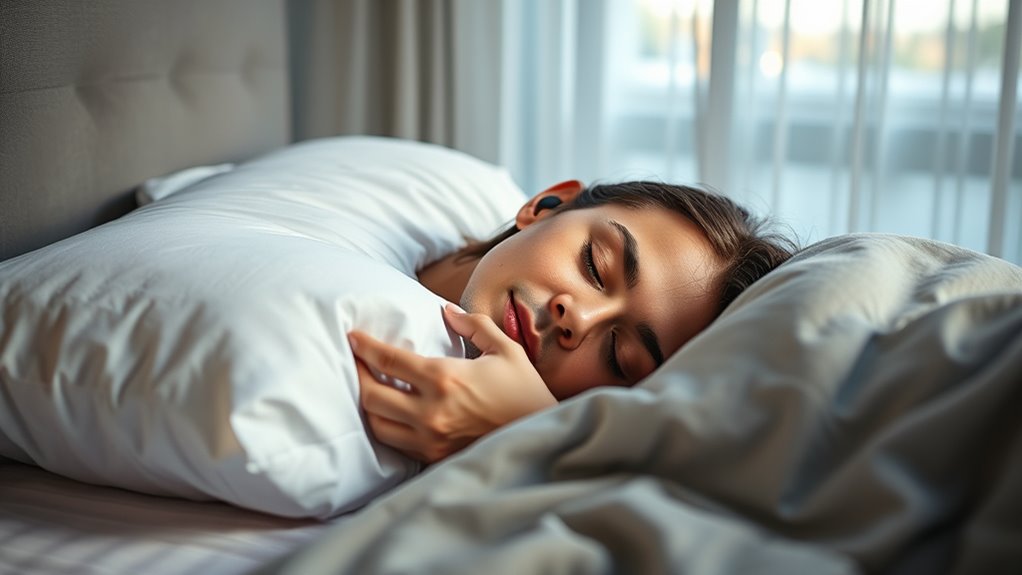
Many people find that listening to music or calming sounds with headphones or earbuds helps them fall asleep more easily. It’s a popular way to unwind after a long day and block out distracting noises. However, sleeping with headphones or earbuds isn’t without its risks, and you should consider both health and comfort before making it part of your nightly routine.
One of the main concerns involves health risks. Wearing headphones or earbuds for extended periods while sleeping can increase the chance of ear infections. When you keep earbuds in your ears overnight, moisture and bacteria can become trapped, creating an ideal environment for infections. Additionally, prolonged use can cause earwax buildup or even damage to your ear canal or eardrum. If the headphones press against your ear or cause discomfort, you might develop soreness or irritation. Over time, this can lead to more serious issues like hearing loss or persistent ear pain.
Comfort considerations are equally important. Not everyone finds wearing headphones or earbuds comfortable during sleep. Some models can feel bulky or put pressure on your ears, especially if you sleep on your side. This discomfort may disturb your sleep rather than improve it. Moreover, earbuds that aren’t well-fitted might fall out during the night, leading to interruptions or the need to constantly adjust them. When headphones or earbuds aren’t comfortable, you might wake up with sore ears, headaches, or feeling less rested.
There are also practical concerns about safety. Wearing headphones while sleeping can pose a risk if you move suddenly or turn over during the night. You could accidentally damage your ears or the device itself. If you sleep with high-volume sounds, it may also affect your hearing health over time, as prolonged exposure to loud music or sounds can cause hearing loss. Additionally, proper hygiene practices can help reduce the risk of infections and ear issues related to headphone use.
To reduce these risks, you should choose headphones designed specifically for sleep, which are often softer, more comfortable, and less intrusive. Keep the volume at a moderate level, and avoid wearing them for long stretches every night. It’s also advisable to give your ears a break now and then, allowing them to breathe and recover. Remember, prioritizing comfort and health is key — if you experience discomfort, pain, or notice any signs of infection, it’s best to stop using headphones while sleeping and consult a healthcare professional. Overall, while headphones or earbuds can help you relax and fall asleep, weigh the potential health risks and comfort issues carefully before making it a regular habit.
Frequently Asked Questions
Can Sleeping With Headphones Cause Hearing Loss?
Sleeping with headphones can potentially cause hearing loss if you listen at high volumes or use them frequently. Over time, this affects your long-term hearing health by damaging delicate hair cells in your ears. To protect yourself, maintain good headphone hygiene, clean your devices regularly, and keep volume levels moderate. Being mindful of these habits helps prevent hearing damage and preserves your ear health while sleeping.
Are Wireless Earbuds Safer Than Wired Headphones for Sleep?
Wireless earbuds are generally safer than wired headphones for sleep because they eliminate the risk of strangulation or tangled cords, making your sleep environment safer. However, consider your wireless safety by choosing reputable brands with good battery safety. Wired comfort offers a reliable connection but can cause discomfort from cords. Ultimately, pick what feels most comfortable and safe for you, ensuring a peaceful, uninterrupted night’s sleep.
How Do I Prevent Ear Infections With Sleep Headphones?
To prevent ear infections with sleep headphones, you should prioritize ear canal hygiene by cleaning your ears regularly and removing wax buildup. Choose headphones made from breathable, hypoallergenic materials to reduce irritation. Always clean the earbuds or headphones according to the manufacturer’s instructions, and avoid sharing them. Allow your ears to breathe by taking breaks from using them overnight, ensuring your ear health stays protected.
Is It Okay to Wear Headphones All Night Long?
Wearing headphones all night long isn’t ideal, as it can lead to discomfort and impact your sleep quality. You might find that headphone comfort decreases over time, making it harder to rest soundly. Plus, the risk of ear infections increases when you wear them for extended periods. It’s better to give your ears a break and explore other ways to enjoy sleep-friendly music or sounds without turning your nights into a marathon.
What Are the Best Headphone Types for Comfortable Sleep?
The best headphone types for comfortable sleep prioritize headphone comfort and sleep-friendly designs. Consider soft, lightweight over-ear headphones with plush ear cups that won’t cause pressure points. Alternatively, flat, slim earbuds or sleep-specific headbands with built-in speakers offer comfort and security. These options help reduce discomfort and keep you relaxed all night. Choose headphones that fit snugly without tightness, ensuring a peaceful, undisturbed sleep experience.
Conclusion
So, while slipping on headphones or earbuds for sleep might seem like a modern solution, it’s wise to contemplate safety and comfort first. Think of it as a journey into the future—just like the flying cars in sci-fi movies—where convenience shouldn’t compromise your well-being. If you take precautions, you can enjoy your favorite tunes or podcasts without risking discomfort or harm. Remember, a good night’s sleep is priceless—no gadget can replace that peace of mind.