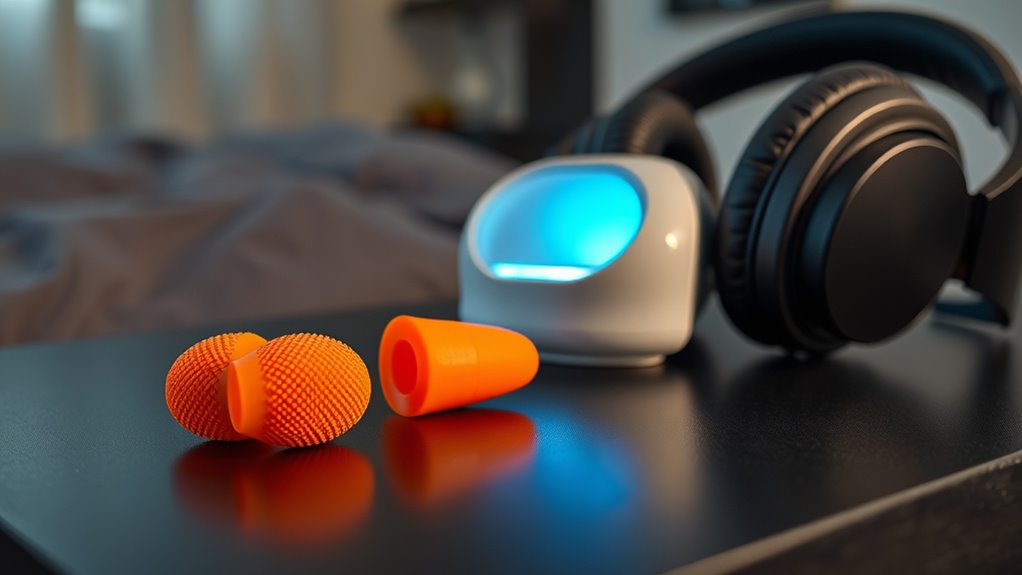

If you want maximum noise blocking with comfort, earplugs are a good choice, especially for direct ear coverage and portability. White noise machines create a steady sound environment without touching your ears, ideal if you prefer not to insert anything. Noise-canceling headphones offer active noise reduction and can double as listening devices but might be less comfortable for long-term sleep. To find the best solution for your noisy nights, consider your comfort and durability needs as you explore options.
Key Takeaways
- Earplugs provide direct, physical noise blocking ideal for maximum sleep protection.
- White noise machines mask ambient sounds without ear contact, offering comfort for sensitive ears.
- Noise-canceling headphones actively reduce noise and can serve as versatile, multi-use devices.
- Comfort, durability, and noise environment determine the most suitable option for noisy nights.
- For long-term durability and maximum effectiveness, high-quality earplugs or premium noise-canceling headphones are recommended.

If you’re seeking a way to block out disruptive sounds and improve your focus or sleep, earplugs with white noise and noise-canceling features can be a game-changer. Each option offers distinct advantages, so understanding their benefits helps you choose the best for your needs. When it comes to sleep comfort, earplugs often excel because they fit directly into your ear canal, creating a physical barrier against noise. Soft silicone or foam earplugs mold comfortably, reducing pressure and allowing you to rest undisturbed. Plus, high-quality earplugs are designed for durability, meaning they can withstand repeated use without losing their shape or effectiveness. Their simple design makes them easy to clean and store, ensuring long-term device durability. However, some people find earplugs uncomfortable over extended periods, especially if they have sensitive ears or if the fit isn’t perfect. Proper insertion is key to maximizing sleep comfort and preventing discomfort or earaches.
Earplugs offer durable, comfortable sleep protection by fitting directly into the ear canal and forming a physical noise barrier.
White noise machines, on the other hand, produce a steady, unobtrusive sound that masks other noises. They’re particularly effective if you dislike inserting objects into your ears or find earplugs uncomfortable. White noise devices are often portable and easy to use, with many models designed to last for years; their durability depends on the build quality and usage frequency. Unlike earplugs, they don’t physically contact your ear, which can be more comfortable for some and less intrusive. That said, they rely on electricity or batteries, so device durability involves considering battery life and build quality. A well-made white noise machine can serve you reliably night after night, but cheaper models may break down or produce inconsistent sound quality over time.
Noise-canceling headphones combine active noise reduction with comfort, offering an all-in-one solution. They’re ideal if you want to block out noise while still listening to calming sounds or music. Their durability varies greatly depending on brand and build quality, with premium models often built to withstand daily use. Comfort is a significant factor here; over-ear designs can be bulky and cause discomfort during sleep, while in-ear models might not fit securely or comfortably for everyone. Noise-canceling technology is powerful but can drain batteries quickly, so device durability also depends on battery longevity and overall construction.
Ultimately, your choice hinges on your priorities: if you want maximum sleep comfort and device durability, high-quality earplugs are a solid choice. If you prefer a non-intrusive, consistent sound environment, a white noise machine might suit you better. For those who want versatility and active noise reduction, noise-canceling headphones could be the best fit. Consider your comfort preferences, how often you’ll use the device, and your noise environment to make the most effective choice for peaceful, quiet nights.
Frequently Asked Questions
Are Earplugs Suitable for Allergy Sufferers?
Yes, earplugs can be suitable for allergy sufferers if you choose allergy-friendly materials like silicone or hypoallergenic foam. If you have skin sensitivity, look for soft, gentle options to prevent irritation. Make sure they are clean and free from irritants. Always wash your hands before inserting them, and replace them regularly to reduce the risk of infections. Properly selected, earplugs can help you sleep better without aggravating allergies.
Can White Noise Help With Tinnitus?
Yes, white noise can help with tinnitus by providing sound masking, which reduces the contrast between your tinnitus and silence. This can make the ringing less noticeable and offer tinnitus relief. You might find that a consistent, soothing background sound helps your brain focus elsewhere, easing the perception of tinnitus. Try different white noise devices or apps to discover what works best for your comfort and relief.
How Long Do Noise-Canceling Headphones Last?
Noise-canceling headphones typically last between 20 to 40 hours on a single charge, depending on the model. Did you know that some premium models can even reach 50 hours? Their battery life depends on usage and features like active noise cancellation. For durability, look for well-built models with sturdy materials and replaceable batteries. Proper care can extend their lifespan, ensuring you enjoy noise-free nights for a long time.
Are There Health Risks With Prolonged White Noise Exposure?
Prolonged white noise exposure can pose health risks, like hearing damage if the volume is too high, and sleep disruption if it’s too loud or inconsistent. You should use white noise at a safe volume and avoid long durations without breaks. Always monitor your comfort level, and if you notice any ringing or discomfort, reduce the volume or switch to a different sleep aid to safeguard your hearing and ensure restful sleep.
Which Option Is Best for Light Sleepers?
You’ll find earplugs are your best option as a light sleeper because they provide effective noise reduction directly at your ear, helping you create a quiet sleep environment. White noise machines can also work well by masking disruptive sounds with consistent background sound. Noise-canceling devices are less practical for sleeping, but combining earplugs with white noise offers a powerful noise reduction technique, ensuring you get restful, undisturbed sleep.
Conclusion
Ultimately, your choice depends on what feels right—sometimes, it’s no accident that earplugs, white noise, or noise-canceling devices align perfectly with your sleep needs. You might find yourself reaching for earplugs after a long day, only to discover white noise helps you drift off effortlessly the next night. In the end, it seems that finding the right solution is less about chance and more about tuning into what genuinely helps you enjoy peaceful, quiet nights.