Both blue light filter apps and physical glasses can help improve your sleep and reduce eye strain at night. Apps are easy to use, offer quick adjustments, and are budget-friendly, while glasses provide consistent, device-independent protection and direct eye filtering. Your choice depends on your routine and preferences. If you want to understand which solution is best for you and how to optimize your nighttime eye comfort, keep exploring further.
Key Takeaways
- Both apps and glasses reduce blue light exposure, improving sleep quality and eye comfort during nighttime device use.
- Glasses provide consistent, device-independent protection, while apps offer customizable, quick adjustments for different environments.
- Apps are more affordable and portable, but glasses offer longer-term, durable eye protection without altering device settings.
- Combining both methods can maximize blue light management and sleep benefits at night.
- User preference depends on comfort, routine, and whether they prioritize convenience or consistent, physical eye protection.
How Blue Light Filter Apps Work

Blue light filter apps work by adjusting the display’s color settings to reduce the amount of blue light emitted. When you activate the app, it typically guides you through screen calibration, ensuring the filter is tailored to your device. The app interface is designed to be user-friendly, allowing quick adjustments of color temperature and intensity. You can customize settings based on the time of day or your comfort level, making it easy to shift from a brighter display during the day to a warmer tone at night. These adjustments help minimize eye strain and improve sleep quality by limiting blue light exposure. Incorporating blue light filtering into your home digital environment can help create a more comfortable and sleep-friendly evening routine. Additionally, some apps include features like scheduled activation or auto-adjustment based on ambient lighting, enhancing overall visual comfort during nighttime use. Using these apps can also be a convenient way to support healthy sleep habits without the need for additional accessories.
The Effectiveness of Physical Blue Light Glasses

Physical blue light glasses are designed to block or filter blue light before it reaches your eyes, offering a direct method to reduce exposure. Their effectiveness depends on the quality of the lenses and how well they filter specific blue light wavelengths. Many users notice improved sleep quality and reduced eye strain after regular use. Additionally, these glasses have become fashionable, aligning with current fashion trends, making them a stylish accessory beyond their functional purpose. From an environmental perspective, high-quality glasses often have longer lifespans, reducing waste compared to disposable screen filters or frequent app updates. Overall, physical blue light glasses provide a reliable, tangible solution that actively minimizes blue light exposure and can complement your style while supporting sustainable choices.
Ease of Use and Accessibility
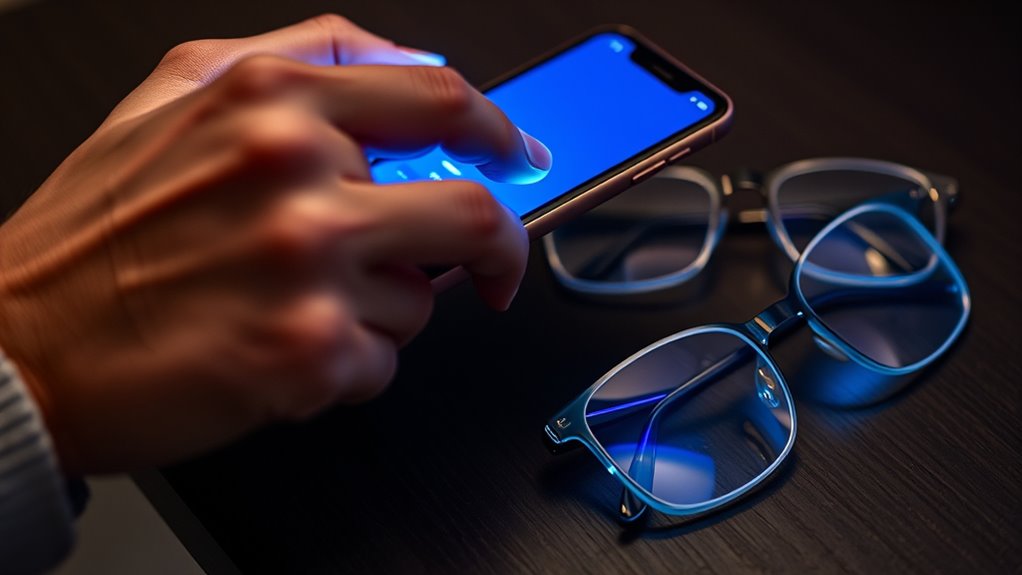
When it comes to ease of use and accessibility, blue light filter apps often have the advantage because they’re simple to install and require minimal setup. You can quickly download them on various devices, making them highly portable if you switch between smartphones, tablets, or computers. The user interface of most apps is designed to be intuitive, allowing you to activate or adjust blue light settings easily without technical knowledge. Unlike physical glasses, apps don’t need you to carry extra gear, and updates are automatic, ensuring smooth operation. This convenience makes apps particularly appealing if you value quick, hassle-free solutions that seamlessly integrate into your nightly routine. Overall, apps tend to be more accessible for most users due to their straightforward installation and user-friendly interfaces. Additionally, product compatibility ensures that these apps work smoothly across different devices and operating systems, which is an important aspect of digital accessibility. Ensuring that the app’s features are compatible with various device types can further enhance user experience and effectiveness.
Customization and Control Options
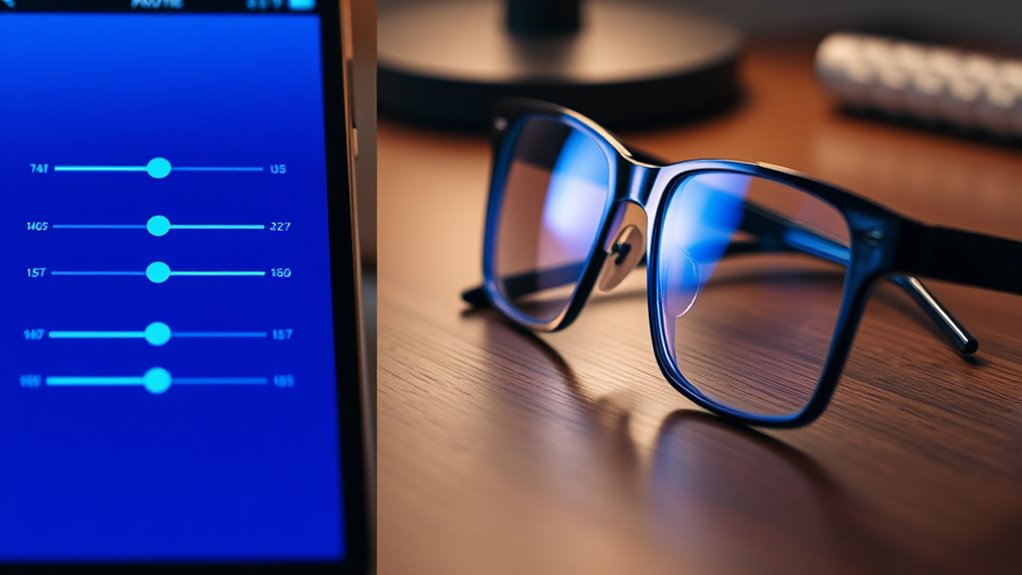
While blue light filter apps often come with a range of preset options, they also allow you to customize settings to better suit your preferences. You can adjust:
- Screen brightness to reduce glare without making the screen too dim.
- Color temperature for warmer tones that are easier on your eyes at night.
- Ambient lighting settings, syncing the filter with your environment to maintain consistent comfort.
- Free Floating features that enable the filter to adapt dynamically as lighting conditions change throughout your evening. Additionally, some apps offer automatic adjustments that learn your usage patterns for more seamless protection. These settings help enhance the overall user experience by making blue light management more intuitive and personalized, especially with features like adaptive filtering that respond to your environment in real-time. Implementing real-time monitoring can further optimize blue light reduction based on your specific lighting conditions.
Impact on Sleep Quality
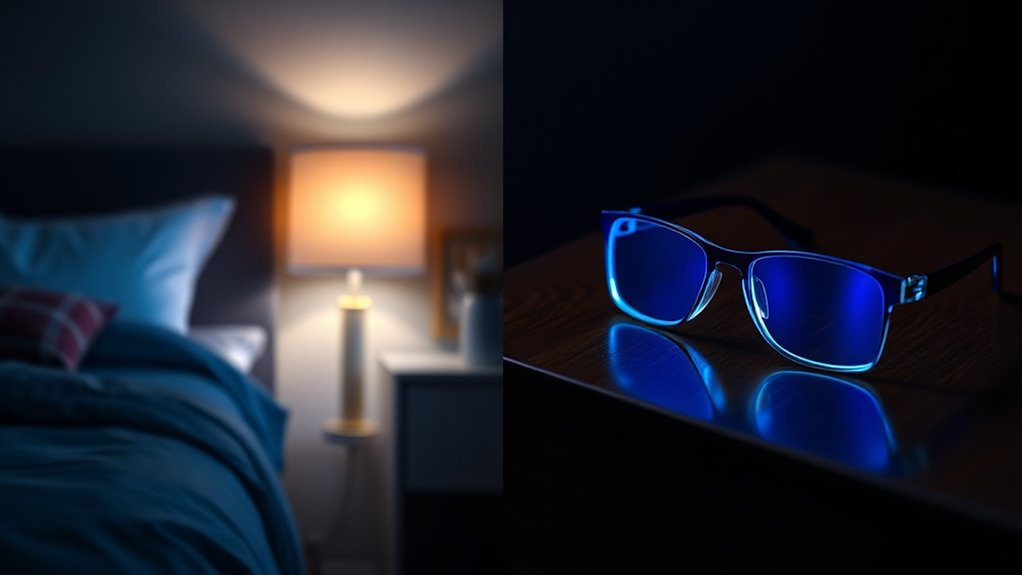
Blue light exposure can suppress melatonin production, making it harder for you to fall asleep. You might notice delays in sleep onset and disruptions in your sleep quality. Understanding how apps and glasses impact these factors can help you choose the best solution for better rest. Some precious metal investment options have also been explored for their potential health benefits, indicating a broader interest in mitigating blue light’s effects. Additionally, using comprehensive survival strategies such as mastering bug out bags can contribute to overall well-being and resilience, indirectly supporting healthier sleep patterns during stressful situations. Recognizing the impact on circadian rhythms can further guide effective choices in managing blue light exposure at night, especially considering the role of light exposure timing in regulating your internal clock. Moreover, awareness of sleep hygiene practices can enhance your ability to adapt to these interventions and improve sleep quality.
Melatonin Suppression Levels
Blue light exposure from screens can markedly suppress your body’s production of melatonin, the hormone that regulates sleep-wake cycles. Higher color temperature settings and increased screen brightness intensify this effect, making it harder to fall asleep. To minimize suppression:
- Lower your device’s color temperature to warmer tones.
- Reduce screen brightness during nighttime use.
- Use blue light filters or glasses to block specific wavelengths.
- Incorporating smart lighting that adjusts automatically can further reduce exposure at night.
Sleep Onset Delays
Excessive blue light exposure from screens not only suppresses melatonin but also delays your ability to fall asleep, disrupting your sleep cycle. When you’re exposed to blue light at night, your brain perceives it as daytime, which signals it to stay alert. This interference makes it harder to shift into sleep, increasing sleep onset delays. The longer it takes for you to fall asleep, the more your overall sleep quality suffers. Both blue light filter apps and physical blue light glasses aim to reduce this exposure, helping your body recognize it’s time to wind down. By minimizing blue light exposure, you support a smoother sleep cycle, allowing you to fall asleep faster and improve your rest at night. Blue light exposure can also cause eye strain and discomfort during prolonged screen use, further impacting your ability to relax before sleep. Implementing effective blue light mitigation strategies can enhance sleep quality by reducing these negative effects.
Sleep Quality Differences
While both blue light filter apps and physical blue light glasses aim to protect your sleep, they can have different effects on its overall quality. Blue light exposure affects your sleep cycle regulation, influencing how quickly you fall asleep and the depth of your rest. Here’s what you might notice:
- Apps may reduce blue light exposure on screens, helping you fall asleep faster but sometimes lacking consistency.
- Glasses offer a more reliable physical barrier, ensuring continuous blue light blocking even if you switch devices.
- Overall sleep quality improves more noticeably with glasses, as they better support sleep cycle regulation by consistently limiting blue light before bed.
- Incorporating safety considerations, such as proper fit and effective blocking capabilities, can further enhance the benefits of blue light protection at night.
Eye Comfort and Strain Reduction
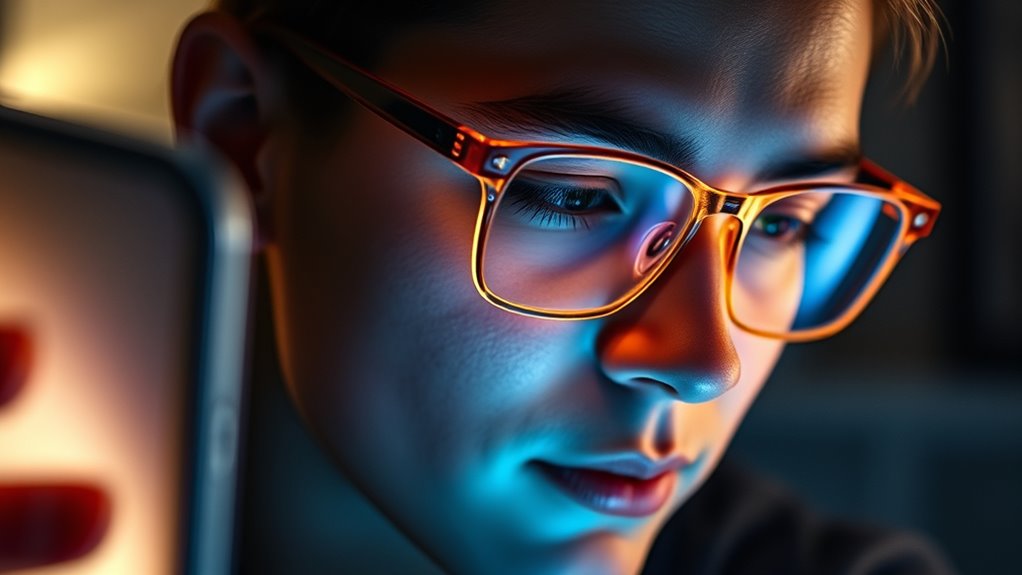
Both blue light filter apps and physical glasses aim to provide immediate visual relief by reducing glare and eye strain. Over time, they can support better eye health and lessen discomfort during long screen sessions. Plus, they help you stay focused without distractions, making your digital experience more comfortable. Incorporating simple systems into your routine can make consistent use easier and more effective. Additionally, selecting appropriate lenses can further enhance eye protection and comfort during extended screen time. Using blue light blocking technology in devices can also contribute to reducing overall exposure and improve sleep quality. Utilizing smart home technology like automated lighting adjustments can also help reduce eye strain by optimizing ambient light conditions.
Immediate Visual Relief
Blue light filter apps and physical blue light glasses can provide quick relief from eye strain, especially after long hours of screen time. They help reduce discomfort caused by blue light exposure, easing digital eye strain and making your eyes feel more relaxed. Here’s how they help you find immediate relief:
- Reduce glare – Both filters and glasses cut down harsh blue light, easing your eye’s workload.
- Minimize flickering – They lessen screen flicker, which can cause eye fatigue.
- Improve contrast – They enhance visual clarity, helping your eyes focus with less effort.
These solutions don’t eliminate eye strain completely but offer fast relief, making your eyes feel more comfortable during and after screen use. If you need quick comfort, both options are effective at providing instant visual relief.
Long-term Eye Health
To protect your eyes from long-term damage, consistently using blue light filter apps or physical glasses helps reduce overall eye strain and fatigue over time. Adjusting screen brightness to a comfortable level minimizes unnecessary light exposure, preventing your eyes from working harder than needed. Both solutions can help lower eye fatigue caused by prolonged screen use, especially at night. Blue light filters decrease the harshness of bright screens, reducing the effort your eyes must exert to focus. Over time, this can lessen discomfort, decrease the risk of developing digital eye strain, and support healthier eye function. By making these adjustments a routine, you give your eyes a better chance at long-term health, avoiding unnecessary stress that can lead to more serious issues later on.
Distraction-Free Focus
When your eyes are tired from prolonged screen time, distractions can make it harder to focus and increase strain. To achieve distraction-free focus, consider how blue light management helps promote mindful focus and productivity enhancement. Here are three ways to improve your focus:
- Use blue light glasses or apps to reduce glare, minimizing eye fatigue.
- Set specific work intervals, allowing your eyes to rest and stay sharp.
- Eliminate background noise or visual clutter to maintain better concentration.
Both blue light filter apps and physical glasses can help you stay on task, but glasses often provide more consistent eye comfort. By reducing strain, you’ll find it easier to stay engaged, boost your productivity, and maintain a focused mindset throughout your work or study sessions.
Cost and Investment Considerations
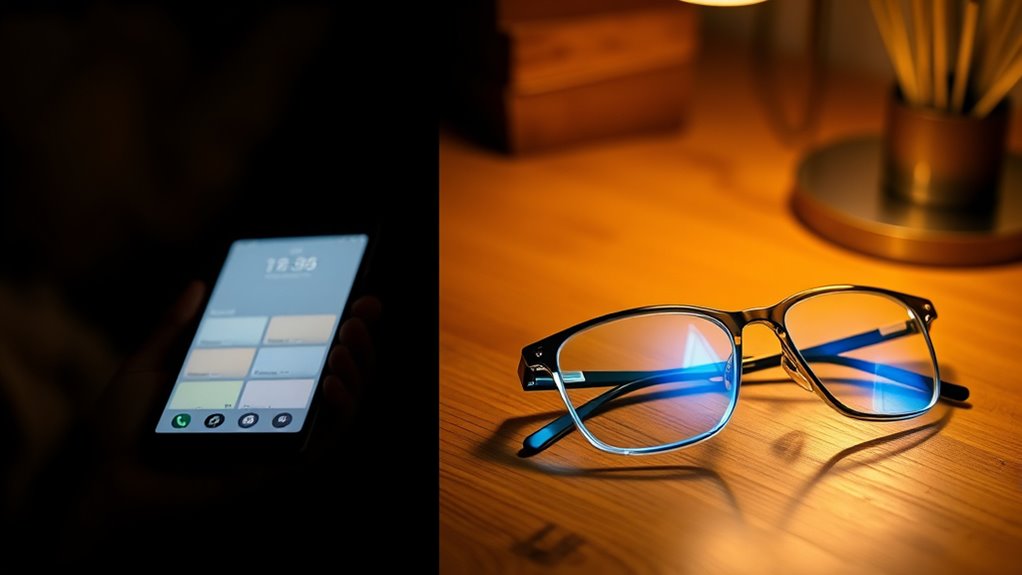
While both blue light filter apps and physical blue light glasses require an investment, their costs can vary substantially. If you’re considering budget considerations, apps are generally more affordable, often free or costing only a few dollars for premium features. They require no physical purchase, making the initial investment minimal. On the other hand, physical blue light glasses involve a higher upfront cost, typically ranging from $20 to over $100, depending on the brand and quality. This initial investment might seem steep, but glasses are reusable and don’t require ongoing payments. Your choice depends on your budget and how much you’re willing to spend upfront. Apps provide a low-cost, immediate solution, while glasses represent a longer-term investment that can offer consistent protection.
Compatibility and Device Restrictions
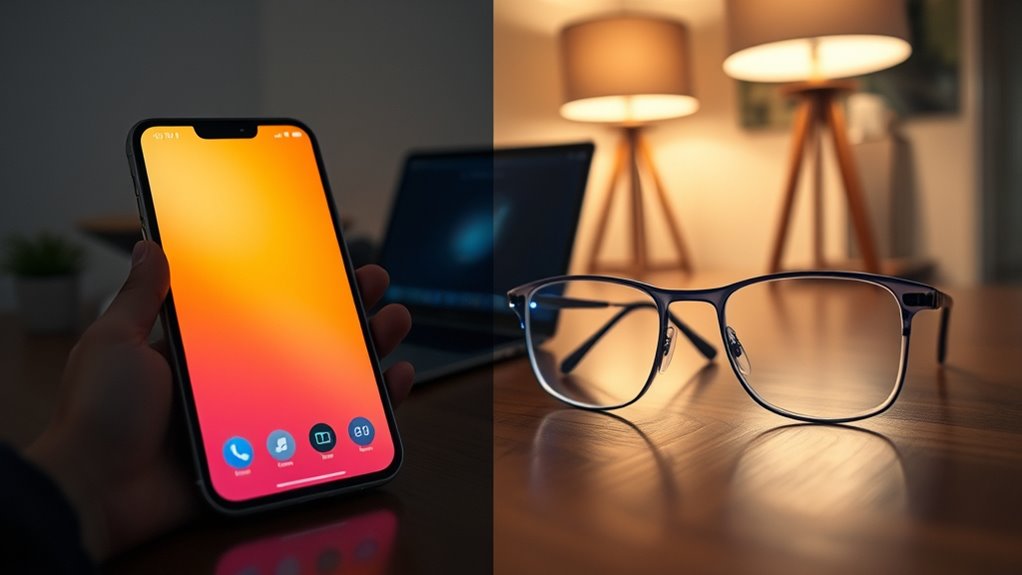
Compatibility and device restrictions can considerably impact your choice between blue light filter apps and physical blue light glasses. Your device’s compatibility and software restrictions determine which option works best. For example:
- Device Compatibility: Apps may only work on certain operating systems like iOS or Android, limiting your options if you use an older or less common device.
- Software Restrictions: Some apps require specific permissions or system settings, which might not be available on all devices.
- Physical Glasses: They are universally compatible—they don’t depend on device software or updates, making them a reliable choice regardless of your tech setup.
Assess your device’s specifications and restrictions first to decide which solution fits your needs best.
User Experience and Personal Preferences
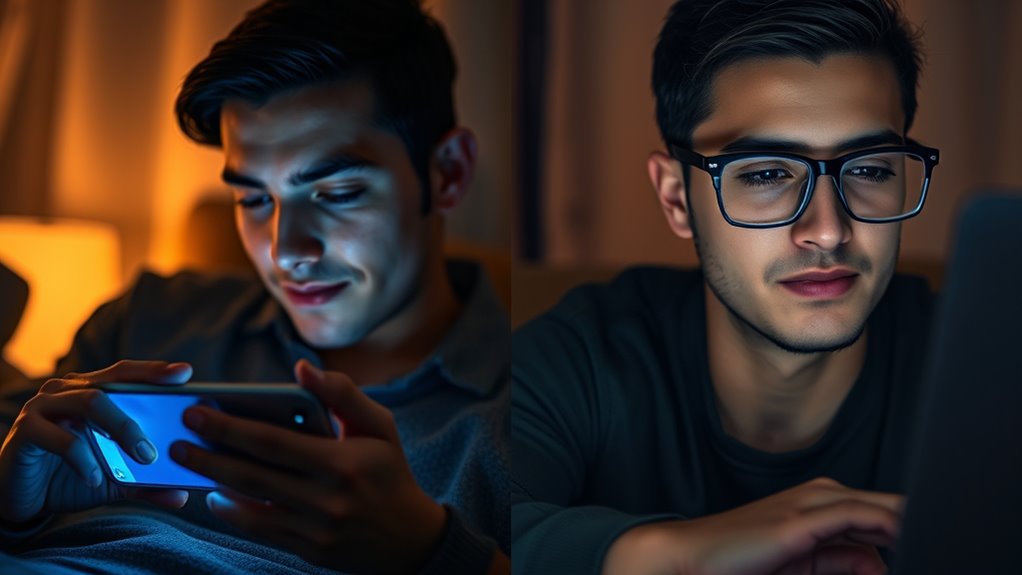
Your comfort with blue light solutions depends on how easy they are to use and how well they fit your personal preferences. You might find apps more flexible with customization, but glasses could offer a more natural experience. Considering your daily routines, which option helps you feel the most comfortable and in control?
Ease of Use
Choosing between blue light filter apps and physical blue light glasses often comes down to how easy they are to use in your daily routine. When considering ease of use, think about the setup process and ongoing adjustments. For apps:
- You need to download and configure settings, which can take a few minutes.
- It requires regularly enabling or disabling filters based on your usage.
- Updates might occasionally change the interface or features, affecting familiarity.
For glasses:
- The setup process is minimal—you just put them on.
- They require no technical adjustments or updates.
- Once fitted, use remains consistent without needing further setup.
Your choice depends on whether you prefer quick, straightforward use or a more integrated, hands-off experience.
Visual Comfort Levels
Since everyone’s eyes respond differently to blue light, personal comfort plays a significant role in user experience. You might find that adjusting screen brightness helps reduce eye strain, making your viewing more comfortable. Blue light filter apps often allow you to tweak color warmth, which can improve glare reduction and lessen discomfort during late-night screen time. On the other hand, physical blue light glasses can provide consistent glare reduction without affecting screen brightness, offering a natural visual comfort. Your preference depends on how your eyes feel after using each solution. Some users find that a combination of both methods offers the best relief, while others prefer one over the other based on comfort levels. Ultimately, choosing what feels best enhances your overall nighttime viewing experience.
Customization Options
Both blue light filter apps and physical blue light glasses offer different ways to customize your viewing experience, allowing you to tailor the solution to your preferences. With apps, you can adjust settings such as screen brightness and color customization to suit your comfort level. For example:
- You can set the filter intensity based on how sensitive your eyes are at night.
- You can modify screen brightness to reduce eye strain without affecting overall visibility.
- You can choose specific color tones, like warmer hues, to create a more soothing environment.
Physical glasses, on the other hand, typically offer limited customization but may come with adjustable features like nose pads or lens coatings. This allows you to personalize fit and comfort, enhancing your overall experience.
Making the Right Choice for Your Nighttime Routine

Deciding between blue light filter apps and physical blue light glasses depends on your nighttime routine and personal preferences. If you often keep your screen brightness high or use devices in brightly lit rooms, physical glasses can provide consistent protection without relying on app settings. They’re effective regardless of ambient lighting changes, ensuring your eyes stay protected even if your screen brightness fluctuates. On the other hand, if you prefer adjusting your screen settings or want flexibility in different environments, blue light filter apps allow quick customization. Consider how you use your devices at night—if you tend to have varied ambient lighting or switch between multiple screens, a combination of both might be your best bet. Ultimately, choose what seamlessly fits into your routine to promote better sleep.
Frequently Asked Questions
Do Blue Light Glasses Interfere With Normal Daytime Vision?
No, blue light glasses generally don’t interfere with your normal daytime vision. They’re designed to reduce blue light fatigue and daytime glare without distorting colors or sharpness. You might notice a slight tint, but it shouldn’t hinder your ability to see clearly. Wearing them during the day can help lessen eye strain, so you feel more comfortable and less fatigued, especially if you spend a lot of time on screens.
Can Blue Light Filter Apps Cause Any Screen Color Distortions?
Sure, your blue light filter app might turn your screen into a sunset, but don’t worry—it’s not causing permanent damage, just a slight dip in screen color accuracy. Sometimes, outdated apps with infrequent update schedules can cause more distortions, making your selfies look like Picasso paintings. Keep your app updated regularly to guarantee minimal color shifts, so you can enjoy a cozy glow without turning your device into an abstract art piece.
Are There Any Long-Term Health Benefits From Using Blue Light Glasses?
Using blue light glasses can offer long-term health benefits by protecting your eyes from strain and reducing potential damage, supporting long-term eye health. Additionally, wearing them may improve your sleep quality by minimizing blue light exposure before bed. Over time, these benefits can help maintain better vision and a more restful sleep pattern, making blue light glasses a smart choice for your overall well-being.
How Do Blue Light Filters Affect Screen Brightness and Clarity?
Blue light filters can slightly reduce screen brightness, making your display appear dimmer, but they usually don’t substantially impact visual clarity. You might notice a softer or warmer color tone, which can help reduce eye strain at night. However, if the filter is too strong, it may compromise sharpness and detail. Adjust the filter settings to balance comfortable brightness levels and maintain ideal clarity for your screen use.
Which Option Is More Eco-Friendly: Apps or Physical Glasses?
You’ll find that apps are more eco-friendly due to recyclability concerns and lower manufacturing impact. They don’t require physical materials, reducing waste and energy use during production. Physical glasses, while reusable, involve resource-intensive manufacturing and disposal challenges, especially if they contain plastics or non-recyclable frames. By choosing apps, you lessen environmental harm, making it a smarter, more sustainable option for protecting your eyes at night.
Conclusion
So, whether you choose blue light filter apps or physical glasses, remember—they both aim to save your sleep, yet neither can guarantee it. It’s ironic how the very tools designed to protect your eyes can sometimes be a distraction or just another gadget to forget about. In the end, the best choice depends on your habits and preferences. After all, there’s no perfect fix—just a little less screen time might be the real magic.