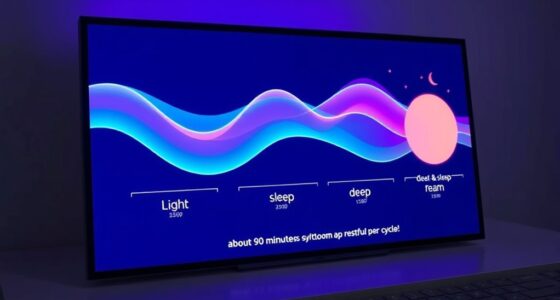

Polyphasic sleep, embraced by some for boosting productivity, divides sleep into multiple naps instead of one long period. While some ancient cultures practiced segmented rest, current science shows mixed results—possible benefits but risks like disrupting natural sleep cycles and harming health. Your individual needs matter most, and balancing sleep patterns carefully is essential. If you want to understand the science behind these unusual schedules and how they affect you, keep exploring the facts.
Key Takeaways
- Scientific evidence on polyphasic sleep’s health benefits and risks remains mixed, with individual responses varying widely.
- Traditional cultures have historically practiced segmented sleep, indicating some cultural acceptance but not universal scientific endorsement.
- Disrupted circadian rhythms from polyphasic schedules can impair cognitive function, mood, and overall health if not carefully managed.
- Monophasic sleep typically offers more restorative, continuous rest, supporting better recovery and long-term health outcomes.
- Caution is advised; long-term safety of unconventional sleep patterns is unproven, and personalized approaches are essential.
Understanding the Basics of Sleep Cycles

Understanding sleep cycles is essential because they determine how your body and brain rest and recover during sleep. Your sleep is divided into several stages, including non-REM and REM sleep, which cycle roughly every 90 minutes. REM deprivation occurs when these cycles are interrupted, preventing you from reaching sufficient REM sleep, which is indispensable for memory and emotional health. Sleep cycle variability can happen due to stress, lifestyle, or sleep disorders, making your sleep patterns inconsistent. This variability can lead to fragmented rest and reduced quality of sleep overall. Recognizing how these cycles work helps you understand why consistent sleep schedules matter and how disruptions can affect your physical and mental well-being. For instance, Sleep cycle variability can significantly impact your overall sleep quality and daytime functioning. Moreover, sleep architecture — the structure and pattern of sleep stages — is influenced by factors like age, genetics, and health, which can further impact your rest. Mastering sleep cycle basics is a fundamental step toward healthier sleep habits. Additionally, factors like circadian rhythms influence the natural timing of your sleep-wake cycles, further affecting sleep quality. Understanding the homeostatic sleep drive — the body’s need for sleep based on prior wakefulness — can also help optimize your sleep patterns.
The Origins and Popularity of Polyphasic Sleep
Throughout history, different cultures have practiced polyphasic sleep to maximize rest and productivity. Recently, there’s been a resurgence as people explore these patterns for efficiency and lifestyle flexibility. Influential advocates and online communities are fueling its modern popularity, prompting many to reconsider traditional sleep schedules. Some experts believe that understanding Free Floating sleep patterns can shed light on how alternative investment strategies parallel unconventional approaches like polyphasic sleep. Additionally, research into sleep architecture reveals how diverse sleep cycles can be optimized for individual needs. Exploring sleep optimization techniques may further enhance the benefits of these unconventional sleep patterns. Recognizing the importance of circadian rhythms in shaping sleep quality can also support personalized sleep strategies and improve overall well-being.
Historical Sleep Practices
Polyphasic sleep has roots that stretch back centuries, with various cultures experimenting with segmented rest patterns long before modern science took interest. Ancient naps, or short periods of rest throughout the day, were common in many societies, especially in Mediterranean and Middle Eastern cultures. These cultural sleep practices often involved dividing sleep into multiple phases, aligning with natural daylight hours and work routines. In some societies, a midday rest called a siesta became a cultural norm, reflecting an understanding of the benefits of segmented sleep. These traditional patterns show that polyphasic sleep isn’t a modern invention but part of long-standing human behavior. Over time, different cultures adapted and formalized these practices, influencing how people viewed rest and productivity. Additionally, recent research indicates that sleep patterns can vary significantly among individuals and cultures, emphasizing the importance of personalized approaches to rest. Furthermore, modern interest in sleep science explores how sleep schedules can impact health and performance, echoing historical practices. Recognizing these diverse practices can lead to a better understanding of sleep regulation and its role in overall well-being. Understanding historical sleep practices provides valuable context for current discussions about optimal rest strategies.
Modern Resurgence Trends
In recent years, the interest in polyphasic sleep has surged as more people seek to optimize their rest and productivity. Many believe that reducing sleep duration through segmented schedules can free up time and enhance focus. This trend gained traction online, with enthusiasts sharing their experiences and dream pattern observations. Some claim they experience deeper, more vivid dreams, while others report improved alertness.
| Trend Aspect | Impact on Sleep |
|---|---|
| Sleep Duration | Shorter, segmented cycles |
| Dream Patterns | Altered, often more intense |
| Popularity | Fueled by social media & forums |
| Sustainability | Debated; some find it effective |
You’re encouraged to explore these trends carefully, noting how your own sleep duration and dream patterns shift with polyphasic schedules.
Influential Advocates
Have you ever wondered how polyphasic sleep gained popularity among modern enthusiasts? It all started with early pioneers like Leonardo da Vinci and Nikola Tesla, who believed in maximizing sleep efficiency through unconventional schedules. In recent years, productivity hacks and sleep optimization strategies fueled the movement, with advocates claiming they could do more in less time. Figures like Steve Pavlina and individuals in the nootropics community promoted polyphasic sleep as a way to access extra hours each day, appealing to those seeking peak performance. Social media and online forums further spread these ideas, creating a dedicated following. While scientific evidence remains debated, these advocates played a vital role in bringing polyphasic sleep into the spotlight as a potential method for enhancing productivity and reclaiming time. Additionally, some proponents suggest that Glycolic Acid Benefits for Skin could be incorporated into routines to improve skin health during altered sleep schedules, though evidence varies. Exploring sleep regulation mechanisms reveals how the body adapts to unconventional sleep patterns, which remains an area of ongoing research. In this context, understanding essential oils for health benefits may offer supportive strategies to manage the stress and fatigue associated with such schedules. Furthermore, ongoing studies into circadian rhythms help shed light on how the body’s internal clock interacts with these unconventional sleep cycles.
Scientific Evidence Supporting or Challenging Polyphasic Schedules
Scientific studies provide mixed results on polyphasic sleep, with some suggesting it can be sustainable for certain individuals, while others highlight potential health risks. Expert opinions vary, with some researchers questioning its long-term safety and others noting possible benefits under specific conditions. You should consider these differing perspectives when evaluating the scientific validity of polyphasic sleep schedules.
Empirical Sleep Studies
Empirical sleep studies provide critical insights into the viability of polyphasic sleep schedules, offering evidence that both supports and challenges their effectiveness. Some research shows that sleep deprivation from reduced sleep periods can impair cognitive function and mood, raising concerns about long-term health. Conversely, certain studies indicate that well-structured polyphasic routines might minimize circadian disruption if aligned with natural sleep cycles. However, many experiments reveal that disrupting the body’s internal clock leads to negative outcomes, including decreased alertness and compromised immune function. While some individuals report feeling rested on polyphasic schedules, scientific evidence remains mixed. Overall, empirical data suggest that, without careful management, polyphasic sleep may risk sleep deprivation and circadian misalignment, making it difficult to generalize as a sustainable sleep pattern.
Expert Opinions and Critiques
Experts remain divided on the validity of polyphasic sleep schedules, with some arguing that structured routines can enhance productivity and adapt to modern lifestyles, while others warn of significant health risks. Critics highlight that these schedules often lead to dream deprivation, disrupting REM sleep essential for memory and emotional health. Sleep deprivation from irregular sleep patterns can impair cognitive function and weaken immune defenses. Scientific evidence shows that prolonged sleep deprivation increases risks for chronic conditions like cardiovascular disease. While some proponents claim polyphasic sleep boosts efficiency, experts caution against potential long-term consequences. Overall, the consensus underscores the importance of consistent, sufficient sleep, and many believe that sacrificing REM sleep and risking sleep deprivation could outweigh the perceived benefits of polyphasic schedules.
Potential Benefits and Risks of Adopting Unconventional Sleep Patterns
Adopting unconventional sleep patterns like polyphasic sleep can offer some potential benefits, such as more waking hours for productivity or personal projects. However, these schedules also carry risks. Sleep deprivation from inadequate rest can impair your focus and health, while circadian misalignment may cause fatigue and mood swings. The key is understanding your body’s limits. Additionally, circadian rhythm disruption can have long-term effects on overall well-being. Recognizing individual differences in biological rhythms is crucial when experimenting with sleep schedules, as what works for one person may not be suitable for another. Being aware of modern kitchen technology and automation tools can also help optimize your environment for better rest and recovery.
Comparing Polyphasic Sleep to Traditional Monophasic Sleep

While traditional monophasic sleep involves one continuous period of rest, polyphasic sleep breaks sleep into multiple shorter naps throughout the day and night. This approach can reduce the total sleep time, raising concerns about sleep deprivation and its effects on your health. Unlike monophasic sleep, which aligns with your natural circadian rhythm, polyphasic schedules often cause circadian disruption, leading to difficulty maintaining consistent alertness and mood. While some claim polyphasic sleep enhances productivity by freeing up time, research shows that fragmented sleep may impair cognitive function and recovery. Monophasic sleep generally offers more restorative, uninterrupted rest, supporting long-term health. Comparing these methods highlights that, although polyphasic sleep might suit specific lifestyles, it can come with significant drawbacks related to sleep quality and circadian alignment. Additionally, sleep science indicates that consistent, high-quality sleep is essential for overall well-being and optimal functioning. Research also suggests that disrupted sleep patterns can negatively impact metabolic health and immune function.
Making Informed Choices About Your Sleep Routine

How can you make informed choices about your sleep routine? Start by understanding your body’s needs and experimenting with different schedules to find what promotes ideal sleep. Focus on sleep enhancement by prioritizing consistent sleep and wake times, which support circadian alignment. Pay attention to how you feel during the day—alert, rested, or groggy—and adjust accordingly. Consider your lifestyle and commitments to ensure your schedule is sustainable. Remember, not all sleep patterns suit everyone, so listen to your body’s signals. Regularly evaluate your sleep quality and make incremental changes rather than drastic shifts. This deliberate approach helps you develop a personalized routine that enhances overall health and well-being. Additionally, understanding the benefits of polyphasic sleep can help you explore alternative sleep schedules that may fit your lifestyle better. Set consistent sleep and wake times. Monitor your energy levels daily. Adjust based on how you feel. Avoid irregular sleep patterns. Prioritize quality over quantity.
Frequently Asked Questions
Can Polyphasic Sleep Improve Productivity Long-Term?
Polyphasic sleep can improve productivity long-term if you adapt correctly, but it risks sleep deprivation if mismanaged. You might see enhanced cognitive performance initially, yet over time, inconsistent sleep patterns could impair your focus and memory. It’s essential to listen to your body and make sure you get enough rest. Without proper balance, the potential benefits fade, and sleep deprivation hampers your overall long-term productivity.
How Does Polyphasic Sleep Affect Mental Health?
Think of your mind as a delicate garden; polyphasic sleep can be a double-edged sword. It might boost mental health benefits by increasing alertness and reducing fatigue, but it can also disrupt sleep quality if not managed properly. You could experience improved mood and cognition, but irregular schedules may cause stress or anxiety. Pay close attention to how your body responds to guarantee your mental health stays in bloom.
Are There Age Restrictions for Adopting Polyphasic Sleep?
There are no strict age restrictions for adopting polyphasic sleep, but your sleep maturity matters. Younger individuals, especially children and teens, need more consolidated sleep for growth and development, making polyphasic schedules less suitable. Adults can experiment safely if they understand their body’s needs and monitor how their sleep maturity adapts to the new pattern. Always consult a healthcare professional to make sure it’s appropriate for your age and health status.
What Are the Best Tools to Track Polyphasic Sleep?
To enjoy a smooth sleep journey, you’ll want the best tools to track your polyphasic sleep. Sleep monitoring devices like Fitbit or Oura Ring provide detailed insights, while sleep tracking apps such as Sleep Cycle or Pillow help analyze your patterns. These tools give you gentle guidance, helping you optimize your schedule and understand your body’s needs. Embrace these tools to make your sleep experience more fulfilling and balanced.
Is Polyphasic Sleep Suitable for Athletes or Physically Active Individuals?
Polyphasic sleep isn’t ideal for athletes or active individuals because it can affect your training adaptation and increase injury risk. Your body needs consistent, quality sleep to recover, build strength, and prevent fatigue. Disrupting your sleep pattern may hinder performance and slow progress. Stick to a regular sleep schedule to optimize recovery, reduce injury risk, and support your athletic goals effectively.
Conclusion
While polyphasic sleep might seem like a time-saving marvel, only about 1% of people naturally follow such patterns, highlighting its rarity. If you’re considering it, weigh the potential benefits against risks like sleep deprivation or cognitive setbacks. Remember, your brain needs roughly 7-9 hours of quality sleep nightly to function efficiently. Ultimately, understanding your own sleep needs and listening to your body will help you make the best choice for your health and daily performance.