Blue light from screens and artificial lighting signals daytime to your brain, disrupting your sleep-wake cycle and suppressing melatonin, which makes falling asleep harder. This exposure, especially in the evening, can delay sleep onset, reduce sleep quality, and cause fatigue. Common sources include smartphones, computers, and bright lights. To improve your sleep, consider strategies like using filters, dimming screens, and creating a relaxing environment. Discover more ways to protect your sleep as you explore further.
Key Takeaways
- Blue light disrupts sleep by suppressing melatonin production and delaying sleep onset.
- Exposure from screens and artificial lighting, especially at night, worsens circadian rhythm misalignment.
- Scientific studies link blue light to poor sleep quality, fatigue, and sleep cycle disturbances.
- Using blue light filters, glasses, and reducing evening screen time can mitigate its negative effects.
- Establishing consistent sleep routines and minimizing artificial light exposure improve sleep health.
How Blue Light Affects Our Circadian Rhythm

Blue light plays a significant role in regulating your circadian rhythm, the internal clock that controls your sleep-wake cycle. When you’re exposed to blue light, especially during evening hours, it signals your brain that it’s daytime. This can cause circadian disruption, throwing off your natural sleep patterns. Blue light suppresses the production of melatonin, the hormone responsible for feeling sleepy. As a result, you might find it harder to fall asleep or experience reduced sleep quality. Prolonged exposure to blue light from screens can shift your internal clock, making you feel alert when you should be winding down. Managing your exposure in the evening helps maintain your circadian rhythm, leading to better sleep and overall health. Additionally, understanding the impact of light spectrum can help you choose better screen settings or lighting solutions to protect your sleep cycle. Using blue light filters or wearing specialized glasses in the evening can further mitigate these effects and support your natural sleep patterns. Recognizing the influence of light exposure on your biological clock is essential for maintaining healthy sleep habits. Being aware of the timing of exposure can also make a difference in preserving your circadian health. Incorporating light management strategies into your routine can significantly improve sleep quality and overall well-being.
The Role of Melatonin in Sleep Regulation
Have you ever wondered what triggers your body to feel sleepy at night? It’s primarily due to melatonin production, which is your sleep hormone. As daylight fades, your brain signals your pineal gland to produce more melatonin, helping you feel drowsy. This hormone plays a vital role in regulating your sleep-wake cycle, ensuring you get restful sleep when it’s dark. When blue light from screens or artificial lighting interferes, it suppresses melatonin production, making it harder to fall asleep. Without sufficient melatonin, your sleep quality diminishes, and you may feel restless or fatigued during the day. Understanding how melatonin works highlights the importance of managing light exposure to support healthy sleep patterns and maintain your overall well-being. Additionally, technological solutions like blue light filters and specialized glasses can help mitigate these effects. Recognizing the impact of light exposure on melatonin production underscores the importance of creating sleep-friendly environments. Proper light management can significantly improve your sleep quality and overall health.
Scientific Studies Linking Blue Light to Sleep Disruption

Research shows that blue light suppresses melatonin production, making it harder for you to fall asleep. Studies also reveal that exposure to blue light disrupts your circadian rhythm, throwing off your natural sleep cycle. Understanding these links can help you make better choices about your light exposure before bed. Additionally, being aware of sleep disruption factors can empower you to create a more restful environment. Incorporating smart lighting technology that adjusts to your circadian rhythms can further support healthy sleep patterns. Recognizing the impact of blue light exposure from screens and artificial lighting can enable you to adopt effective strategies for better sleep health. Being mindful of environmental considerations such as reducing light pollution can also contribute to improved sleep quality.
Melatonin Suppression Evidence
Numerous scientific studies have demonstrated that exposure to blue light in the evening can profoundly suppress melatonin production, a hormone essential for regulating sleep. This suppression makes it harder for you to fall asleep and stay asleep through the night. Researchers have found that blue light emitted from screens decreases melatonin levels more than other wavelengths. To counteract this, some turn to light therapy devices that minimize blue light exposure before bedtime. Melatonin supplements are also popular, helping to restore hormone levels and promote sleep. Evidence shows that reducing blue light exposure in the evening can improve sleep quality markedly. Staying mindful of light exposure may be your best defense against sleep disruption caused by melatonin suppression. Additionally, understanding the spectral composition of light can help you choose better lighting options for evening relaxation. Recent research also highlights the importance of light intensity in influencing melatonin levels and sleep quality. Moreover, adjusting the lighting environment can significantly enhance your overall sleep patterns and health. For example, employing blue light filters on electronic devices can further reduce melatonin suppression during evening hours, especially when combined with other sleep hygiene practices.
Circadian Rhythm Impact
Blue light exposure in the evening disrupts your body’s natural circadian rhythm, the internal clock that regulates sleep-wake cycles. This disruption causes circadian misalignment, making it harder to fall asleep and wake up refreshed. Light pollution from screens and artificial lighting amplifies this effect, extending blue light exposure late into the night. Scientific studies link blue light to delayed melatonin production and altered circadian timing, impacting overall sleep quality. To visualize this, consider the following:
| Effect of Blue Light | Impact on Circadian Rhythm |
|---|---|
| Light pollution | Circadian misalignment |
| Melatonin suppression | Sleep disruption |
| Evening exposure | Delayed sleep onset |
| Reduced alertness at night | Poor sleep quality |
Understanding these links highlights the importance of managing blue light exposure to maintain healthy sleep patterns.
Common Sources of Blue Light in Daily Life

You encounter blue light from many sources every day, especially at night. Your digital devices, like smartphones and tablets, emit significant blue light that can interfere with sleep. Additionally, LED and fluorescent bulbs, as well as outdoor sunlight, contribute to your overall blue light exposure. Understanding Berkley Vallone‘s insights into balanced designs can help you create a sleep-friendly environment by minimizing harsh lighting and incorporating calming decor. Incorporating lighting controls such as dimmers and timers can further reduce unnecessary blue light exposure during evening hours. Being aware of blue light filters and their effectiveness can also aid in protecting your sleep quality. Considering the impact of artificial lighting on circadian rhythms can inform your choices for healthier lighting options at home. Furthermore, choosing light sources with warmer color temperatures can significantly lessen blue light’s impact on your sleep cycle.
Digital Devices at Night
Many people use digital devices late into the night without realizing how much blue light they emit. These devices, including smartphones, tablets, laptops, and TVs, are major sources of blue light emissions that can disrupt sleep. Your screen time habits often extend into late hours, increasing your exposure and affecting melatonin production. To help reduce this impact, consider:
- Using night mode or blue light filters on your devices
- Setting a cutoff time for screen use before bed
- Limiting your overall screen time in the evening
- Opting for paper books instead of e-readers at night
Being mindful of these habits can considerably improve your sleep quality by minimizing unnecessary blue light exposure during your most vulnerable hours. Blue light exposure is a significant factor in sleep disruption, especially when it occurs close to bedtime.
LED and Fluorescent Bulbs
LED and fluorescent bulbs are common sources of blue light in daily life, especially since they are widely used for indoor lighting. LED technology has advanced to produce bright, energy-efficient lighting that’s popular in homes and offices. However, these bulbs emit significant blue light, which can interfere with your sleep if you’re exposed to them late at night. Fluorescent lighting, found in many fixtures, also contributes to blue light exposure, often without your awareness. Because both types are prevalent, they increase your overall blue light exposure during evening hours. Reducing exposure from LED and fluorescent bulbs, especially before bedtime, can help protect your sleep cycle. Using dimmer lights or warmer color temperatures can minimize blue light’s impact on your melatonin production. Understanding blue light’s effects can empower you to make better lighting choices for healthier sleep.
Outdoor Sunlight Exposure
Outdoor sunlight is a major natural source of blue light that influences your sleep-wake cycle. Daily sunlight exposure during outdoor activities helps regulate your circadian rhythm, promoting better sleep at night. However, excessive or poorly timed sunlight can disrupt this balance, especially if you’re exposed late in the day. Engaging in outdoor activities like walking, jogging, or gardening provides beneficial sunlight exposure, boosting your mood and alertness. Be mindful of the time of day to avoid overexposure, which can interfere with sleep onset. To maintain healthy sleep patterns, balance outdoor sunlight exposure with indoor rest and limit bright light in the evening. Proper outdoor sun exposure is essential for synchronizing your internal clock and supporting overall well-being.
Signs and Symptoms of Blue Light-Induced Sleep Problems

Have you noticed difficulty falling asleep or waking up feeling unrefreshed after screen time? You might be experiencing signs of blue light-induced sleep problems. Blue light and eye strain often go hand-in-hand, causing headaches, dry eyes, or blurred vision, especially after prolonged exposure. These physical symptoms can make relaxing at night harder, disrupting your sleep cycle. Additionally, blue light and mental health are connected; you may feel increased anxiety, irritability, or difficulty concentrating. Sleep disturbances such as tossing and turning or waking multiple times during the night are common indicators. If these signs persist, they could signal that blue light is affecting your sleep quality. Recognizing these symptoms early helps you take steps to improve your sleep and overall well-being.
Practical Strategies to Reduce Blue Light Exposure

If you’re noticing signs of blue light-related sleep issues, taking steps to limit your exposure can make a significant difference. You can adopt simple, practical strategies to protect your sleep. Start by using blue light filters on your devices, especially in the evening, to reduce eye strain and blue light exposure. Establish sleep-friendly routines, like turning off screens at least an hour before bed. Consider wearing blue light blocking glasses if you need to use devices late at night. Additionally, dimming your screen brightness and increasing ambient lighting can help signal your body that it’s time to wind down. Implementing these tactics can improve your sleep quality and make it easier to fall asleep naturally. Small changes can have a big impact on your overall sleep health.
Technology and Devices Designed to Protect Sleep

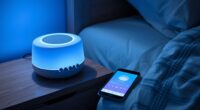
Technology and devices designed to protect sleep offer effective solutions for minimizing blue light exposure and improving rest quality. Blue light filters on screens reduce eye strain and help maintain melatonin levels. Sleep-friendly devices, such as smart lamps and e-reader covers, adapt lighting to evening hours, creating a more natural environment. These tools are easy to incorporate into your routine, ensuring you’re not exposed to excessive blue light before bedtime. Below is a table highlighting some options:
| Device Type | Key Feature |
|---|---|
| Blue light glasses | Block or filter blue light from screens |
| Screen filters | Attachments or software that reduce blue light |
| Sleep-friendly lamps | Adjust color temperature for evening use |
| E-reader covers | Reduce blue light emission on devices |
Using these tools can markedly improve your sleep quality.
Tips for Improving Sleep Hygiene in a Digital Age

While using blue light filters and sleep-friendly devices can help reduce exposure before bed, maintaining good sleep hygiene in a digital age requires additional mindful habits. Managing your screen time and establishing consistent sleep patterns are essential. Limit screen use at least an hour before bedtime to decrease blue light exposure. Create a relaxing pre-sleep routine that avoids electronics, such as reading or gentle stretching. Keep your bedroom cool, dark, and quiet to promote better sleep. Avoid caffeine and heavy meals close to bedtime, which can disrupt your sleep cycle. Prioritize a regular sleep schedule, even on weekends, to help regulate your internal clock. These small changes can considerably improve your sleep quality and help you wake refreshed each morning.
Frequently Asked Questions
Can Blue Light Exposure Affect Children’s Sleep Patterns Differently?
Yes, blue light exposure can affect children’s sleep patterns differently because it influences their developing circadian rhythms. As a parent or caregiver, you should be mindful of your child’s screen habits, especially before bedtime, as excessive blue light can delay sleep onset and disrupt sleep quality. Encouraging healthy screen habits early supports better child development and helps establish a routine that promotes restful sleep.
Are There Long-Term Health Consequences From Chronic Blue Light Exposure?
Chronic blue light exposure can lead to long-term health consequences like retinal damage and circadian disruption. As you spend extended hours exposed to blue light, especially from screens, it may damage your retina over time, increasing the risk of vision problems. Additionally, blue light can disrupt your circadian rhythm, affecting sleep quality and overall health. Protect your eyes by limiting screen time and using blue light filters, especially at night.
How Does Blue Light Influence Alertness and Cognitive Performance?
You might notice a boost in alertness and focus when exposed to blue light, as it suppresses melatonin and shifts your circadian rhythm. This boosts cognitive performance temporarily, helping you stay awake and alert. However, prolonged exposure can disrupt your natural sleep cycle, leading to fatigue and decreased mental clarity over time. Use blue light strategically to enhance productivity, but be mindful of its potential long-term effects.
Do Different Types of Screens Emit Varying Levels of Blue Light?
Yes, different types of screens emit varying levels of blue light intensity due to their screen technology. For example, LED screens generally emit more blue light compared to LCD or OLED screens. You should be aware that newer devices often incorporate blue light filters or night modes to reduce blue light exposure. Adjusting your device settings or choosing screens with lower blue light emissions can help protect your sleep and eye health.
Is Blue Light Exposure Linked to Increased Risk of Depression or Anxiety?
Yes, blue light exposure is linked to increased risks of depression and anxiety. It disrupts your circadian rhythm and suppresses melatonin production, making it harder for you to fall asleep and maintain restful sleep. Over time, this circadian disruption can affect your mental health, increasing vulnerability to depression and anxiety. To protect yourself, limit screen time before bed and consider using blue light filters on your devices.
Conclusion
Understanding how blue light impacts your sleep is essential in today’s digital world. Did you know that exposure to blue light before bed can delay melatonin production by up to two hours? By being mindful of your screen time and using protective strategies, you can improve your sleep quality. Don’t let blue light disrupt your rest—take control, reduce exposure, and enjoy healthier, more restful nights. Your sleep—and your well-being—will thank you.