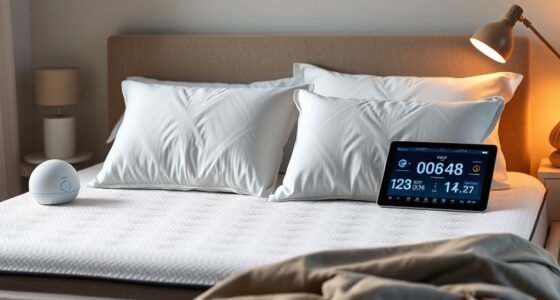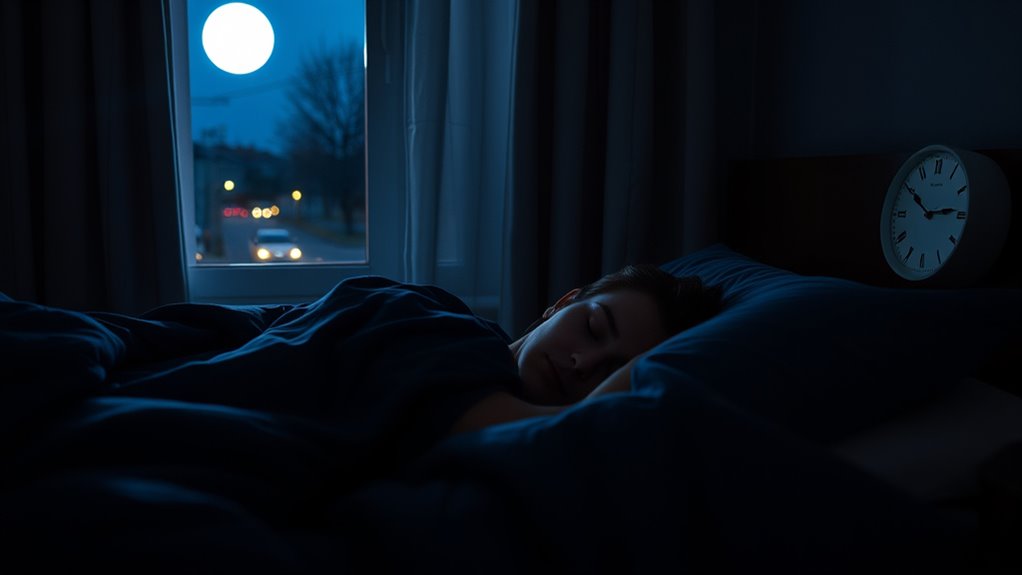

To stay asleep despite noise and disruptions, create a calm sleep environment by using white noise machines, blackout curtains, and soundproofing techniques to block or mask sounds. Maintain a consistent sleep schedule, avoid caffeine late, and establish relaxing pre-sleep routines. Wearing comfortable earplugs and keeping your room cool, dark, and quiet also help. If these tips aren’t enough, there are additional strategies to improve your sleep that you can explore further.
Key Takeaways
- Use sound masking devices or white noise machines to drown out disruptive sounds.
- Wear comfortable earplugs combined with background noise for optimal soundproofing.
- Create a sleep-friendly environment with blackout curtains, cool temperature, and minimal light.
- Establish calming pre-sleep routines and maintain a consistent sleep schedule to reduce internal disruptions.
- Seek professional help if sleep issues persist despite environmental adjustments and lifestyle changes.
Understanding the Causes of Light Sleep and Disruptions

Light sleep occurs when your body is more easily disturbed by external and internal factors, preventing you from reaching deeper, more restorative stages. During your sleep cycle, lighter stages are naturally more vulnerable, especially if environmental factors like noise, light, or temperature fluctuations disturb you. These disruptions can interrupt your progression into slow-wave sleep or REM, making it harder to achieve restful sleep overall. If your surroundings are noisy or inconsistent, your brain stays alert, keeping you in lighter sleep stages longer. Internal factors like stress, anxiety, or health conditions can also make your sleep lighter, increasing the likelihood of waking up. Understanding how these elements influence your sleep cycle helps you identify why you might be more sensitive to disruptions and how to better manage them. Implementing strategies such as controlling ambient noise can significantly reduce these disturbances and improve your sleep quality. Recognizing the influence of environmental factors is essential for developing effective strategies to protect your sleep, especially considering how modern technology can sometimes contribute to sleep disruptions. Additionally, sleep environment adjustments can help create a more consistent and calming setting, supporting deeper sleep stages.
Creating a Sleep-Friendly Environment to Minimize Noise
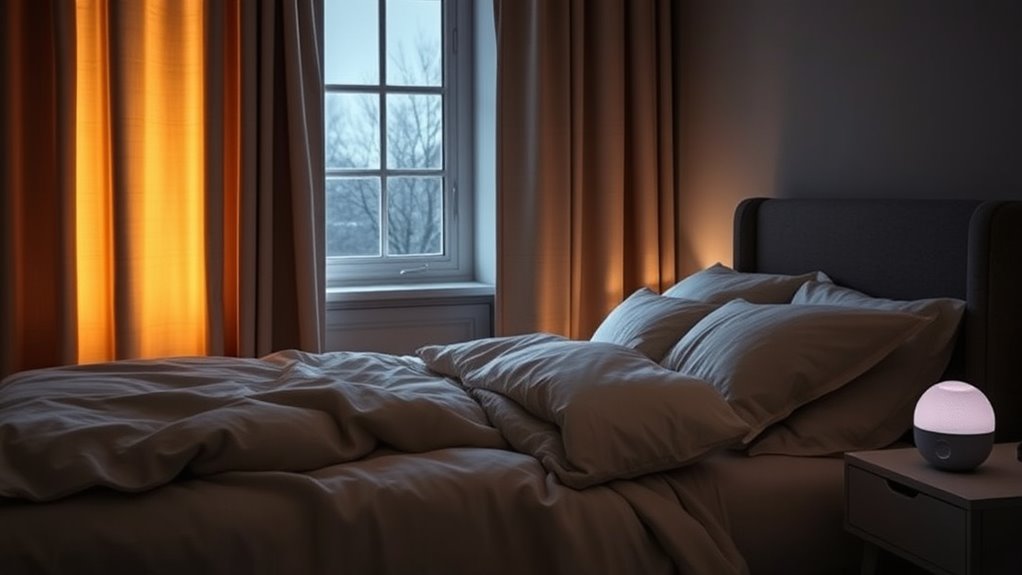
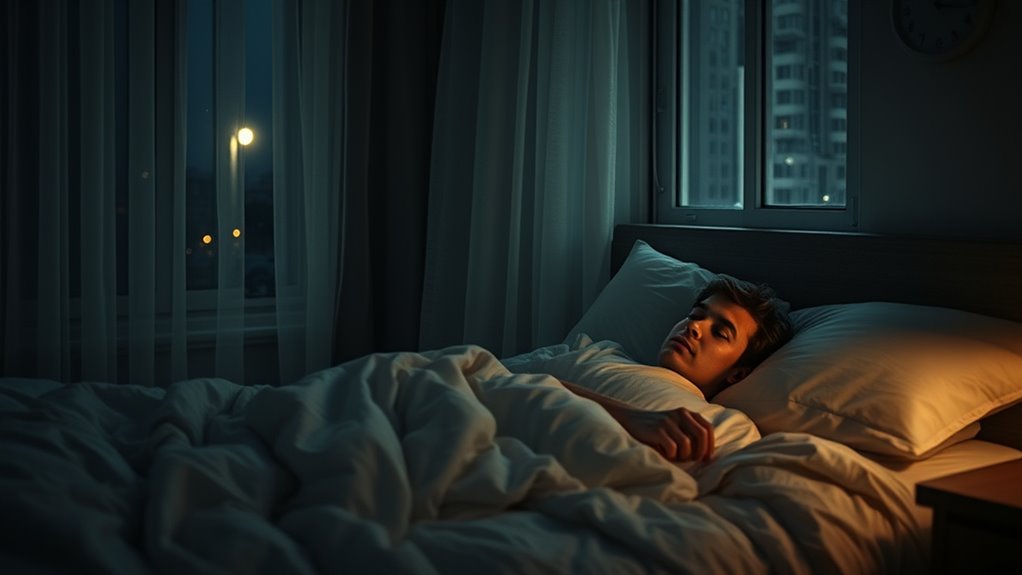
Reducing noise in your bedroom is essential for creating a sleep-friendly environment that promotes deeper, more restorative sleep. Using white noise machines can mask disruptive sounds, providing a consistent background that helps your brain stay relaxed. Installing blackout curtains blocks out external light and reduces visual distractions, making it easier to fall and stay asleep. These curtains also help create a dark, cozy atmosphere, which signals your body that it’s time to rest. Keep your room quiet and dark, and eliminate sources of sudden noise or light disruptions. Incorporating Free Floating elements into your bedroom decor can further minimize vibrations and noise transmission. Implementing soundproofing strategies inspired by innovative European Cloud Servers can be simple to implement and greatly improve your sleep quality. Exploring acoustic treatments designed for residential spaces can enhance sound absorption and further reduce disturbances. Combining white noise with blackout curtains creates an ideal sleep environment for light sleepers, minimizing interruptions and supporting continuous, restful sleep throughout the night.
Practical Techniques to Block or Drown Out Noise

When noise threatens to disturb your sleep, taking proactive steps can help you block or drown out disruptive sounds effectively. Using sound masking devices can create a consistent, soothing background noise that reduces the impact of sudden sounds. Earplugs are another practical solution, providing a physical barrier against unwanted noise. To maximize their effectiveness, choose comfortable, high-quality earplugs suited for sleep. Additionally, consider combining sound masking with earplugs for enhanced noise reduction. Here are some techniques to try: 1. Use a white noise machine or sound masking device to cover disruptive sounds. 2. Wear comfortable earplugs designed for sleep. 3. Employ a combination of sound masking and earplugs for ideal results. Air purifiers, which help improve indoor air quality, can also contribute to more restful sleep by reducing airborne irritants that may cause discomfort or awakenings.
Lifestyle Changes to Enhance Sleep Quality
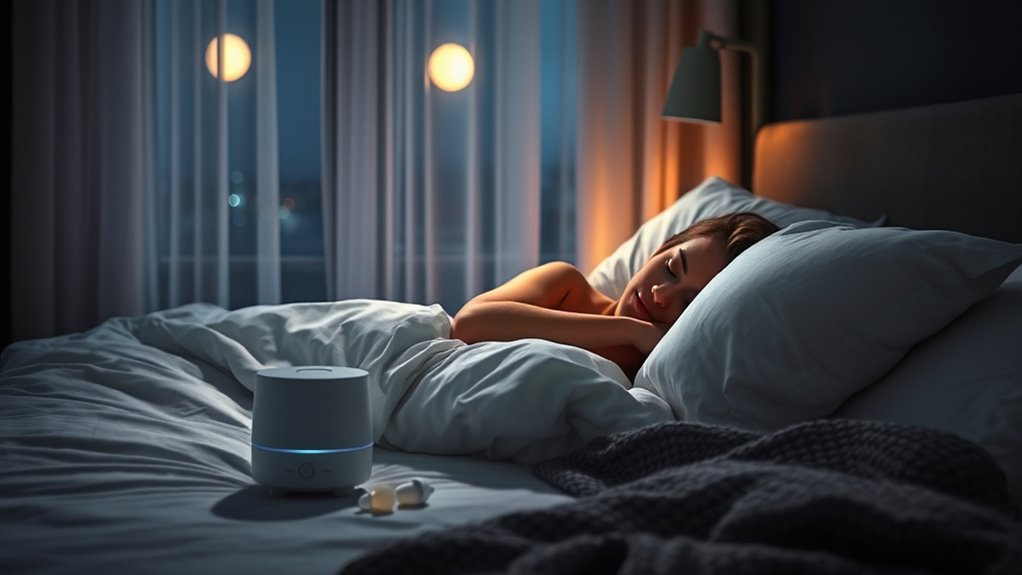
Making simple lifestyle adjustments can substantially improve your sleep quality. Prioritizing good sleep hygiene is key—stick to a consistent sleep schedule, avoid caffeine late in the day, and create a calming bedtime routine. Incorporate relaxation strategies like deep breathing, meditation, or gentle stretches to help your mind unwind before bed. Limit screen time at least an hour before sleeping, as blue light can disrupt melatonin production. Guarantee your bedroom environment promotes rest—keep it cool, dark, and quiet. Regular exercise during the day can also boost sleep quality, but avoid vigorous activity close to bedtime. Understanding the difference between pomade, putty, and styling cream can help you select the right hair products for comfort and style, reducing potential disruptions. Being aware of sleep environment factors like noise, light, and temperature can further enhance your chances of staying asleep. Additionally, choosing the right hair care products can prevent discomfort and disturbances during sleep. Incorporating sleep-friendly routines such as establishing a consistent pre-sleep ritual can also significantly improve your ability to stay asleep. For example, selecting the appropriate gelato or frozen dessert options can also contribute to a more comfortable sleep environment by avoiding heavy, sugary treats that may cause discomfort. By making these mindful changes, you set the stage for deeper, uninterrupted sleep and reduce the chances of waking due to noise or disruptions.
When to Seek Professional Help for Persistent Sleep Issues
Despite adopting healthy sleep habits, some individuals still wrestle with persistent sleep issues. If noise disruptions or other factors continue to impair your sleep, it might be time to seek professional help. Consider consulting a sleep specialist if:
- You experience ongoing insomnia despite lifestyle adjustments, and sleep tools aren’t effective.
- You suspect an underlying sleep disorder, such as sleep apnea or restless legs syndrome.
- You’re exploring medication options or sleep therapy to improve sleep quality.
- Ensuring your sleep environment is properly sized and configured can also make a significant difference in sleep quality. Additionally, understanding sleep environment optimization can help you create a more conducive setting for restful sleep.
A healthcare professional can evaluate your condition and recommend tailored treatments, including sleep therapy or medications if appropriate. Addressing these problems early can prevent long-term health consequences and restore restful, uninterrupted sleep.
Frequently Asked Questions
Can Certain Medications Disrupt My Sleep Cycles?
Yes, certain medications can disrupt your sleep cycles. You might experience medication side effects like insomnia or fragmented sleep, which interfere with your natural sleep pattern. These disruptions can make it harder to stay asleep or achieve restorative rest. Always talk to your doctor about potential side effects and how your medication could impact your sleep. Adjustments or alternatives might help minimize sleep cycle disruption and improve your overall sleep quality.
How Does Caffeine Intake Affect Light Sleep Quality?
While caffeine’s effects can gently nudge your sleep quality, it often interacts with your body’s natural rhythms, leading to lighter, less restorative sleep. Sleep caffeine interactions may cause you to wake more easily and hinder deep sleep phases. To maintain restful slumber, consider limiting caffeine intake in the hours before bed. This helps make certain your sleep remains undisturbed, allowing your body to fully recharge overnight.
Are There Specific Sleep Aids That Work Best for Noise Sensitivity?
You’ll find that white noise machines or apps can effectively block out disruptive sounds, helping you stay asleep. Earplugs are also a great option, providing direct sound insulation. Combining both can maximize your noise sensitivity relief. Select comfortable, high-quality earplugs and experiment with different white noise settings to discover what works best for your sleep environment. This approach can considerably improve your chances of staying asleep despite noise disturbances.
Does Sleep Position Influence Sensitivity to Noise Disruptions?
Yes, your sleep position can influence how sensitive you are to noise disruptions. Choosing the right pillow and maintaining a good sleep posture helps create a buffer against sound. For example, sleeping on your side with a supportive pillow can muffle noise better than lying on your back. Experiment with pillow choices to find what minimizes disturbances, and keep a consistent sleep posture to improve overall noise resilience.
Can Light Exposure During the Day Impact Nighttime Sleep Quality?
Think of your sleep as a delicate plant that needs darkness to thrive. Light exposure during the day, especially from light pollution and daytime naps, can trick your body into thinking it’s daytime, making it harder to fall asleep or stay asleep at night. To improve sleep quality, minimize bright lights in the evening and get plenty of natural light during the day, helping your body reset its internal clock.
Conclusion
By implementing these strategies, you can transform your restless nights into peaceful, uninterrupted sleep. Think of your environment as a quiet lake, where even the smallest ripple—like a noise—can disturb the surface. With a few adjustments, you’ll create a calm haven that silences distractions and invites deep rest. Remember, you hold the power to turn chaos into tranquility, ensuring each night’s sleep is as serene as a still, glassy pond.