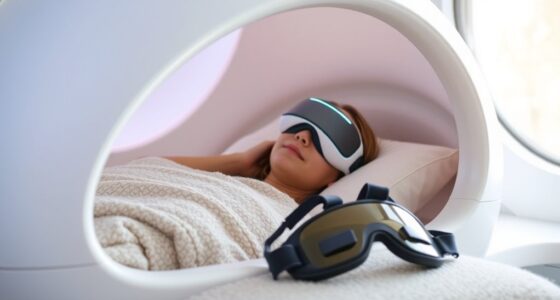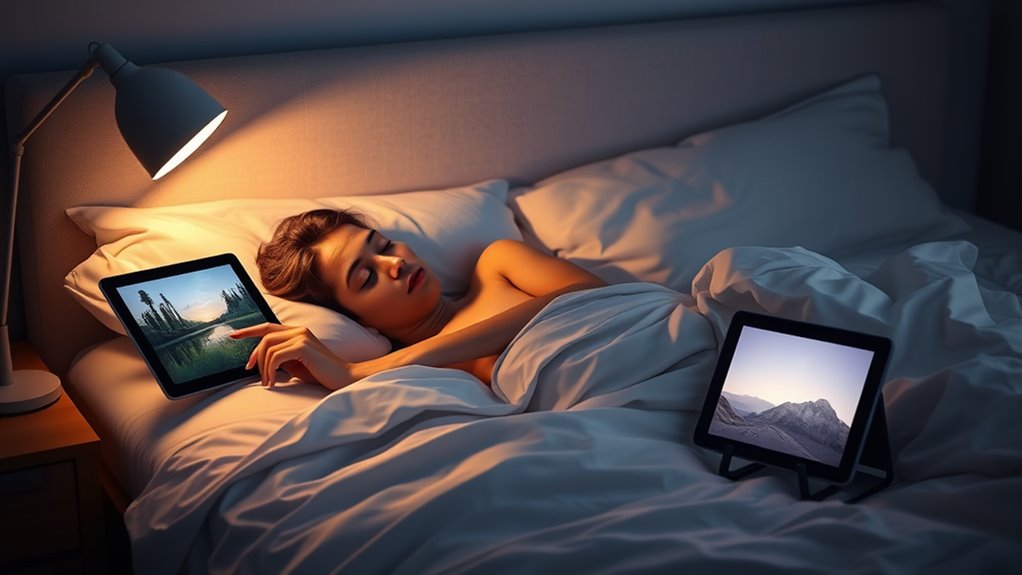

If anxiety keeps you awake, tech tools can help calm your mind at bedtime. Use apps for relaxation and mindfulness to focus on the present, or try guided meditation and breathing exercises to ease stress. Ambient soundscapes and white noise devices create a peaceful environment, while wearables track your sleep and stress levels for personalized advice. Smart home gadgets like dimmable lights and diffusers further foster tranquility. Keep exploring to discover these calming solutions in detail.
Key Takeaways
- Use guided meditation apps and breathing exercises to calm racing thoughts before sleep.
- Play ambient soundscapes or white noise to mask disruptive noises and promote relaxation.
- Utilize wearable devices to monitor stress levels and receive personalized sleep improvement tips.
- Incorporate smart lighting and aromatherapy diffusers to create a soothing, sleep-inducing environment.
- Develop consistent relaxation routines with customizable mindfulness prompts for reduced nighttime anxiety.
Top Apps for Relaxation and Mindfulness
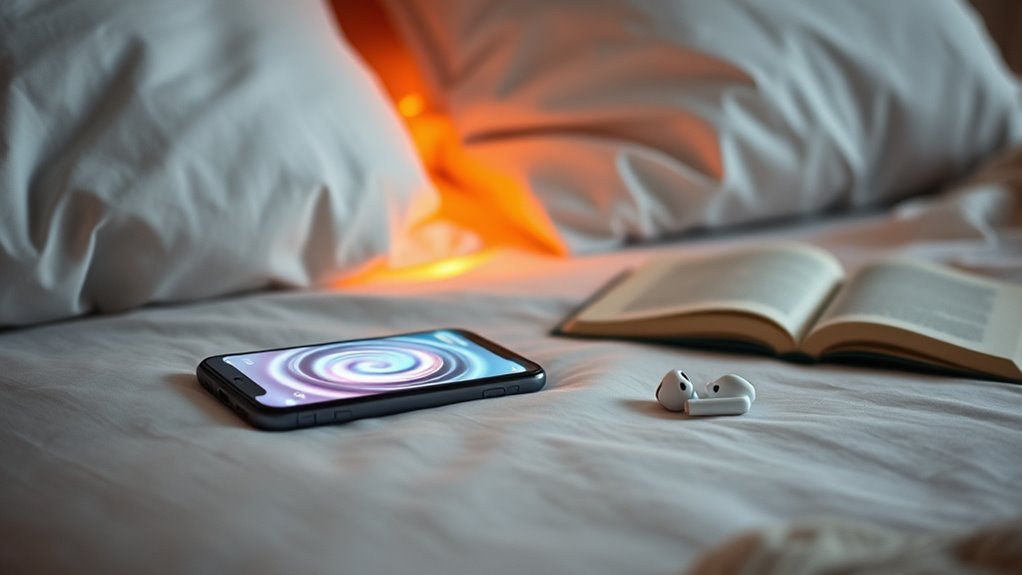
When it comes to easing anxiety before bed, relaxation and mindfulness apps can be powerful tools. These apps often feature helpful mindfulness prompts that guide you to focus on the present moment, reducing racing thoughts. They also incorporate various relaxation techniques, such as deep breathing exercises, progressive muscle relaxation, and calming sounds. By engaging with these tools, you create a calming routine that signals to your brain it’s time to unwind. Many apps allow you to customize your experience, choosing the prompts and techniques that work best for you. Regular use can help you develop a habit of relaxation, making it easier to shift into restful sleep. Exploring these apps offers a practical way to calm your mind and ease anxiety at bedtime. Additionally, some apps utilize Free Floating techniques to help you relax your mind without specific focus, promoting a more peaceful transition to sleep. Incorporating mindfulness practices into your nightly routine can further enhance the calming effect and support overall mental well-being. Understanding the importance of personality traits, such as openness and neuroticism, can also help tailor relaxation strategies to better suit individual needs. Moreover, integrating calming sounds can significantly improve the effectiveness of your relaxation routine by creating a soothing auditory environment.
Guided Meditation and Breathing Exercises

Guided meditation and breathing exercises build on relaxation techniques by providing structured ways to calm your mind and body. These mindfulness techniques help you focus on your breath, releasing tension and reducing racing thoughts. Guided sessions often lead you through visualizations or body scans, making it easier to let go of stress accumulated during the day. Breathing exercises, like deep diaphragmatic breaths or paced inhalation, slow your heart rate and promote relaxation routines that prepare you for sleep. Using apps or recordings, you can follow step-by-step instructions to stay engaged and mindful without wandering thoughts. Incorporating these practices into your nightly routine creates a calming ritual, helping you shift seamlessly into restful sleep while managing anxiety more effectively. Embracing evidence-based insights ensures these techniques are both safe and effective for your mental well-being. Additionally, research supports that mindfulness techniques can significantly reduce anxiety and improve sleep quality over time.
Ambient Soundscapes and White Noise Devices
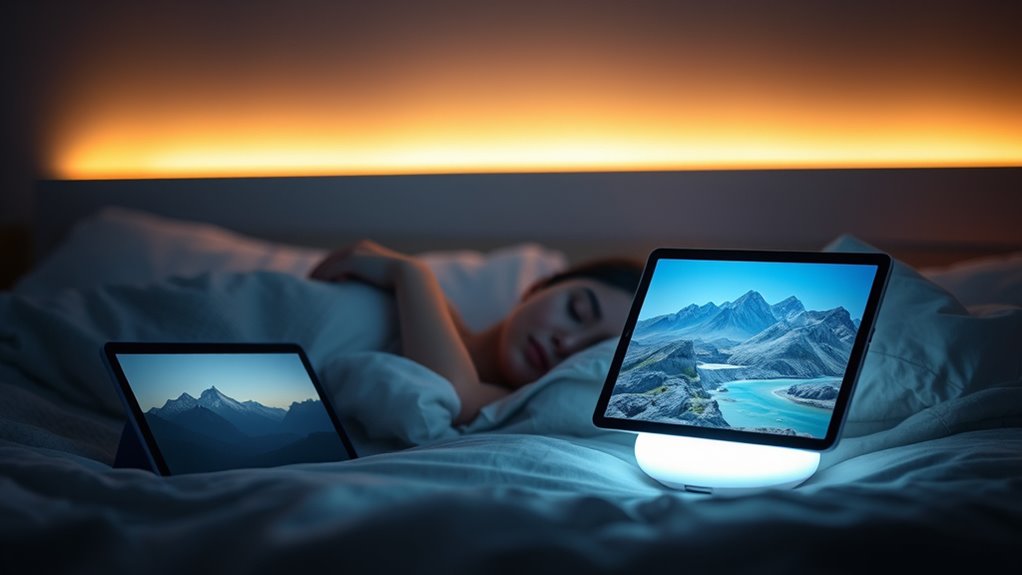
Ambient soundscapes and white noise devices create a soothing auditory environment that helps mask distracting noises and quiet the mind before sleep. By playing nature sounds like rain, waves, or forest sounds, you can create a calming atmosphere that promotes relaxation. These sounds serve as effective noise masking tools, reducing the impact of sudden or disruptive sounds that might otherwise wake you. White noise devices generate a consistent, neutral sound that blends seamlessly into your environment, helping to drown out background disturbances. Using these tools, you can establish a peaceful soundscape that signals your brain it’s time to unwind, easing anxiety and encouraging a smoother *shift* into sleep. Incorporating modern smart sound machines with customizable sound options can further enhance your bedtime routine. They’re simple yet powerful aids for calming your mind at bedtime, especially when designed with user-friendly features that accommodate various needs. For added benefit, some devices include integrated sleep tracking, providing insights to optimize your relaxation strategies. Additionally, understanding the importance of sound masking can help you select the most effective device for your specific sleep environment, as it plays a crucial role in creating a calm sleep environment that promotes restful sleep.
Wearable Tech for Sleep and Stress Monitoring
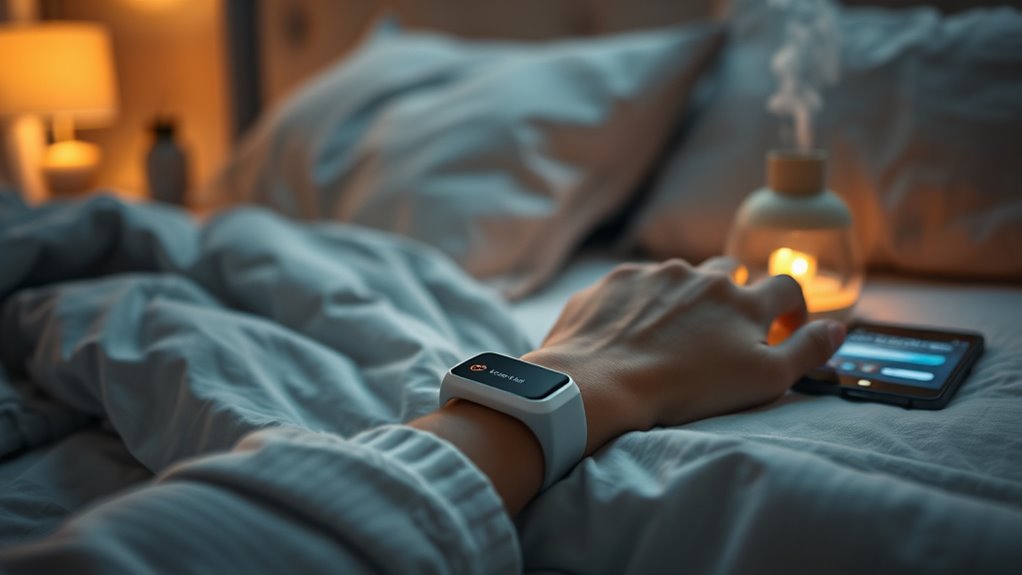
Wearable tech for sleep and stress monitoring offers real-time insights into your body’s internal signals, making it easier to understand and manage your bedtime anxiety. With features like stress tracking and sleep quality analysis, these devices help you identify patterns that affect your rest. By wearing a device overnight, you gain valuable data on how stress impacts your sleep cycles and overall well-being. This knowledge enables you to make targeted adjustments to your bedtime routine. Look for wearables that provide:
- Accurate stress level readings
- Detailed sleep stage breakdowns
- Personalized relaxation suggestions
- Progress tracking over time
These tools empower you to take control of your sleep health, reducing anxiety and fostering a calmer, more restful night. Understanding sleep patterns can further enhance your ability to improve sleep quality and manage bedtime anxiety effectively.
Smart Home Gadgets to Create a Calm Environment
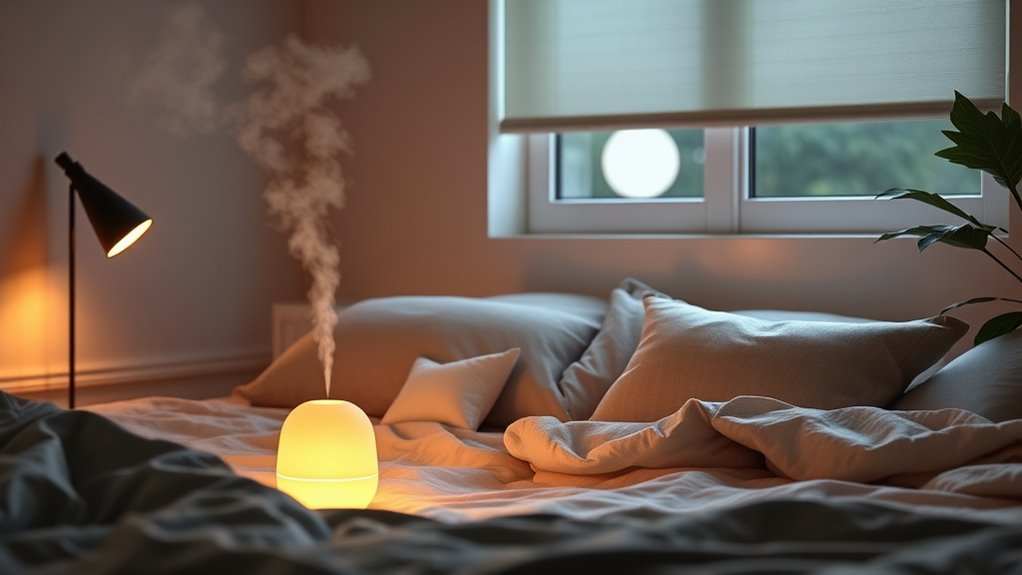
Creating a calm environment in your home can considerably reduce bedtime anxiety and promote restful sleep. Smart lighting plays a key role by allowing you to adjust brightness and color temperature with a tap or voice command, mimicking natural dusk to signal your body it’s time to wind down. Pair this with aromatherapy diffusers, which release soothing scents like lavender or chamomile, proven to relax your mind. These gadgets create a sensory oasis, fostering tranquility before sleep. Set your smart lights to dim gradually as you prepare for bed, and activate your diffuser to fill the room with calming aromas. Incorporating sleep-promoting techniques can further enhance your relaxation routine. Together, these smart home gadgets help you establish a peaceful atmosphere, making it easier to let go of stress and drift into restful sleep.
Frequently Asked Questions
Can These Tech Tools Replace Professional Therapy for Anxiety?
Tech tools can be helpful as therapy alternatives, but they can’t fully substitute professional therapy for anxiety. While apps and gadgets support self-help efforts, they have limitations in addressing complex or severe issues. You might find relief with these tools, but for deeper or persistent anxiety, consulting a mental health professional ensures personalized, effective treatment. Relying solely on tech tools may miss underlying causes that therapy can uncover and treat.
Are There Any Risks Associated With Using Sleep-Tracking Devices?
Be cautious—sleep-tracking devices can pose risks. Privacy concerns emerge as your personal sleep data might be shared or hacked, and you could become dependent on the device, disrupting natural sleep patterns. Over-reliance might cause anxiety if the device malfunctions or provides inaccurate readings. Stay aware of these risks and balance tech use with healthy sleep habits to protect your well-being and maintain control over your sleep health.
How Long Should I Use Relaxation Apps Before Noticing Benefits?
You should typically use relaxation apps for at least two weeks to see noticeable benefits, as this duration allows your mind to adapt and develop new calming habits. Follow app usage guidelines, such as practicing nightly before bed and maintaining consistent timing, to maximize effectiveness. Keep in mind that individual results vary, so patience and regular use will help you achieve the best results in reducing anxiety and improving sleep quality.
Do Ambient Soundscapes Interfere With Natural Sleep Cycles?
Like a gentle river shaping its banks, ambient soundscapes can influence your sleep. They typically don’t interfere with natural sleep cycles if they’re soft and consistent. Instead, ambient noise often enhances sleep quality by masking disruptive sounds. However, loud or unpredictable sounds might disrupt your rest. To benefit, choose calming, steady soundscapes that create a soothing environment, helping your mind drift peacefully without interfering with your natural sleep rhythm.
Can Smart Home Gadgets Be Customized for Individual Anxiety Triggers?
Yes, you can customize smart home gadgets for your anxiety triggers. Use personalized alert systems to notify you in ways that soothe or alert without overwhelming. Implement customizable lighting to create calming environments tailored to your needs, such as dimming lights or shifting to gentle colors during stressful times. This way, your smart home adapts to your unique triggers, helping you relax and improve your sleep quality.
Conclusion
Imagine your mind as a restless river, churning with worries. With these tech tools, you become the steady boat, gently guiding yourself to calmer waters. Studies show that using relaxation apps can reduce bedtime anxiety by up to 30%. Just like a river finds its peaceful course, you can find your calm. Embrace these tools, and let them help you drift into restful sleep, leaving the turbulence behind.