

Teenagers need more sleep because their bodies and brains are rapidly developing, which requires extra rest for growth, mental health, and physical well-being. During adolescence, internal clocks shift, making it hard to sleep early and wake up on time. Hormones like melatonin, cortisol, and growth hormone also change, influencing sleep patterns. Modern habits, like screen use and busy schedules, can disrupt sleep, but understanding these factors helps explain why teens sleep so much—there’s more to discover below.
Key Takeaways
- Teenagers need more sleep due to rapid growth, brain development, and hormonal changes during adolescence.
- Biological shifts delay melatonin production, causing teens to feel sleepy later and require longer rest.
- The circadian rhythm shifts in puberty, naturally leading to later bedtimes and longer sleep durations.
- Hormonal fluctuations, like increased cortisol and adrenaline, promote wakefulness, influencing sleep patterns.
- Modern lifestyles, including screen time and academic pressures, disrupt sleep schedules, increasing sleep needs.
The Unique Sleep Needs of Teenagers

Teenagers have unique sleep needs because their bodies and brains are going through rapid growth and development. During this time, your teenage dreams often feel more vivid, reflecting the intense changes happening inside. Your sleep cycles shift, making it harder to fall asleep early and easier to stay up late. This natural tendency means you may not feel sleepy until later at night, but still need plenty of rest for proper growth. The combination of evolving sleep cycles and the desire for more restful sleep explains why teenagers often sleep longer than adults. Recognizing these needs helps you understand why you might crave extra sleep and why maintaining a consistent sleep schedule is essential for supporting your physical and mental development. Additionally, understanding the biological changes occurring during adolescence can empower you to prioritize sleep and develop healthier routines. Furthermore, being aware of sleep regulation mechanisms can help you adapt your habits to better align with your natural sleep tendencies. Understanding adolescent sleep patterns can also help reduce daytime fatigue and improve overall well-being. Moreover, the hormonal shifts during adolescence influence sleep quality and duration, making it even more important to establish good sleep habits.
Biological Changes During Adolescence

During adolescence, your body undergoes significant biological changes that directly impact your sleep patterns. Genetic predispositions can influence how your internal clock functions, making some teens naturally inclined to stay awake later. Brain development also plays a vital role; during this time, your brain’s structure and chemistry shift rapidly, especially in areas controlling sleep and wakefulness. These changes can delay the production of melatonin, the hormone responsible for signaling sleep, causing you to feel sleepy later at night. As your brain matures, these biological factors work together to modify your sleep needs and timing. Additionally, biological changes during adolescence can vary greatly among individuals, leading to diverse sleep behaviors. Understanding these natural shifts helps explain why you might find yourself wanting to sleep more or experiencing different sleep patterns compared to younger children or adults. Moreover, biological changes can be influenced by genetic factors, which play a role in individual differences in sleep patterns during adolescence. Recognizing adolescent sleep patterns as a natural part of development can help reduce misconceptions about sleep needs during this stage.
The Shift in Sleep Timing: Why Teens Stay Up Late

As your body’s internal clock shifts during adolescence, you naturally start staying up later than you used to. This change happens because your circadian rhythm, the internal process that regulates your sleep-wake cycle, adjusts during puberty. The sleep phase, which dictates when you feel sleepy or alert, shifts to a later time. This means your body wants to stay awake longer in the evening and sleep later in the morning. It’s a biological response, not just a choice, and it explains why teens often find themselves scrolling or chatting late into the night. Your internal clock is telling you to delay bedtime, making it harder to fall asleep early even if you’re tired. This shift is a normal part of adolescent development.
The Impact of Hormones on Sleep Patterns

As you hit adolescence, your hormones start to change, affecting how and when you sleep. Your melatonin production shifts, making you feel sleepy later at night, and growth hormone release timing also adjusts. These hormonal shifts play a key role in the sleep patterns many teenagers experience.
Hormonal Changes During Adolescence
Hormonal changes in adolescence considerably influence sleep patterns, often making teenagers feel more alert at night and tired in the morning. During this time, hormonal fluctuations occur as part of endocrine development, which affects your body’s internal clock. These hormonal shifts, especially increases in certain hormones like adrenaline and cortisol, can promote wakefulness and reduce sleep pressure. At the same time, the development of your endocrine system influences how your body regulates sleep-wake cycles. This imbalance can lead to later bedtimes and difficulty waking up early. As your body adjusts to these hormonal changes, you might notice changes in your sleep habits and energy levels. Understanding these biological processes helps explain why sleep patterns shift so dramatically during adolescence.
Melatonin Production Shifts
During adolescence, your body’s production of melatonin—the hormone signaling your brain it’s time to sleep—shifts considerably. This change affects your circadian rhythm, making it harder to fall asleep early. Typically, melatonin secretion starts later in the evening, pushing your sleep-wake cycle back. As a result, you naturally feel alert later at night and prefer sleeping in. This shift in melatonin production explains why teenagers often struggle with early school start times and feel tired during the day. Understanding this hormonal change highlights why your sleep patterns differ from adults. Here’s a quick overview:
| Time of Night | Melatonin Secretion | Effect on Sleep |
|---|---|---|
| Early Evening | Low | Feel alert |
| Late Evening | Rising | Feel sleepy |
| Late Night | Peak | Deep sleep |
Additionally, awareness of the hormonal shifts involved can help in developing better sleep strategies for teenagers, especially considering adolescent biological changes that influence sleep needs. Recognizing how melatonin production varies during adolescence can aid in adjusting sleep habits to improve overall rest and health. Moreover, the timing of melatonin release plays a crucial role in aligning sleep patterns with daily activities. Being mindful of the puberty-related changes in sleep hormones can further assist in establishing healthy routines.
Growth Hormone Release Timing
The timing of growth hormone release plays a significant role in shaping your sleep patterns during adolescence. During this period, your body releases growth hormone mainly during deep sleep stages, especially in the early part of your sleep cycle. This hormone is essential for physical growth and cell repair, and its release is closely tied to your sleep cycles. As you progress through adolescence, the peak of growth hormone secretion shifts to later in the night, aligning with your natural tendency to go to bed later. This shift can influence your sleep duration and quality, making it harder to wake up early. Understanding this timing helps explain why teenagers often sleep longer and wake feeling more refreshed after adequate rest.
Modern Lifestyle Factors Affecting Teen Sleep

Your busy lifestyle plays a big role in teen sleep patterns today. Increased screen time, mounting academic pressure, and irregular sleep schedules can all keep you awake longer and disrupt your rest. Understanding these factors helps you find ways to improve your sleep habits. Implementing simple strategies can make a significant difference in establishing healthier sleep routines. Additionally, the modern lifestyle often leads to heightened stress levels, which can interfere with falling asleep quickly.
Increased Screen Time
Have you ever wondered how the glow of screens affects your sleep? Increased screen time often leads to screen addiction, making it hard to put devices down. The blue light emitted by phones, tablets, and computers suppresses melatonin, the hormone that helps you fall asleep. When you stay on your devices late at night, your body struggles to recognize it’s time to wind down, delaying sleep onset. This disruption can reduce overall sleep quality and make you feel more tired during the day. The more you rely on screens, the more your natural sleep patterns get thrown off. To improve your sleep, consider limiting screen time before bed and using features that reduce blue light exposure. Your sleep quality depends on it. Additionally, the use of specialized magnifying lamps can help reduce eye strain during late-night screen use, making it easier to relax afterward. Maintaining proper sleep hygiene practices can also significantly support healthy sleep patterns, especially when combined with quality filtration and pump protection to ensure overall well-being.
Academic Pressure Rise
As academic demands continue to grow, teens often sacrifice sleep to keep up with their workload. You might stay up late completing homework or preparing for tests, feeling pressure to excel academically. Extracurricular commitments—like sports, clubs, or part-time jobs—add to your busy schedule, leaving less time for rest. Peer influence also plays a role; many teens stay up late texting friends or studying together, trying to fit in or stay competitive. This constant push to meet academic and social expectations can lead to inconsistent sleep patterns and reduced sleep duration. The desire to succeed and maintain social ties makes it tempting to cut into sleep hours, which can have long-term effects on your health, mood, and overall well-being. Additionally, astrological beliefs about attractiveness and personality traits may influence some teens’ self-confidence, indirectly affecting their sleep habits as they navigate social pressures.
Irregular Sleep Schedules
Modern lifestyles contribute considerably to irregular sleep schedules among teenagers. You might stay up late scrolling social media or binge-watching shows, disrupting your sleep hygiene and making it hard to stick to consistent bed routines. These irregular habits can shift your internal clock, causing difficulty falling asleep and waking up refreshed. To help, establish a regular sleep schedule and prioritize calming activities before bed. Additionally, understanding how vetted wave and wind patterns impact sleep can provide further insights into maintaining a healthy sleep cycle. Recognizing the influence of natural atmospheric conditions on sleep quality can help you better manage your sleep environment. Being aware of natural light exposure and its effects on your circadian rhythm can also support healthier sleep patterns.
Tips for Helping Teenagers Get Better Rest
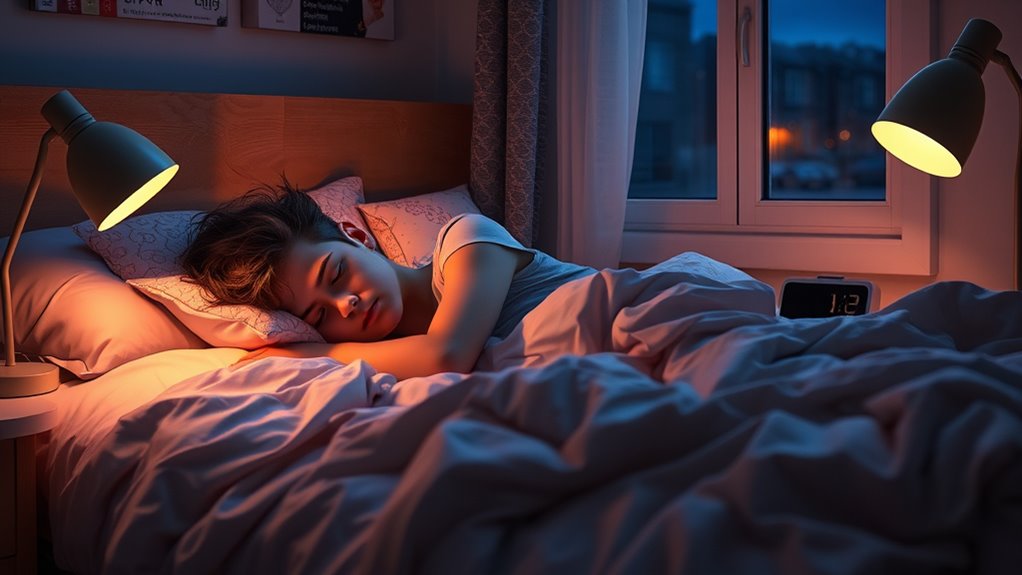
Getting teenagers to improve their sleep habits starts with creating a consistent routine. Establish regular bedtimes and wake times to strengthen sleep hygiene. Encourage your teen to avoid screens at least an hour before bed, as blue light disrupts melatonin production. Incorporate relaxation techniques like deep breathing, gentle stretching, or listening to calming music to help them unwind. Ensuring their sleep environment is cool, dark, and quiet also promotes better rest. Limit caffeine and heavy meals close to bedtime, and promote physical activity during the day. By fostering these habits, you help your teen develop healthier sleep patterns, making it easier for them to fall asleep and stay rested. Small, considerably changes can greatly enhance their overall sleep quality.
Frequently Asked Questions
How Does Sleep Deprivation Affect Teenage Brain Development?
Sleep deprivation hampers your teenage brain development by disrupting sleep architecture, which affects how your brain processes dreams and consolidates memories. You might notice reduced dream recall and impaired learning. Without enough rest, your brain struggles to create new neural connections, impacting decision-making, emotional regulation, and problem-solving skills. Prioritizing quality sleep helps support healthy brain growth, memory, and overall mental health during these vital years.
Can Genetics Influence a Teenager’s Sleep Patterns?
Yes, genetics can influence your sleep patterns through genetic predisposition and sleep genes. If your family has a history of late bedtimes or difficulty waking up, you might inherit these traits. Sleep genes regulate your body’s internal clock, affecting your sleep-wake cycle. Understanding your genetic makeup can help you develop better sleep habits and manage any sleep-related challenges more effectively.
Do School Start Times Impact Adolescent Sleep Quality?
School schedules cut into your sleep like a sharp knife, making it harder to get quality rest. When start times are early, your body struggles to wind down, disrupting sleep hygiene. Shifting school hours later can release a calmer, more restful night, helping you wake up refreshed and ready. You have the power to advocate for change, ensuring your sleep isn’t sacrificed on the altar of punctuality.
How Does Caffeine Consumption Disrupt Teen Sleep Cycles?
Caffeine consumption can considerably disrupt your sleep cycles because it delays your sleep onset and reduces sleep quality. When you consume caffeine, it blocks adenosine receptors, which normally promote sleepiness, leading to longer caffeine metabolism times. This sleep cycle disruption makes it harder for you to fall asleep and get restful, restorative sleep. To improve your sleep, limit caffeine intake, especially in the afternoon and evening.
Are There Long-Term Health Effects of Insufficient Teenage Sleep?
Insufficient teenage sleep can be like a shadow looming over your future, leading to long-term health issues. You might face problems with adolescent nutrition, affecting growth and energy, and peer influence could push you toward unhealthy habits. Over time, sleep deprivation increases risks of obesity, diabetes, and mental health struggles, making it vital to prioritize good sleep habits now to protect your well-being later.
Conclusion
Understanding why teenagers sleep so much reveals a complex dance of biology and lifestyle, like a symphony where each note influences the next. As you navigate this stage, remember that nurturing good sleep habits helps your body’s natural rhythms find harmony amid life’s chaos. Embrace patience and consistency, allowing restful nights to be your anchor. With time, your sleep pattern can become a steady lighthouse guiding you through the stormy seas of adolescence.