
Having a nightcap might seem relaxing, but alcohol actually disrupts your sleep cycle. It causes fragmented sleep, reduces the time spent in restorative deep and REM sleep, and makes you wake up feeling tired. As alcohol is metabolized, your sleep becomes lighter and more interrupted, which hampers emotional and physical recovery. If you want to learn how to improve your sleep and avoid these pitfalls, keep exploring how alcohol really affects your rest.
Key Takeaways
- Alcohol initially makes you sleepy but disrupts sleep cycles, leading to fragmented, less restorative rest.
- It reduces REM sleep, impairing memory, emotional regulation, and dream quality.
- Alcohol causes frequent awakenings, resulting in unrefreshing sleep and morning grogginess.
- Metabolism of alcohol increases wakefulness and sleep disturbances during the second half of the night.
- Drinking alcohol can worsen breathing issues and sleep environment, further impairing sleep quality.
How Alcohol Affects Your Sleep Cycle
Alcohol can considerably disrupt your sleep cycle, even if it initially makes you feel sleepy. When you consume alcohol, your body begins alcohol metabolism, breaking it down in the liver. This process affects your sleep by interfering with the production and regulation of sleep hormones like melatonin and cortisol. As a result, your sleep becomes fragmented and less restorative. Even though alcohol might help you fall asleep faster, it reduces the quality of your rest by causing frequent awakenings and preventing deep sleep stages. The disruption of your sleep hormone balance hampers your body’s natural circadian rhythm, making it harder to get a restful, uninterrupted night’s sleep. Additionally, the impact of alcohol on sleep quality can lead to longer-term sleep issues if consumption continues regularly. Chronic sleep problems can develop over time, affecting overall health and well-being. Over time, these effects can accumulate, leading to Chronic sleep problems and potential negative impacts on your overall health.
The Sedative Effect That Isn’t So Sleep-Friendly
You might feel sleepy after drinking alcohol, but that sedative effect can actually disrupt your sleep quality. It causes your sleep cycles to become uneven and shortens your time in REM sleep, which is essential for rest. As a result, you may wake up feeling unrefreshed, even if you think you’ve slept enough. Incorporating smart appliances and connected devices into your bedtime routine can help monitor and improve your sleep environment. Understanding how alcohol impacts your sleep architecture can empower you to make better choices for restorative rest. Recognizing how alcohol influences your sleep cycles can further inform your habits and promote healthier sleep patterns, especially considering the impact on sleep quality and overall health. Additionally, using air purifiers with appropriate filter maintenance can help create a cleaner sleep environment by reducing airborne irritants that might disturb your rest.
Temporary Sleepiness Boost
Although it might seem like a quick way to fall asleep, alcohol’s sedative effect is temporary and can actually disrupt your sleep cycle. When you indulge in social drinking, your body begins alcohol metabolism, which gradually clears the substance from your system. This process causes your initial drowsiness to fade, often leading to wakefulness later in the night. You might feel sleepy at first, but that feeling doesn’t last. Instead, alcohol can lead to fragmented sleep and reduced REM stages. Keep in mind: the temporary sleepiness boost is misleading. It masks underlying issues and can make you feel more tired overall. To avoid these pitfalls, understanding how alcohol affects your sleep is key to better rest.
Disrupted Sleep Cycles
While the initial drowsiness from drinking might seem helpful, it’s only a fleeting effect that masks the true impact on your sleep cycle. Alcohol metabolism quickly reduces its sedative effect, causing your sleep architecture to become disrupted. Instead of progressing naturally through the sleep stages, alcohol interferes with your body’s ability to maintain a steady sleep cycle. This disruption can lead to fragmented sleep, frequent awakenings, and difficulty reaching restorative sleep stages. As your body processes alcohol, the sedative effects fade, leaving you vulnerable to lighter, less restful sleep. Additionally, alcohol’s influence on sleep regulation can exacerbate these disturbances, preventing you from experiencing the deep, consistent sleep your body needs to recover and rejuvenate effectively. The combined effect of these disruptions can also impair overall sleep quality, making it harder to feel refreshed upon waking. Moreover, alcohol can increase the likelihood of experiencing nighttime awakenings, further diminishing sleep efficiency.
Reduced REM Sleep
Alcohol’s sedative effects might make you feel sleepy at first, but they actually reduce the amount of REM sleep you get. When alcohol undergoes metabolism, it disrupts your sleep architecture, especially during the later sleep cycles. This means less time spent in REM, which is vital for memory and emotional health. As your body processes alcohol, you may experience lighter sleep and frequent awakenings, further cutting into REM stages. Additionally, alcohol’s impact on sleep quality can lead to increased fatigue and reduced cognitive function the next day. Moreover, alcohol interferes with the sleep cycle, causing fragmented sleep patterns that diminish overall restorative rest. This disruption can also hinder the body’s ability to enter deep sleep stages, essential for physical recovery and immune function. Furthermore, research shows that alcohol can impair sleep regulation, making it harder to maintain a consistent and healthy sleep pattern. The interference with your natural sleep patterns can also contribute to mood disturbances and decreased overall well-being.
Disruption of REM Sleep and Its Consequences

When you drink alcohol, it can cause REM sleep to become fragmented, interrupting your natural sleep cycles. This disruption often leads to impaired dreaming and less restorative sleep. As a result, you may wake up feeling tired and less alert the next day. Additionally, alcohol can interfere with your overall sleep architecture, including the quality of your sleep surfaces and finishes, which affects how deeply and comfortably you rest. Proper sleep surface quality is essential for maintaining healthy sleep architecture and ensuring restorative sleep. Alcohol’s impact on sleep can also exacerbate underlying sleep disorders, making restful sleep even more difficult to achieve. Moreover, alcohol may impair the body’s natural circadian rhythms, further disturbing your sleep patterns and overall restfulness. Understanding how alcohol affects your sleep quality can help you make better choices for a more restful night.
REM Sleep Fragmentation
REM sleep fragmentation occurs when your sleep cycle is repeatedly interrupted during the rapid eye movement (REM) stage, which is essential for memory, learning, and emotional health. Alcohol metabolism can cause your body to shift between stimulation and sedation, leading to frequent awakenings. A disruptive sleep environment—bright lights, noise, or an uncomfortable bed—also worsens fragmentation. When REM sleep is fragmented, you miss out on its restorative effects, leaving you groggy and emotionally unbalanced. This disruption can impair cognitive functions and weaken immune defenses. To improve your sleep, minimize alcohol intake close to bedtime, create a calming sleep environment, and allow your body enough time to process alcohol for better REM continuity. Additionally, understanding how light exposure influences sleep can help you optimize your sleep environment. Adequate sleep hygiene practices, such as maintaining a consistent sleep schedule, further support sleep quality and overall health. Recognizing the importance of circadian rhythms can help you align your sleep patterns for better rest. Consistent, quality REM sleep is crucial for overall health and well-being.
Impaired Dreaming Cycles
Disruption of REM sleep can substantially impair your dreaming cycles, which are essential for emotional regulation and cognitive processing. Alcohol’s REM interference leads to dreaming disruption, preventing you from experiencing the vivid, story-like dreams typical of healthy REM sleep. Without proper REM phases, your brain struggles to process emotions and consolidate memories effectively. This disruption not only hampers your ability to experience restorative dreams but also affects your mood and mental clarity during the day. You might notice increased emotional volatility or difficulty focusing, as your brain’s natural relaxation and processing mechanisms are compromised. Consuming alcohol before bed hampers your ability to get the full benefits of dreaming, leaving you with fragmented sleep and reduced cognitive resilience.
The Role of Alcohol in Sleep Fragmentation

Alcohol often appears to help you fall asleep faster, but it can considerably disturb the quality of your sleep by causing frequent awakenings throughout the night. As your body processes alcohol through metabolism, it triggers disruptions in your sleep cycles, particularly during the second half of the night. These interruptions lead to fragmented sleep, making you feel less rested in the morning. Poor sleep hygiene caused by alcohol consumption can further worsen these effects, reducing overall sleep efficiency. You might notice that even though you initially drift off easily, your sleep becomes choppy and restless. To improve sleep quality, it’s essential to recognize how alcohol’s impact on sleep fragmentation can undermine your rest and to contemplate healthier habits.
- Alcohol metabolism disrupts sleep stages
- Fragmented sleep reduces restorative rest
- Poor sleep hygiene worsens sleep quality
How Drinking Before Bed Impacts Sleep Quality
Drinking alcohol before bed may seem like a way to unwind, but it often results in poorer sleep quality. When you consume alcohol, your body begins alcohol metabolism, which can disrupt your natural sleep cycle. Alcohol initially makes you feel drowsy, but as it metabolizes, it causes sleep fragmentation and frequent awakenings. Additionally, alcohol can alter your sleep environment by reducing REM sleep, leaving you less restorative rest. It also relaxes your muscles and relaxes the airway, increasing the likelihood of snoring or breathing interruptions. These changes make it harder to reach deep, uninterrupted sleep stages. Ultimately, even moderate drinking before bed can sabotage your sleep quality, leaving you tired and unrested the next day.
The Aftereffects: Morning Fatigue and Grogginess

Even though alcohol might help you fall asleep initially, it often leaves you waking up feeling exhausted. This morning grogginess can linger throughout the day, making you feel sluggish and unfocused. You may notice a foggy mind, difficulty concentrating, and a lack of energy. Alcohol disrupts your sleep cycles, leading to poor quality rest and incomplete recovery. As a result, daytime fatigue sets in, impacting productivity and mood. This cycle can make you crave more alcohol to cope with fatigue, creating a vicious circle. To break free, recognizing how alcohol affects your mornings is key. Being mindful of these aftereffects can motivate you to seek healthier sleep habits and avoid the trap of persistent grogginess.
Tips for Better Sleep Without Alcohol
To improve your sleep quality without relying on alcohol, establishing a consistent bedtime routine is essential. This helps reinforce your sleep hygiene, making it easier to fall asleep naturally. During an alcohol detox, your body needs time to rebalance, so avoiding alcohol before bed supports better rest. Focus on winding down activities like reading or gentle stretches, and keep your sleep environment comfortable and dark. Limit caffeine and screen time in the evening, as these can interfere with your sleep cycle. Regular sleep patterns train your body to expect rest at the same time each night, reducing the urge for a nightcap. By prioritizing sleep hygiene and giving your body a break from alcohol, you set the stage for more restful, restorative sleep.
Alternatives to Nightcaps for Relaxation
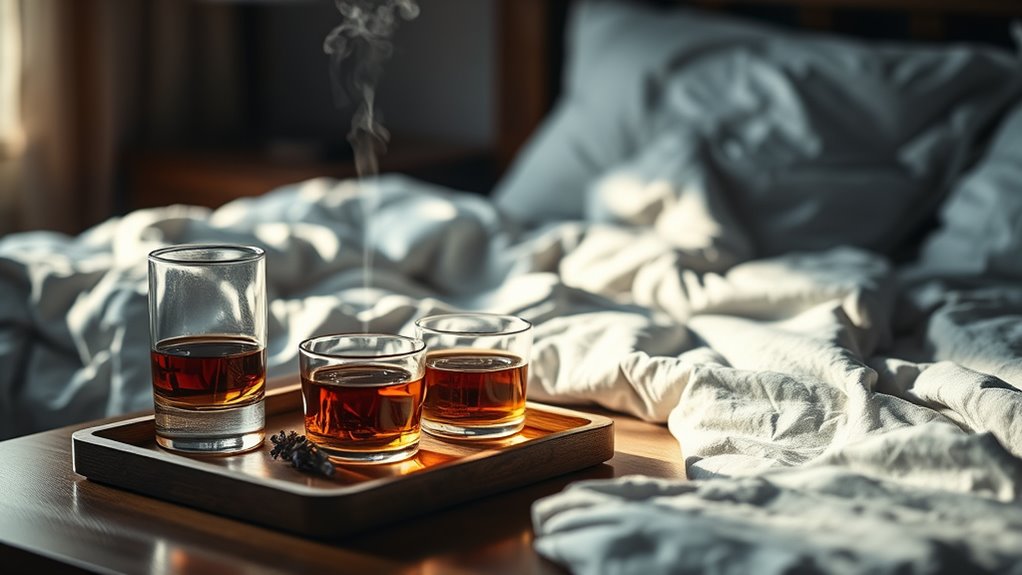
If you’re looking for relaxing alternatives to nightcaps, there are plenty of effective options that can help you unwind without alcohol. One great choice is practicing meditation techniques, which can calm your mind and prepare you for restful sleep. You might also try sipping herbal teas like chamomile or valerian root, known for their soothing properties. These natural remedies promote relaxation without disrupting your sleep cycle. Additionally, engaging in gentle stretching or deep breathing exercises can ease tension and signal your body that it’s time to rest. These alternatives not only support better sleep but also help establish a calming bedtime routine. By exploring these options, you’ll find healthier ways to relax and improve the quality of your sleep.
Frequently Asked Questions
Can Alcohol Consumption Lead to Long-Term Sleep Disorders?
Yes, alcohol consumption can lead to long-term sleep disorders, especially if it results in alcohol addiction. Regular drinking disrupts your sleep hygiene by reducing REM sleep and causing frequent awakenings. Over time, these effects can worsen, making it harder to fall asleep and stay asleep. If you rely on alcohol to sleep, you risk developing chronic issues, therefore it is crucial to address your drinking habits and improve your sleep hygiene for better rest.
How Does Alcohol Affect Sleep in Different Age Groups?
You might believe alcohol affects all ages equally, but it varies. In younger adults, it can disrupt REM sleep and impair sleep hygiene, leading to poorer rest. Older adults, however, are more prone to alcohol dependency, which worsens sleep quality and increases risks of sleep disorders. Recognizing these differences helps you understand how alcohol impacts sleep across different age groups, emphasizing the importance of mindful drinking for better rest.
Are There Genetic Factors Influencing Alcohol’s Impact on Sleep?
Yes, genetic predispositions can influence how alcohol impacts your sleep. Your sleep gene interactions might make you more sensitive or resistant to alcohol’s effects, affecting sleep quality differently. If you have specific genetic variants related to alcohol metabolism or sleep regulation, you could experience more disrupted rest after drinking. Understanding your genetic makeup can help you predict and manage alcohol’s influence on your sleep, allowing you to make better choices for restful nights.
Does the Timing of Drinking Influence Sleep Disruption Severity?
Yes, drinking timing considerably influences sleep disruption severity. When you consume alcohol closer to bedtime, it can interfere with your sleep cycles, causing more fragmented and less restorative rest. Drinking earlier in the evening allows your body more time to process the alcohol, reducing sleep disruption. So, if you want better sleep, consider adjusting your drinking timing to avoid consuming alcohol right before you plan to sleep.
Can Moderate Alcohol Intake Still Impair Sleep Quality?
Even moderate alcohol intake can still impair your sleep quality. While you might think small amounts help you relax, alcohol metabolism disrupts your sleep architecture, leading to lighter, fragmented sleep. This means you won’t get the deep, restorative rest you need. So, don’t let the idea of moderation fool you—your sleep suffers regardless, and frequent disruptions can affect your overall health and well-being.
Conclusion
So, next time you reach for that nightcap, ask yourself—are those few extra minutes of relaxation really worth sacrificing your sleep quality? Alcohol might seem like a quick fix, but it can leave you feeling tired and groggy the next day. Instead, try relaxing without booze and see how much better your sleep can be. After all, isn’t waking up refreshed worth making a small change tonight?