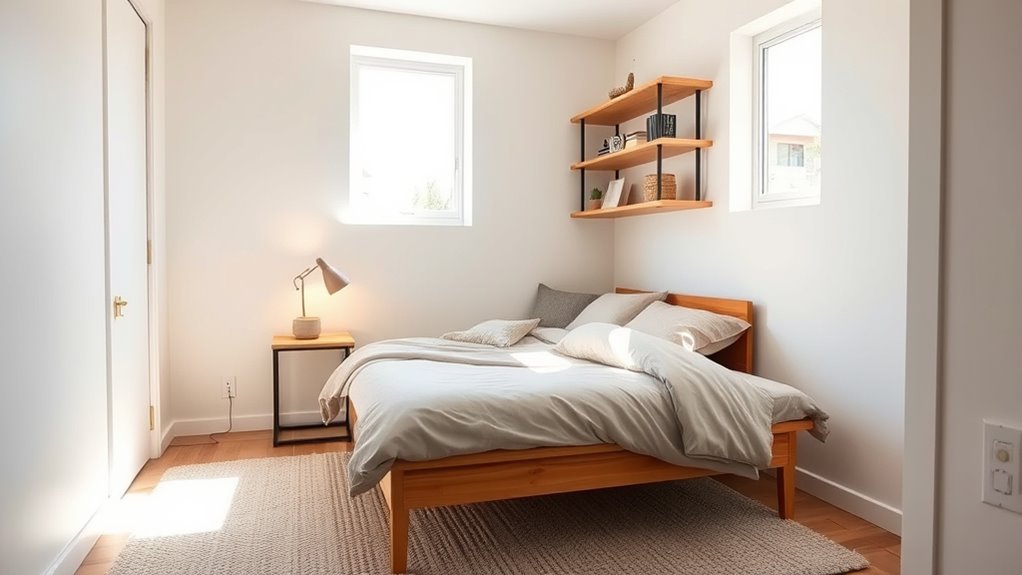

To optimize a small bedroom for better sleep, clear out unnecessary items and choose multifunctional furniture to save space. Keep your space organized with smart storage solutions, and create a calming environment with soft lighting, blackout curtains, and soothing scents like lavender. Use a comfortable mattress and minimize electronics that disrupt sleep. Focus on a cozy, clutter-free atmosphere, and you’ll turn your tiny room into a peaceful retreat. Discover more tips to transform your space into a sleep sanctuary.
Key Takeaways
- Use multifunctional furniture and smart storage to maximize space and reduce clutter.
- Keep the sleep area cool, dark, and quiet with blackout curtains and white noise for optimal rest.
- Incorporate calming scents, soft lighting, and small plants to create a relaxing environment.
- Declutter regularly and organize belongings out of sight to promote tranquility and reduce stress.
- Enhance air quality with purifiers and maintain a clean, clutter-free space for better sleep quality.

Ever wondered how to turn a tiny bedroom into a restful retreat? The key lies in smart bedroom organization and prioritizing sleep hygiene. When space is limited, every inch counts, so you need to make sure your room promotes relaxation and minimizes clutter. Start by decluttering your space—keep only what you truly need and love. Use multifunctional furniture, like a bed with storage drawers or a fold-away desk, to maximize your room’s usability without sacrificing floor space. A tidy room not only looks more inviting but also helps reduce distractions, making it easier for your mind to unwind at night.
Next, focus on bedroom organization to create a calming environment. Invest in storage solutions that keep your belongings out of sight but easily accessible. Baskets, under-bed storage, and wall-mounted shelves help you maintain a clutter-free space. When everything has its place, your brain receives fewer stimuli, which supports better sleep hygiene. Remember, a cluttered room can cause stress and make it harder to relax, so develop a regular tidying routine to keep things orderly. This simple habit can considerably improve your sleep quality by creating a peaceful atmosphere conducive to rest.
In addition to organization, pay attention to the setup of your sleeping area. Choose a comfortable, supportive mattress and pillows that suit your preferences. Keep your bedding simple and clean, and opt for soft, calming colors that promote relaxation. Minimize electronic devices in your bedroom, as screens emit blue light that can interfere with melatonin production—the hormone responsible for regulating sleep cycles. Instead, create a soothing ambiance with soft lighting, like warm bedside lamps or blackout curtains, to block out external disturbances. Establishing a consistent sleep routine, such as going to bed and waking up at the same time every day, also reinforces good sleep hygiene, helping your body adapt to a restful rhythm.
Finally, consider the overall atmosphere of your tiny bedroom. Keep it cool, dark, and quiet—conditions that foster deep sleep. Use a fan or white noise machine if needed to mask disruptive sounds. Small changes, like placing a small plant or using calming scents such as lavender, can also enhance your sleep environment. Remember, making a tiny space feel cozy and serene doesn’t require a lot of square footage; it’s about how you organize and set up your room to support your sleep habits. With thoughtful bedroom organization and a focus on sleep hygiene, your small bedroom can become a sanctuary where quality rest is always within reach. Incorporating air purifiers can further improve air quality, making your sleep environment even more relaxing and healthful.
Frequently Asked Questions
How Can I Maximize Storage in a Small Bedroom?
You can maximize storage in your small bedroom by choosing space-saving furniture like beds with built-in drawers or wall-mounted desks. Get creative with storage solutions, such as under-bed storage bins, vertical shelves, and multi-functional furniture. Use wall space for hooks or hanging organizers, and keep clutter to a minimum. These strategies help you make the most of your limited space while keeping your room organized and functional.
What Colors Promote Better Sleep in Tiny Spaces?
Soft, soothing shades like serene blues, calming greens, or gentle lavenders promote better sleep in tiny spaces. These colors align with color psychology, creating a peaceful sleep environment that reduces stress and encourages relaxation. You can craft a calming, cozy corner by choosing cool, muted hues, making your small bedroom a serene sanctuary. Remember, subtle shades soothe your senses, setting the stage for restful, restorative sleep every night.
Are There Specific Mattress Types Ideal for Small Rooms?
For small rooms, opt for a twin or twin XL mattress to save space. Choose a mattress with medium firmness for balanced support and comfort, especially if you sleep on your side or back. Avoid bulky memory foam or thick mattresses that can crowd the room. Instead, go for a thinner, supportive mattress that fits your space and provides restful sleep without overwhelming your tiny bedroom.
How Do I Improve Air Quality in a Compact Bedroom?
You can improve air quality in your compact bedroom by using an air purifier to remove dust, allergens, and pollutants. Keep your space well-ventilated with a ventilation system or by opening windows regularly, especially when weather permits. Additionally, avoid clutter that traps dust and consider houseplants that naturally purify the air. These simple steps make a significant difference, ensuring you breathe cleaner, healthier air every night.
Can Lighting Design Affect Sleep Quality in Small Bedrooms?
Lighting design can profoundly impact your sleep quality in small bedrooms. By creating a calming lighting ambiance with warm, dimmable lights, you help regulate your sleep hormone production, like melatonin. Avoid harsh, blue-toned lights before bed, as they can suppress melatonin and disrupt your sleep cycle. Proper lighting helps your body wind down naturally, making it easier to fall asleep and enjoy restful, uninterrupted sleep in your tiny space.
Conclusion
So, even in a tiny space, a good night’s sleep is totally achievable. With a little clever planning—like choosing the right mattress, maximizing storage, and creating a calming vibe—you can turn your small bedroom into a sleep sanctuary. Why settle for restless nights when your cozy corner could be your best sleep yet? Remember, sometimes less really is more—so embrace the challenge and sleep tight in your perfectly optimized tiny space.