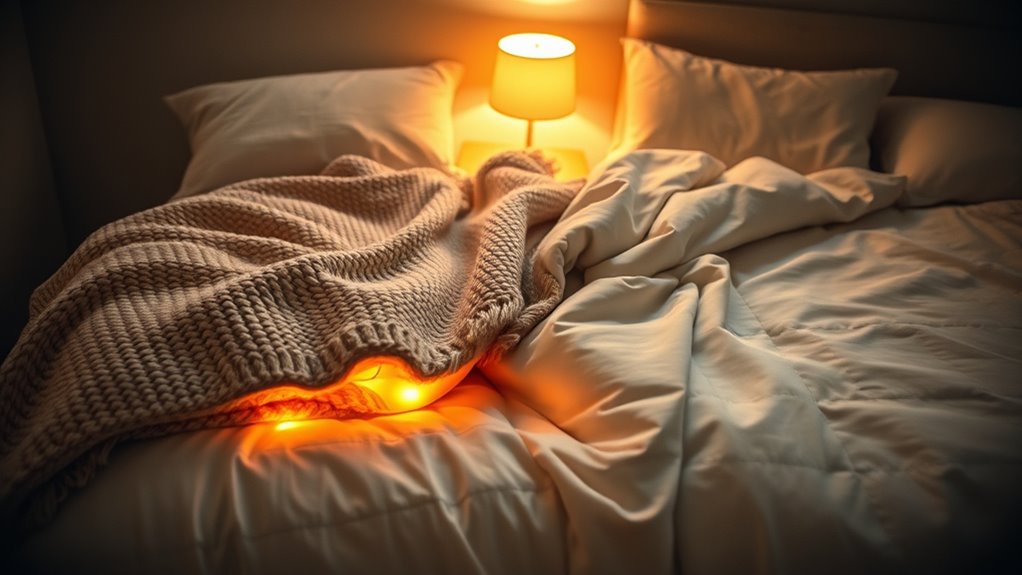

Choosing between an electric and traditional blanket depends on your safety, comfort, and energy needs. Electric blankets offer quick, adjustable warmth but require careful use, like checking for damage and automatic shut-off features, to stay safe. Traditional blankets are safer, simpler, and don’t risk electrical issues, but they heat more slowly and depend on body heat. Exploring these options further will help you find the safest and coziest solution for your nights.
Key Takeaways
- Electric blankets provide rapid, adjustable warmth but require safety features like automatic shut-off to prevent overheating.
- Traditional blankets rely on insulation and body heat, eliminating electrical risks and simplifying maintenance.
- Electric blankets consume less energy overnight and allow personalized temperature control, enhancing energy efficiency.
- Traditional blankets are safer with no electrical components, ideal for those prioritizing safety and low maintenance.
- Balancing safety, comfort, and convenience helps determine whether an electric or traditional blanket best suits your needs.

When it comes to staying warm at night, choosing between an electric blanket and a traditional blanket can make a big difference. Your decision impacts not only comfort but also safety precautions and energy efficiency. Electric blankets can offer targeted warmth, but they require careful use to prevent accidents. Always read the manufacturer’s instructions and confirm the blanket has an automatic shut-off feature. This safety precaution minimizes the risk of overheating or fire, especially if you tend to fall asleep with the blanket still on. It’s also wise to inspect the cord and controls regularly for signs of damage. Never fold or bunch up the blanket, as this can cause uneven heating and potential safety hazards. When used correctly, electric blankets are safe, but awareness of these precautions helps you sleep peacefully without worry. Additionally, understanding safety features can help you choose a more reliable and secure product.
Energy efficiency is another critical factor to contemplate. Electric blankets tend to consume less energy than running a space heater or cranking up your central heating system all night. They heat your bed directly, so you can set the temperature lower than you would with other heating options, saving on electricity bills. To maximize energy efficiency, set the thermostat to a comfortable, moderate level instead of the highest setting. Using an electric blanket can be more economical over time, especially if you only want to warm your bed rather than the entire room. However, it’s essential to turn off the blanket once you’re under the covers to prevent unnecessary energy use. When comparing to traditional blankets, electric blankets give you more control over your personal warmth, which means you can reduce overall energy consumption by avoiding heating the entire room.
Traditional blankets, on the other hand, rely solely on insulation and your body heat. They don’t require electricity, making them inherently safer in terms of electrical safety precautions. You don’t have to worry about malfunction or overheating, and they’re easy to wash and maintain. However, they may not provide the same level of warmth or quick heating as electric blankets. If warmth and energy efficiency are your priorities, a high-quality electric blanket might be more suitable—so long as you follow safety guidelines. Conversely, if you prefer a simple, low-maintenance option with no electrical risks, a traditional blanket is a reliable choice. Ultimately, your comfort and safety depend on your habits and preferences. By understanding the safety precautions and energy efficiency benefits of both options, you can make an informed decision that keeps you warm, safe, and cost-conscious during cold nights.
Frequently Asked Questions
Can Electric Blankets Cause Allergies or Skin Irritation?
Electric blankets can cause allergies or skin irritation if you’re sensitive to certain fabrics or chemicals. If you have fabric sensitivities or chemical allergies, you might notice redness, itching, or discomfort after contact. To reduce risks, choose hypoallergenic, organic, or breathable materials, and wash your blanket regularly. Always check for skin reactions and discontinue use if irritation occurs, ensuring a safer, more comfortable sleep.
Are There Specific Safety Features to Look for in Electric Blankets?
When choosing an electric blanket, look for safety features like safety certification to guarantee it meets safety standards. Additionally, opt for models with an auto shut-off feature, which turns the blanket off after a set period, preventing overheating and conserving energy. These features help you stay safe and comfortable throughout the night, giving you peace of mind while staying warm. Always read product labels and user reviews for added assurance.
How Do Electric Blankets Impact Energy Consumption Compared to Traditional Blankets?
Imagine waking up refreshed, knowing you stayed warm while saving energy. Electric blankets are generally more energy-efficient than heating systems, consuming less power than traditional blankets heated by your body heat. This leads to a better cost comparison, lowering your electricity bills. You can stay cozy without guilt, as electric blankets are designed to heat quickly and shut off automatically, ensuring safe, efficient warmth all night long.
Can Electric Blankets Be Used Safely by Pregnant Women?
Yes, electric blankets can be used safely by pregnant women if you follow proper precautions. Make sure you use a model with adjustable temperature settings and avoid prolonged use to prevent overheating. Be aware of pregnancy safety concerns like overheating and potential electrical hazards. Always consult your healthcare provider before use, especially if you have any pregnancy-related health issues or concerns about heating pad safety, to ensure it’s safe for you.
What Maintenance Is Required to Keep Electric Blankets Safe and Effective?
To keep your electric blanket safe and effective, regularly check the fabric care instructions to guarantee it remains in good condition. Unplug the blanket before cleaning, and avoid using harsh chemicals. Additionally, perform electrical inspections periodically to spot any frayed wires or damage. Store it properly when not in use, and replace it if you notice any issues. Proper maintenance keeps your blanket safe and prolongs its lifespan.
Conclusion
So, which will keep you warmer and safer tonight? The familiar comfort of a traditional blanket or the tempting warmth of an electric one? As you consider your options, remember there’s more to the story than just heat. Will the added features of an electric blanket outweigh the potential risks? The choice is yours—stay cozy, stay cautious. But one thing’s for sure: your perfect night’s sleep might depend on what you decide next.