
Aromatherapy, especially with scents like lavender, can help improve your sleep by promoting relaxation and reducing stress. The smell interacts with your brain’s chemistry, activating areas that manage mood and calming your nerves. Scientific studies support its effectiveness, showing lavender can shorten the time it takes to fall asleep and boost sleep quality. Using essential oils in your nightly routine could help create a tranquil environment, and if you keep exploring, you’ll discover more ways to optimize your rest.
Key Takeaways
- Aromatherapy activates brain regions linked to relaxation, helping reduce stress and promote better sleep.
- Inhalation of scents like lavender has been scientifically shown to decrease sleep latency and improve sleep quality.
- Essential oils influence neurotransmitters such as serotonin and cortisol, supporting calming effects on the nervous system.
- Incorporating aromatherapy into bedtime routines can enhance relaxation and establish healthy sleep associations.
- Proper use, including diffusion and patch testing, ensures safe and effective benefits from scents like lavender.
Understanding How Aromatherapy Influences Sleep
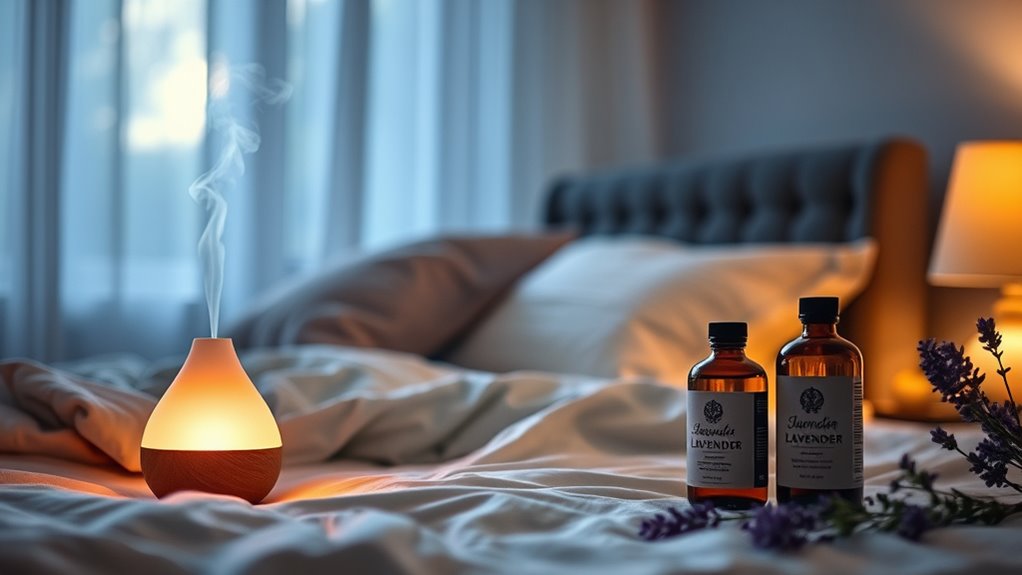
Aromatherapy influences sleep by delivering natural essential oils that interact with your brain’s chemistry. When you breathe in these essential oils, they activate your olfactory system, which connects directly to brain regions controlling mood and relaxation. Certain scents act as sleep triggers, signaling your body to wind down and prepare for rest. For example, lavender’s calming properties can reduce stress, making it easier to fall asleep. The scent molecules stimulate receptors that influence neurotransmitter activity, such as increasing serotonin or decreasing cortisol levels. As a result, your nervous system relaxes, easing you into sleep. Additionally, essential oil delivery methods can enhance the effectiveness of aromatherapy by ensuring optimal absorption and scent diffusion. By understanding how essential oils affect your brain, you can harness their power to create a more restful, peaceful sleep environment naturally. Understanding the science behind aromatherapy can help you choose the most effective scents and techniques for better sleep. Using proper diffusion techniques ensures you maximize the benefits of aromatherapy without overwhelming your space.
Scientific Evidence Supporting the Use of Lavender and Other Scents
Numerous studies have investigated the scientific basis behind the sleep-promoting effects of lavender and other scents. While some essential oil myths suggest aromatherapy is purely placebo, research shows measurable benefits. Modern scent therapy history reveals that scent exposure can influence brain activity related to relaxation and sleep. For example, randomized controlled trials demonstrate that inhaling lavender essential oil can reduce sleep latency and improve sleep quality in both healthy adults and those with sleep disturbances. These findings suggest that the aroma’s effects are rooted in physiological responses rather than just psychological expectation. Although more research is needed to fully understand the mechanisms, current evidence supports the idea that lavender and similar scents can promote better sleep, challenging misconceptions and highlighting their potential as natural sleep aids. Understanding the neurochemical responses involved in scent inhalation further underscores the biological basis for aromatherapy’s benefits. Additionally, the historical use of aromatherapy in different cultures supports its efficacy and natural appeal as a sleep-enhancing practice.
The Role of Relaxation and Stress Reduction in Sleep Quality

Stress and relaxation play a crucial role in determining sleep quality, as heightened stress levels can make falling asleep difficult and disrupt restful sleep. Good sleep hygiene includes practices that promote relaxation and reduce stress, helping you wind down before bed. Managing stress effectively can lower cortisol levels, making it easier to shift into sleep. Techniques like deep breathing, meditation, or aromatherapy can support your stress management efforts. When you create a calming bedtime routine, your body learns to associate certain cues with relaxation, improving sleep quality over time. Incorporating evidence-based strategies can further cultivate relaxation, which in turn can positively influence your sleep environment and overall sleep experience. Additionally, consistent sleep schedules and creating a comfortable, clutter-free space can further enhance sleep quality. Making mindfulness practices part of your nightly routine can also help reduce stress and promote a tranquil mind before sleep. In turn, better sleep promotes overall well-being and resilience against daily stressors.
Practical Ways to Incorporate Aromatherapy Into Your Night Routine

Incorporating aromatherapy into your night routine is a simple yet effective way to enhance relaxation and prepare your body for restful sleep. To do this, consider these practical methods:
- Use essential oils in a diffuser to fill your sleep environment with calming scents like lavender or chamomile. This creates a soothing atmosphere that promotes relaxation and can help reduce stress levels, similar to what vetted home theatre projectors offer in creating a comfortable viewing environment. Incorporating essential oils for sleep can further enhance your experience by promoting deeper rest and supporting sound healing science principles that utilize specific frequencies for healing.
- Add a few drops of essential oil to your pillow or bedding to ensure you breathe in relaxing aromas throughout the night.
- Incorporate essential oils into your bedtime routine by mixing them with a carrier oil and applying to your wrists or temples for a calming effect. Understanding credit card terms is also important for managing personal finances effectively, just as understanding scent profiles enhances aromatherapy.
- Consider Free Floating techniques to create a tranquil environment that supports deep sleep and reduces stress. Regularly updating your security measures can also protect your data, much like maintaining a secure sleep environment promotes better rest.
Limitations and Considerations When Using Aromatherapy for Sleep
While aromatherapy can enhance your sleep routine, it’s important to be aware of its limitations and potential considerations. Some people may experience possible allergies or skin sensitivities to certain scents, which could worsen sleep quality. Additionally, scent preferences vary widely; what relaxes one person might irritate another. Always test new essential oils in small amounts before regular use. Keep in mind that strong or overpowering scents might disrupt sleep rather than promote it. To help clarify, consider this:
| Consideration | Explanation | Tip |
|---|---|---|
| Possible allergies | Reactions can include skin irritation or respiratory issues | Patch test before use |
| Scent preferences | Personal taste influences effectiveness | Choose scents you find calming |
| Sensitivity to intensity | Overly strong scents can cause discomfort | Use in moderation |
Additionally, understanding wave and wind patterns can help you optimize the use of aromatherapy by choosing scents that naturally promote relaxation during specific times of day or weather conditions. Recognizing air circulation in your space can also influence how effectively the scents disperse and how well you tolerate them. Being mindful of environmental factors can also influence the efficacy and safety of your aromatherapy practices. For example, air quality can impact how effectively the scents disperse and how well you tolerate them. Moreover, considering personal sensitivities can further ensure a safe and effective experience with aromatherapy.
Frequently Asked Questions
Are There Any Side Effects or Allergies Associated With Aromatherapy for Sleep?
Yes, aromatherapy can cause side effects or allergies if you’re sensitive. To stay safe, always check essential oil safety by doing an allergy testing before extensive use. Some people might experience skin irritation or respiratory issues. You should dilute essential oils properly and avoid direct contact with skin. If you notice any adverse reactions, discontinue use immediately and consult a healthcare professional to guarantee safe and effective aromatherapy for sleep.
Can Aromatherapy Replace Traditional Sleep Medications Safely?
Is aromatherapy a magic wand? While it offers natural remedies, it’s not a replacement for traditional sleep medications without safety considerations. You shouldn’t abandon prescribed treatments without consulting your healthcare provider. Aromatherapy can complement your sleep routine, but it’s essential to know your allergies and follow proper usage. Always prioritize safety and see it as a helpful addition, not a substitute, to professional medical advice and treatment.
How Long Does It Typically Take to Notice Sleep Improvements From Aromatherapy?
You might notice sleep improvements from aromatherapy within a few days to a week, but timing expectations can vary based on your individual response. Some people experience quicker benefits, while others need consistent use over longer periods. To optimize results, try diffusing lavender or other calming scents regularly before bed. Keep track of your sleep patterns to better understand how aromatherapy affects you personally and adjust your routine accordingly.
Is Aromatherapy Effective for Everyone, Regardless of Individual Scent Preferences?
Aromatherapy isn’t effective for everyone, much like a key that doesn’t open every lock. Your personal scent preferences and cultural differences influence how well it works for you. For example, some find lavender calming, while others prefer citrus or herbal scents. If your favorite aroma relaxes you, it’s more likely to enhance sleep. Experiment with different scents to find what truly resonates, making your sleep routine uniquely effective.
Are There Specific Brands or Quality Standards to Look for in Essential Oils?
You should look for essential oils with strong quality assurance and a reputable brand reputation. Choose brands that provide third-party testing to guarantee purity and potency. Avoid oils with synthetic additives or fillers, and check for clear labels with specific botanical sources. By selecting trusted brands, you ensure you’re using high-quality oils, which maximizes their benefits and minimizes potential risks, making your aromatherapy experience safer and more effective.
Conclusion
Imagine your bedroom as a peaceful garden, where calming scents like lavender are the gentle breeze guiding you to restful sleep. Aromatherapy can be a natural way to create this tranquil space, helping you unwind and ease stress. While it’s not a magic wand, incorporating these scents into your routine can turn your sleep environment into a soothing haven. Embrace the aromas, and let them gently lull you into a night of restorative rest.