
To protect your sleep and teeth from nighttime grinding, identify stress triggers and avoid caffeine or heavy meals before bed. Establish a relaxing bedtime routine, stick to a consistent sleep schedule, and create a peaceful environment. Consider using custom dental guards from your dentist to prevent damage and improve comfort. Managing stress through techniques like meditation or gentle exercise can also help reduce bruxism. Keep exploring for more tips to safeguard your dental health and rest.
Key Takeaways
- Use custom dental guards to prevent tooth wear and protect against fractures during sleep.
- Manage stress with relaxation techniques like meditation, deep breathing, or gentle yoga.
- Avoid caffeine, alcohol, and heavy meals before bed to reduce muscle tension and grinding triggers.
- Maintain a consistent sleep schedule and create a calming bedtime routine for better sleep quality.
- Seek professional dental evaluation early to identify signs of bruxism and receive appropriate treatment.
Understanding the Causes of Nighttime Teeth Grinding
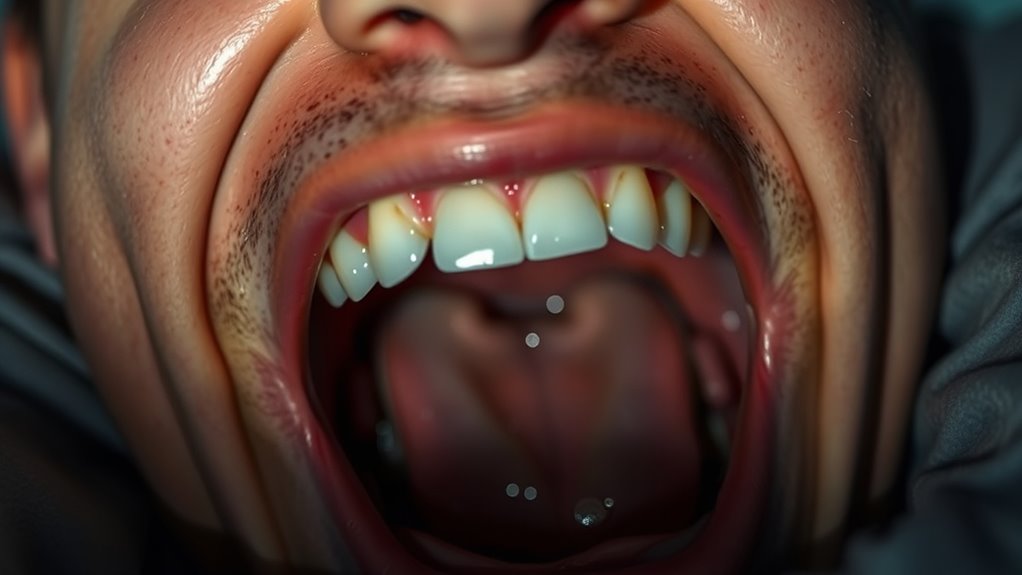
Nighttime teeth grinding, or bruxism, often results from a combination of physical, psychological, and lifestyle factors. You might notice that jaw tension plays a significant role, as it can build up during periods of stress. Stress triggers, such as work pressure or anxiety, often cause your jaw muscles to tighten unconsciously, leading to grinding during sleep. Additionally, habits like caffeine or alcohol consumption can increase your likelihood of bruxism. Sleep disorders, such as apnea, may also contribute by disrupting your normal rest cycles. Recognizing that stress and jaw tension are common culprits helps you understand why bruxism occurs. Addressing these underlying factors can be vital in managing and preventing nighttime teeth grinding effectively. Understanding jaw tension can also help in developing effective relaxation techniques to reduce grinding. Furthermore, awareness of artificial sleep disruptions can assist in identifying potential triggers for bruxism.
Recognizing the Signs and Symptoms of Bruxism

Since bruxism often occurs during sleep, many people aren’t immediately aware they’re grinding their teeth. You might notice signs like jaw clenching, especially upon waking, or persistent muscle tension in your jaw, face, or neck. During the day, you could experience headaches or a sore jaw after waking up. Some people grind or tighten their teeth so intensely that they notice worn-down tooth surfaces or chipped enamel. You might also feel a clicking or popping sound in your jaw joint when opening or closing your mouth. Pay attention to these signs, as they often indicate you’re grinding your teeth at night. Recognizing these symptoms early can help you seek appropriate treatment and protect your dental health.
The Impact of Teeth Grinding on Dental Health
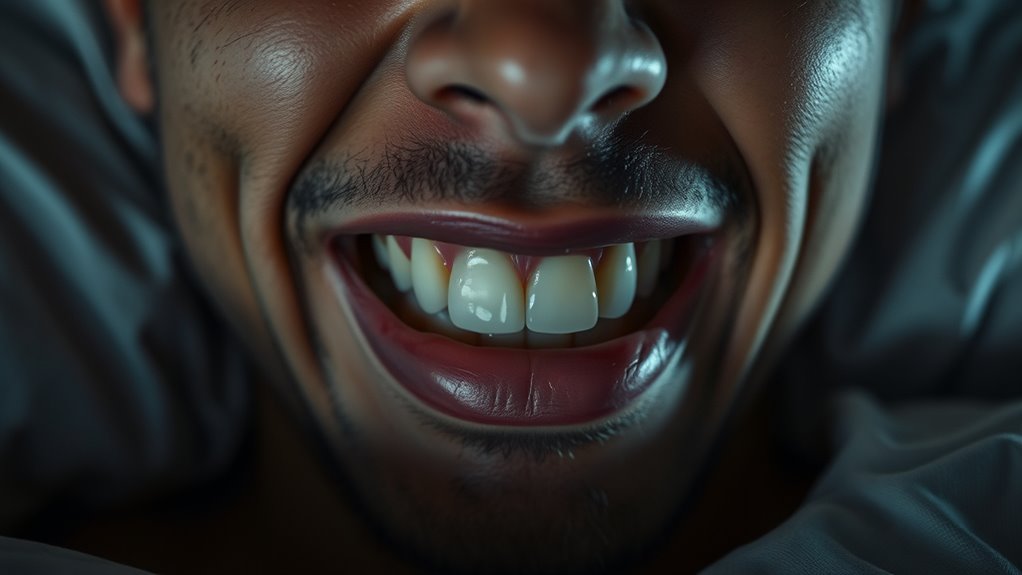
Have you ever considered how teeth grinding can directly damage your smile? The constant pressure from bruxism can cause significant dental issues. One major concern is tooth erosion, where acid-like wear gradually dissolves your tooth surfaces. This process weakens your teeth and can lead to increased sensitivity. Additionally, enamel wear from grinding strips away the protective outer layer of your teeth, making them more vulnerable to decay and damage. Over time, this damage can alter your bite, cause chips, or even lead to tooth fractures. Recognizing these effects early is vital for preventing long-term problems. Protecting your dental health involves addressing grinding habits and seeking professional help to minimize enamel wear and preserve your smile’s strength. Understanding bruxism’s causes can help you better manage and prevent further damage, especially when combined with proper nighttime habits and dental interventions. Being aware of the role of stress and anxiety in teeth grinding can further aid in effective management. Additionally, understanding dental erosion processes offers insight into how ongoing wear impacts your teeth’s durability over time. Incorporating early intervention strategies can significantly reduce the risk of irreversible damage and preserve your dental health in the long run.
How Nighttime Teeth Grinding Affects Sleep Quality

When you grind your teeth at night, it can disrupt your sleep cycles, making it harder to reach deep, restorative sleep. You might find yourself waking up multiple times without fully realizing why. These frequent awakenings can leave you feeling tired and less refreshed in the morning. Incorporating smart appliances that monitor sleep patterns can help identify and address issues related to teeth grinding. Utilizing sleep tracking technology can also provide insights into how your teeth grinding impacts your overall sleep quality, allowing for more targeted interventions. Understanding bruxism and its effects on sleep can empower you to seek appropriate treatments and improve your sleep health. Being aware of lease negotiation strategies can also assist in managing the costs associated with sleep-related health expenses or treatments more effectively. Recognizing the importance of early diagnosis can lead to more effective management of teeth grinding and its impact on sleep.
Disrupted Sleep Cycles
Nighttime teeth grinding often leads to fragmented sleep because it causes frequent awakenings and shifts in sleep stages. This disturbance results in sleep cycle disruption, making it harder for you to reach restorative deep sleep and REM stages. Over time, these sleep pattern changes reduce overall sleep quality, leaving you tired and less alert during the day. To highlight this, consider the following:
| Effect of Grinding | Impact on Sleep Quality |
|---|---|
| Frequent awakenings | Less time in deep sleep |
| Sleep stage shifts | Reduced REM sleep |
| Fragmented cycles | Increased tiredness |
Understanding these disruptions underscores the importance of addressing teeth grinding to protect your sleep cycles and overall well-being. Recognizing sleep cycle disruption can help motivate you to seek effective solutions and improve your sleep health. Additionally, being aware of how disrupted sleep patterns influence mood and cognitive performance can further encourage proactive management. Addressing these issues early can also prevent the development of long-term health consequences, ultimately supporting better overall health and quality of life. Incorporating relaxation techniques and exploring essential oils for sleep may also aid in reducing nighttime grinding and improving sleep continuity.
Increased Nighttime Awakenings
Teeth grinding during sleep often causes you to wake up multiple times throughout the night, even if you don’t fully remember these awakenings. These disruptions fragment your sleep cycle, leaving you feeling unrefreshed. Your sleep posture plays a role; sleeping in positions that strain your jaw or neck can worsen grinding and awakenings. Establishing consistent nighttime routines helps signal to your body that it’s time to relax, reducing the likelihood of restless nights. Avoid caffeine or screens before bed, and focus on calming activities instead. When your sleep posture supports relaxation and your routines promote unwinding, you’re less prone to frequent awakenings. This creates a more restful night and minimizes the impact of teeth grinding on your sleep quality. Proper sleep hygiene practices can significantly improve your overall sleep experience and reduce grinding episodes. Incorporating natural remedies, such as relaxing herbal teas or aromatherapy, can also promote more restful sleep and lessen grinding tendencies. Additionally, practicing stress reduction techniques during the day can help decrease nighttime teeth grinding by lowering overall tension levels. Developing awareness of sleep environment factors, like noise or light, can further enhance sleep quality and reduce disturbances caused by grinding.
Preventive Measures to Reduce Teeth Grinding

To effectively reduce teeth grinding at night, implementing specific preventive measures can make a considerable difference. Managing stress through relaxation techniques like meditation, deep breathing, or gentle yoga helps calm your mind and reduce muscle tension that triggers grinding. Additionally, making dietary adjustments—such as avoiding caffeine, alcohol, and heavy meals before bed—can prevent muscle overactivity and promote better sleep. Establishing a consistent sleep schedule and creating a calming bedtime routine also contribute to less grinding. Regular exercise during the day helps reduce overall stress and improves sleep quality. Incorporating stress management techniques such as mindfulness practices may further support relaxation and decrease nighttime clenching. While these strategies don’t eliminate grinding entirely, they can considerably decrease its frequency and intensity, supporting healthier sleep patterns and protecting your teeth from damage. Incorporating at-home beauty tech devices designed to relax facial muscles may also assist in reducing nighttime clenching and grinding.
Dental Treatments and Devices for Protection

When it comes to protecting your teeth from the damaging effects of grinding, dental treatments and devices offer effective solutions. Dental appliances, like custom guards, are designed to fit your mouth perfectly, providing a barrier between your upper and lower teeth. These guards help distribute bite forces evenly, reducing wear and preventing fractures. You might imagine:
- A sleek, custom-fitted guard snugly covering your teeth
- Durable materials that withstand nightly grinding
- A comfortable fit that allows easy breathing and speaking
- A discreet device that feels almost invisible in your mouth
Choosing the right dental appliance ensures your teeth are protected while you sleep. Custom guards are tailored specifically for you, offering both comfort and effective protection against the harmful effects of bruxism. Understanding plant parts can help in selecting the most effective herbal remedies to support your overall health and well-being. Additionally, selecting a properly fitted device is crucial for ensuring optimal protection and comfort during sleep.
Lifestyle Changes to Minimize Bruxism
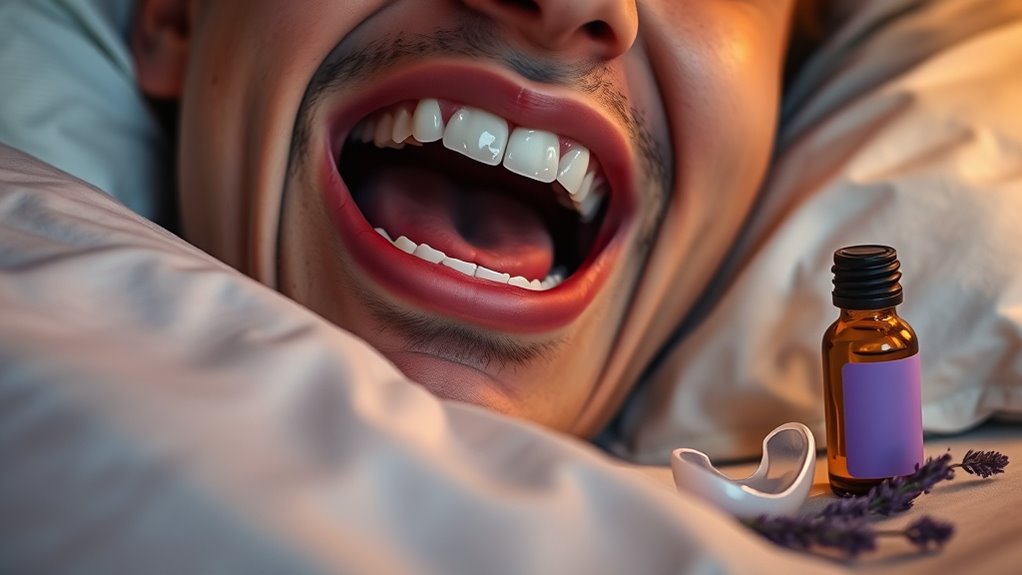
Since stress often triggers nighttime bruxism, managing your daily stress levels can considerably reduce teeth grinding. Incorporate stress management techniques like deep breathing, meditation, or regular exercise to help relax your mind and body. These practices can lower your overall stress, reducing the likelihood of grinding during sleep. Additionally, making dietary adjustments can support this effort; avoid caffeine and alcohol, especially before bedtime, as they can increase muscle tension and disrupt sleep. Eating calming, nutrient-rich foods and maintaining a balanced diet promote better relaxation and reduce stress-related triggers. Small lifestyle changes like establishing a consistent sleep routine and creating a calming evening environment also help minimize bruxism. These simple steps can improve your sleep quality and protect your teeth from damage.
When to Seek Professional Help

If you notice persistent jaw pain, tooth damage, or headaches in the morning, it’s time to see a professional. These signs suggest your bruxism may be worsening and needs expert evaluation. Don’t wait too long—consult your dentist to prevent further damage.
Signs Indicating Need
You should consider seeking professional help when you notice persistent or severe teeth grinding that causes noticeable damage, such as chipped, cracked, or worn-down teeth. Look out for signs like increased jaw muscle tension, which may make your jaw feel sore or stiff upon waking. Nighttime headaches are common, especially around your temples or forehead, often linked to clenching or grinding. You might also experience ear pain or a feeling of fullness, even without an ear infection. Additionally, if you notice your teeth becoming increasingly flattened or chipped, it’s time to consult a professional. These symptoms signal that your grinding may be damaging your teeth and affecting your overall sleep quality. Addressing these issues early can prevent further harm and improve your well-being.
When to Consult Dentist
Knowing when to see a dentist is essential to preventing serious damage from teeth grinding. If you notice persistent jaw pain, worn or chipped teeth, or frequent headaches, it’s time to consult a professional. A dentist can evaluate your condition and recommend custom mouthguards to protect your teeth during sleep. If stress management techniques aren’t diminishing your grinding, seeking professional help can make a difference. Dentists may suggest behavioral therapies or other treatments to address underlying causes. Don’t ignore ongoing symptoms, as untreated teeth grinding can lead to long-term damage and discomfort. Early intervention saves your teeth and improves your sleep quality. When in doubt, scheduling a dental appointment ensures you get the appropriate guidance and protection.
Tips for Maintaining a Healthy, Restful Sleep Environment

Creating a sleep-friendly environment is essential for reducing teeth grinding at night. Good sleep hygiene and consistent bedtime routines set the stage for restful sleep and can minimize nighttime teeth clenching. To improve your sleep space, consider keeping your room cool, dark, and quiet. Use blackout curtains or an eye mask to block out light, and earplugs or white noise machines to drown out noise. Ensure your mattress and pillows support comfortable sleep positions. Establish a calming bedtime routine—such as reading or gentle stretches—to signal your body it’s time to wind down. Avoid screens and caffeine before bed, and stick to a regular sleep schedule. These simple changes help create an environment that promotes relaxation and reduces the likelihood of teeth grinding.
Frequently Asked Questions
Can Stress Management Techniques Help Reduce Nighttime Teeth Grinding?
Yes, stress management techniques can help reduce nighttime teeth grinding. When you practice relaxation exercises and mindfulness techniques, you lower your stress levels, which often trigger grinding. Incorporate deep breathing, meditation, or progressive muscle relaxation into your routine before bed. These methods calm your mind and body, decreasing the likelihood of grinding during sleep. Consistently applying stress reduction strategies can markedly improve your sleep quality and protect your teeth.
Are Certain Medications Linked to Increased Bruxism Episodes?
Certain medications can increase your risk of bruxism due to side effects like muscle tension or jaw clenching. Some drugs, especially antidepressants and stimulants, may also cause drug interactions that worsen grinding episodes. You should consult your healthcare provider if you notice increased teeth grinding after starting a new medication. They can adjust your treatment plan or suggest alternatives to help reduce bruxism and protect your sleep quality.
How Does Age Influence the Likelihood of Teeth Grinding at Night?
Like a river carving new paths, your age shapes your teeth grinding habits. Younger individuals often experience bruxism during developmental stages, while older adults may see a decline due to muscle changes and health factors. Age-related changes can influence how frequently and intensely you grind your teeth at night. Understanding this helps you take targeted steps to protect your teeth, no matter which stage of life you’re in.
Can Dietary Habits Impact Teeth Grinding Severity?
Yes, your dietary habits can impact the severity of teeth grinding. Consuming too much sugar can increase muscle tension and make grinding worse, while nutritional deficiencies, like lack of magnesium or calcium, can weaken enamel and contribute to muscle cramps. Cutting back on sugar and eating a balanced diet rich in essential nutrients may help reduce grinding severity and protect your teeth during sleep.
What Are the Long-Term Dental Consequences of Untreated Bruxism?
If you ignore untreated bruxism, you risk serious dental issues. For example, over time, you might develop dental erosion from constant grinding, which weakens enamel. Tooth fractures are also common, potentially leading to pain, infection, or even tooth loss. These long-term consequences can be costly and uncomfortable, so addressing bruxism early helps protect your teeth from irreversible damage and keeps your smile healthy.
Conclusion
Did you know that nearly 8% of adults suffer from nighttime teeth grinding? By understanding its causes and taking proactive steps, you can protect your teeth and improve your sleep. Remember, addressing bruxism early not only preserves your dental health but also enhances your overall rest. Don’t ignore the signs—seek professional advice if needed. Taking action now can lead to healthier teeth and more restful nights ahead.