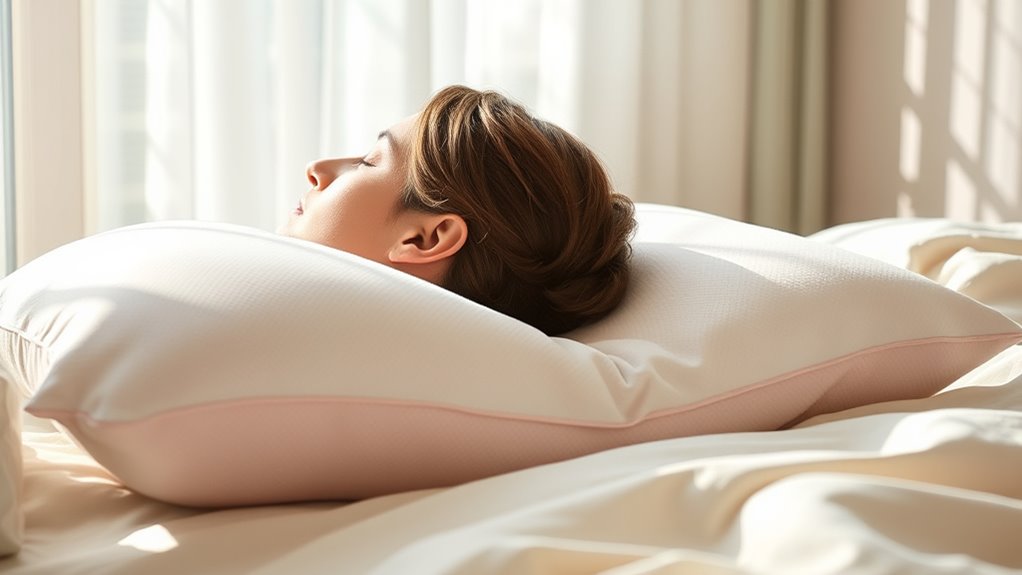

Your pillow influences your sleep quality by supporting proper spinal alignment and reducing neck strain. The right firmness and material help prevent discomfort and waking up stiff or with headaches. Choosing a pillow suited to your sleep position, with the correct loft, can prevent misalignment and improve rest. Keep support, support, and hygiene in mind to wake refreshed. If you want to find out how to choose your ideal pillow, there’s more to discover below.

Get health and wellness essentials delivered free with Prime
- Fast, free delivery on millions of items
- Prime Video, Amazon Music and more included
- Member-only deals all year
Key Takeaways
- Proper support and firmness help maintain spinal alignment, reducing neck pain and improving sleep quality.
- Choosing the right pillow loft ensures comfort and prevents neck strain based on your sleeping position.
- Material choices like memory foam or latex contour to support the head and reduce discomfort.
- Regular pillow hygiene and timely replacement prevent allergens and support healthy, restful sleep.
- An appropriately selected pillow minimizes sleep disruptions caused by discomfort or improper positioning.
As an affiliate, we earn on qualifying purchases.
The Role of Support and Firmness in Sleep Quality
Support and firmness play a crucial role in how well you sleep, as they help maintain proper spinal alignment throughout the night. When choosing a pillow, consider not just its support level but also how it complements your bedroom’s décor. Pillow aesthetics matter because decorative pillows can enhance your sleep space’s look, but they shouldn’t sacrifice support. A pillow that’s too soft may cause your head to sink and misalign your spine, leading to discomfort. Conversely, a firm pillow can provide the necessary lift, especially if you sleep on your back or stomach. Finding the right balance ensures you wake up refreshed. Remember, support and firmness directly influence sleep quality, so prioritize these features over purely decorative aspects when selecting your ideal pillow. Additionally, selecting a pillow made from sustainable materials can contribute to more environmentally friendly sleeping habits, reinforcing the importance of eco-friendly choices in your overall sleep environment. Maintaining proper pillow hygiene is also essential for a healthy sleep routine and reducing allergens that may affect your breathing.
As an affiliate, we earn on qualifying purchases.
How Pillow Materials Influence Comfort and Health
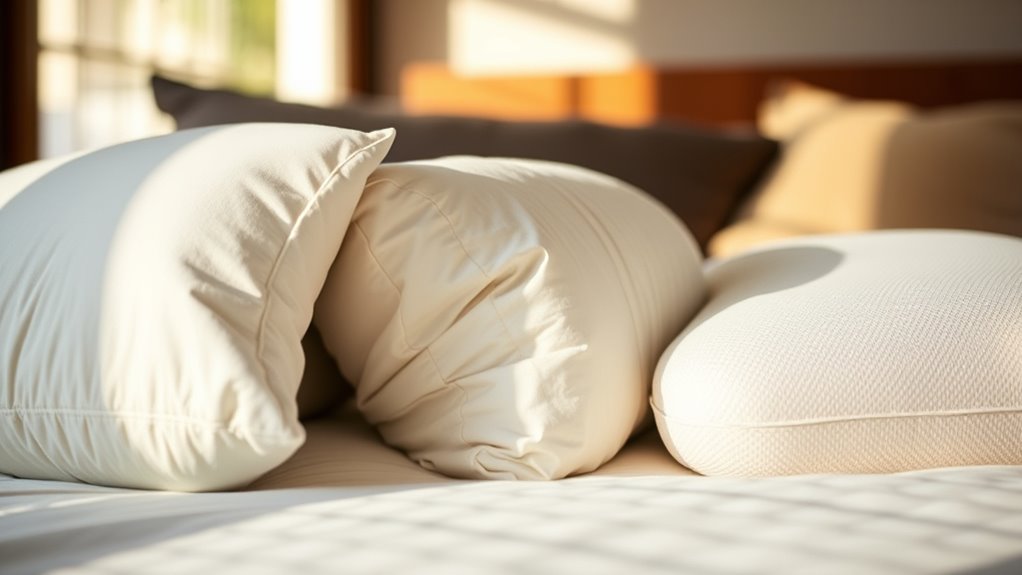
The materials used in a pillow considerably affect both your comfort and overall health. Choosing the right fabric and filling can improve sleep quality and reduce allergies. For example, natural fills like memory foam contour to your head, offering support, while hypoallergenic covers protect your skin. Additionally, pillow aesthetics matter — soft, attractive covers can enhance your bedroom’s style. Keep in mind:
- Memory foam and latex promote better spinal alignment and reduce pressure points.
- Down and synthetic fills vary in firmness, impacting your comfort preferences.
- Decorative pillows often prioritize appearance over support, so they aren’t suitable for sleeping.
- Being aware of Vetted information on materials can help you select a pillow that minimizes discomfort during long periods of rest. Selecting materials that suit your needs can minimize discomfort and health issues, making your sleep more restorative. Considering material durability can also ensure your pillow maintains its supportive qualities over time.
contour support pillow for neck pain
As an affiliate, we earn on qualifying purchases.
As an affiliate, we earn on qualifying purchases.
Identifying the Best Pillow for Your Sleeping Position
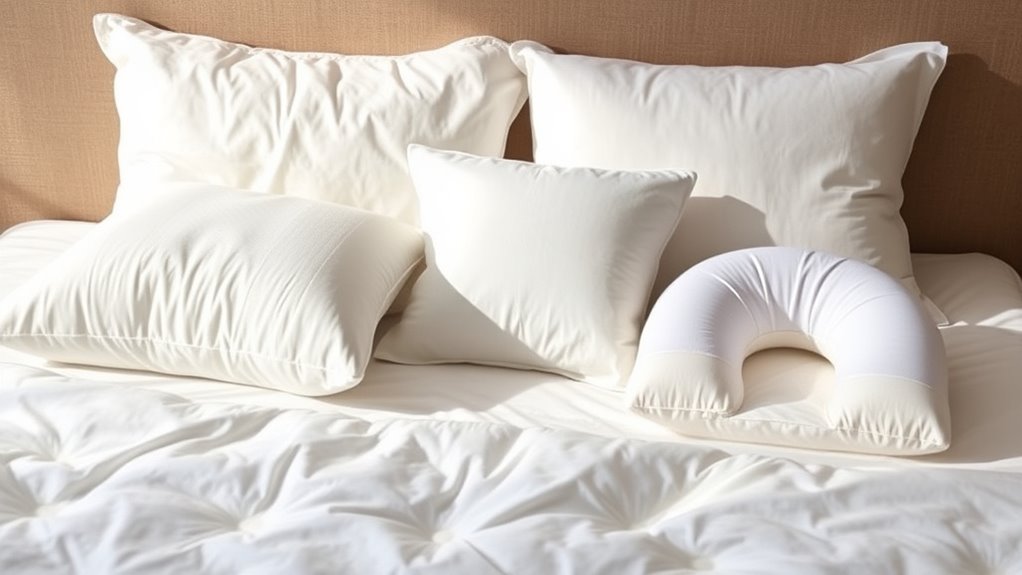
Choosing the right pillow depends heavily on your sleeping position, as each one requires different support to keep your spine aligned and prevent discomfort. Side sleepers need a firmer, thicker pillow to fill the space between shoulder and head. Back sleepers benefit from a medium loft that supports the neck without elevating the head too much. Stomach sleepers should opt for a soft, thin pillow to avoid strain. Be mindful of pillow allergies; hypoallergenic options can minimize reactions. Decorative pillows are tempting but often too firm or decorative pillows aren’t suitable for sleeping. Use the table below as a quick guide: Additionally, selecting a pillow with ergonomic design can further enhance sleep quality by providing tailored support. Incorporating proper pillow maintenance, such as regular washing and replacing worn-out pillows, can also significantly improve your sleep experience. Understanding the importance of personal comfort preferences can help you choose the best pillow for restful nights. For optimal support, consider pillows made from memory foam or latex that adapt to your unique shape and sleeping style.
adjustable loft pillow for sleeping position
As an affiliate, we earn on qualifying purchases.
As an affiliate, we earn on qualifying purchases.
The Impact of Pillow Thickness and Loft on Spinal Alignment

Pillow thickness and loft directly influence how well your spine stays aligned during sleep. If your pillow is too thick or too thin, it can cause neck strain and misalignment, leading to discomfort. When selecting a pillow, consider these factors:
- Proper Loft: Choose a loft that supports your sleeping position, maintaining a natural neck curve.
- Aesthetic Appeal: Pillow aesthetics matter—decorative pillowcases should complement your bedding without adding unnecessary height.
- Material Consistency: Opt for consistent loft materials to ensure lasting support and maintain proper spinal alignment.
Balancing these elements helps prevent neck pain and enhances overall sleep quality. The right pillow, with suitable thickness and loft, ensures your spine remains aligned, promoting restful sleep and better posture.
Signs That Your Pillow Might Be Causing Discomfort
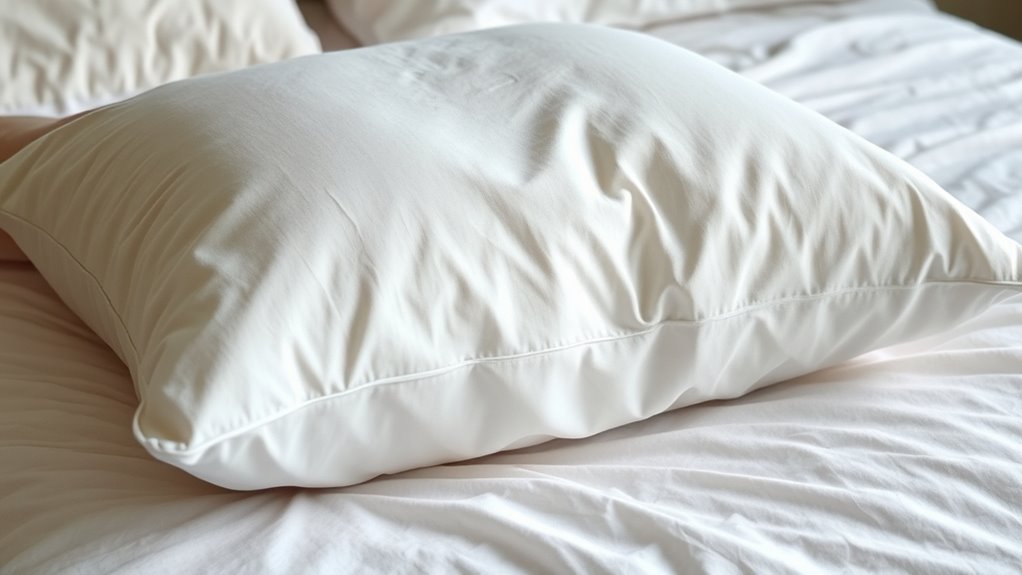
If you wake up with neck pain or find yourself constantly shifting during the night, your pillow could be the culprit. Persistent headaches and frequent sleep disruptions are strong signs that your pillow isn’t providing proper support. Pay attention to these symptoms—they often point to an uncomfortable pillow that needs changing. Additionally, an unsupportive pillow can negatively impact your spinal alignment and overall sleep quality. Managing your document organization can help you keep track of your health and sleep issues, making it easier to identify patterns and seek appropriate solutions. For example, understanding the character development of your sleep habits can help you recognize when a change in pillow support is necessary. Exploring sleep aids like specialized pillows or mattress toppers may also improve your rest. Incorporating topical research about pillow types can guide you in selecting the best option for your sleep needs.
Neck Pain Waking
Have you noticed waking up with stiffness or soreness in your neck? That discomfort could be a sign your pillow isn’t right for you. Here are some clues to watch for:
- Persistent neck pain even after a good night’s sleep
- Waking up with limited neck mobility or tingling sensations
- Signs of pillow allergies or poor pillowcase hygiene, like sneezing or congestion in the morning
- Advances in nanotechnology are being explored to create more supportive and hypoallergenic pillow materials that can enhance sleep quality. Proper pillow support can also help prevent body alignment issues that contribute to neck pain.
- Using a pillow that doesn’t provide adequate water support can lead to improper neck positioning and exacerbate discomfort. Additionally, selecting a pillow with appropriate firmness and shape can significantly improve spinal alignment and reduce waking pain. Regularly cleaning and replacing pillows can also prevent buildup of dust mites and allergens that worsen discomfort, aligning with home maintenance practices to promote better sleep health.
If your pillow is causing allergies or isn’t cleaned regularly, it can increase discomfort and worsen neck issues. An unsupportive pillow may not align your spine properly, leading to waking pain. Investing in a hypoallergenic pillow and maintaining pillowcase hygiene can help reduce these problems and improve your sleep quality.
Persistent Headaches
Persistent headaches upon waking can signal that your pillow isn’t providing proper support or alignment during sleep. An unsupportive pillow can strain your neck and head, leading to repeated headaches. Additionally, poor pillow hygiene can accumulate dust mites, mold, and allergens, which might trigger allergy concerns and worsen headaches. If your pillow isn’t regularly cleaned or replaced, these irritants can irritate your sinuses and cause discomfort. Choosing a pillow that maintains good hygiene and offers suitable support helps reduce the risk of headaches. Consider replacing pillows every 1-2 years and washing pillowcases frequently. Ensuring your pillow is clean and supportive not only improves sleep quality but also minimizes the chances of waking up with persistent headaches. Regularly maintaining pillow hygiene is essential for overall health and sleep comfort, and using appropriate materials can further enhance comfort and reduce allergen buildup.
Sleep Disruptions Occur
Waking up tired or feeling unrested can be a clear sign that your pillow isn’t supporting you properly during sleep. If your sleep is frequently disrupted, your pillow might be the culprit. It’s not just about pillow aesthetics or decorative pillows on your bed; comfort matters most. Here are some signs to watch for:
- You wake up with neck or shoulder pain, indicating poor support.
- Your sleep is interrupted by discomfort or frequent repositioning.
- You notice persistent headaches, which can stem from improper alignment.
If your pillow looks fine but causes these issues, consider replacing it with one that offers better support. Choosing the right pillow can markedly improve your sleep quality and reduce disruptions caused by unsuitable pillow choices.
Tips for Maintaining and Choosing Your Ideal Pillow
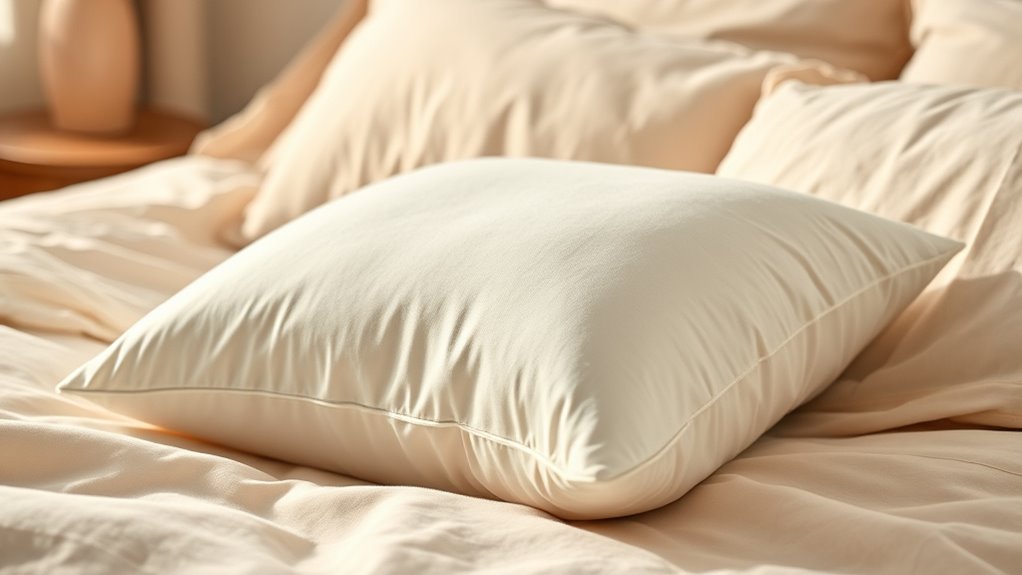
Choosing the right pillow is essential for a good night’s sleep, and maintaining it properly guarantees it stays supportive and comfortable over time. To do this, focus on pillow hygiene by regularly washing your pillowcases and replacing pillows when they become lumpy or lose support. Keep decorative pillows separate from your sleep pillows, as they often aren’t designed for daily use and can harbor dust and allergens. When selecting a new pillow, consider your sleep position, firmness preference, and material. Avoid overly soft or hard options that don’t support your neck properly. Regular maintenance, like fluffing and airing out your pillow, extends its lifespan and keeps it fresh. Proper care ensures your pillow remains a supportive, comfortable foundation for restful sleep.
When to Replace Your Pillow for Better Rest
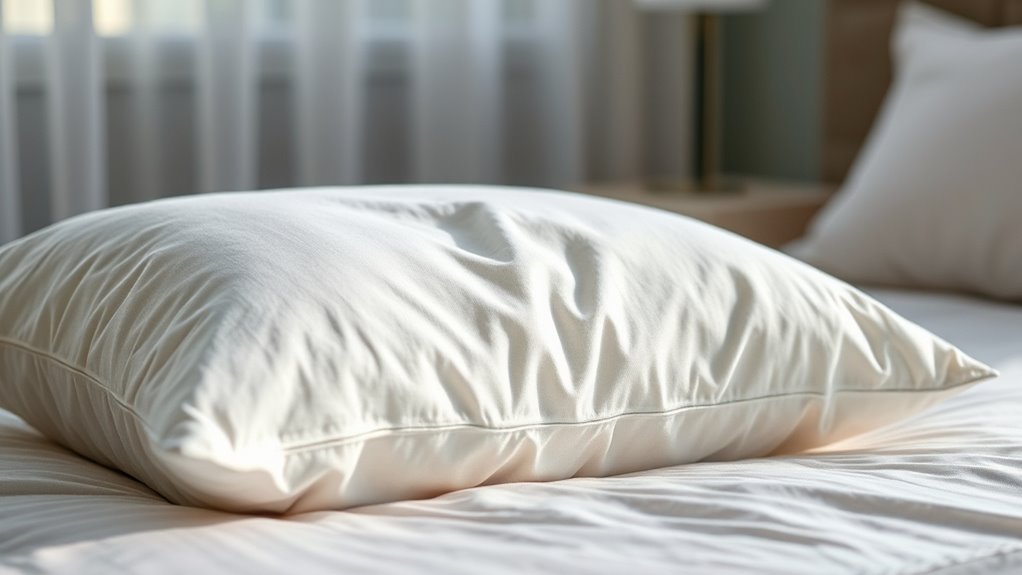
Knowing when to replace your pillow is key to maintaining good sleep quality. Over time, pillows accumulate sweat, oils, and dust mites, affecting pillow hygiene and potentially disrupting your rest. Consider replacing your pillow:
- Every 1-2 years, regardless of appearance, to prevent allergen buildup.
- When you notice persistent odors or visible stains, signaling it’s time for a change.
- During seasonal pillow changes, as these are ideal moments to refresh your sleep setup and ensure maximum pillow hygiene.
Regularly updating your pillow supports better neck support and reduces allergy risks. Seasonal pillow changes not only improve hygiene but also help you choose a pillow suited to changing weather and your evolving comfort needs. Staying proactive ensures restful, healthier sleep.
Frequently Asked Questions
How Often Should I Wash or Clean My Pillow?
You should wash your pillow every 3 to 6 months to maintain good pillow hygiene. Following a regular cleaning schedule helps prevent dust mites, bacteria, and allergens from building up. Check your pillow’s care label for specific instructions, but generally, machine wash with gentle detergent and dry thoroughly. Keeping your pillow clean guarantees better sleep quality and reduces allergy symptoms, so make it a priority in your overall hygiene routine.
Can Allergies Be Triggered by Certain Pillow Materials?
Irony strikes—your pillow’s comfort might be causing allergies. Certain materials, like synthetic fibers, can trigger allergies and attract pillow dust mites, making your sleep less restful. If you notice sneezing or itchy eyes upon waking, your pillow could be the culprit. Choosing hypoallergenic, natural fillings can reduce these reactions, helping you sleep soundly instead of suffering from allergic reactions caused by the very pillow meant to give you comfort.
Do Temperature-Sensitive Pillows Improve Sleep Quality?
Temperature-sensitive pillows can considerably improve your sleep comfort by adapting to your body heat, helping you stay cool or warm as needed. Their innovative pillow material responds to temperature changes, promoting better sleep quality. By regulating heat, these pillows reduce tossing and turning, leading to more restful sleep. If you struggle with temperature discomfort during the night, switching to a temperature-sensitive pillow might be just what you need for a more comfortable and restorative sleep experience.
Are There Specific Pillows Recommended for Side Sleepers?
As a side sleeper, you should choose pillows designed for ideal side sleeper ergonomics, offering proper neck and spine alignment. You’ll likely prefer a firmer pillow that provides enough support and maintains shape throughout the night. Look for options that contour to your head and neck, reducing pressure points. Selecting the right firmness and ergonomic design helps improve sleep quality, preventing discomfort and ensuring you wake up refreshed.
How Does Pillow Age Affect Its Ability to Support Properly?
Think of your pillow like a trusty old friend—over time, its support weakens. As pillow durability declines, support deterioration happens, making it less effective at cradling your head. After about 1-2 years, you may notice it no longer keeps its shape, causing discomfort. Regularly replacing your pillow guarantees you maintain proper support, preventing neck pain and improving sleep quality. Don’t wait; upgrade before support fades completely.
Conclusion
Your pillow is the gentle captain guiding your night’s voyage. When it’s just right, it cradles your head and aligns your spine, turning restless nights into peaceful dreams. But a wrong pillow can be a stormy sea, tossing you into discomfort and fatigue. Choose wisely, maintain it well, and replace when needed—so your sleep becomes a smooth sail, carrying you to mornings full of energy and bright horizons. Sweet dreams start with the perfect pillow!
Evergreen bestsellers Picks
bestsellers
As an affiliate, we earn on qualifying purchases.