
Listening to calming music before bed can help you relax, fall asleep faster, and improve sleep quality by reducing stress and promoting relaxation cues. Brain activity shifts from alertness to restful states when you enjoy soothing tunes, especially classical or ambient sounds. However, if overused or played too loudly, music could cause sleep disruption or dependence. Curious how to choose the best sleep sounds? Keep exploring for practical tips and more insights.
Key Takeaways
- Listening to calming music before bed can reduce stress and cortisol, easing the transition into sleep.
- Music with slow tempos and gentle melodies promotes relaxation and faster sleep onset.
- Consistent use of sleep-friendly music can reinforce sleep cues and improve overall sleep quality.
- Overexposure or loud volume may cause discomfort, sleep disruption, or sound intolerance.
- Choosing instrumental or ambient sounds without lyrics maximizes relaxation benefits and minimizes distractions.

Tim Janis Soothing Sounds of Nature Audio Relaxation, Meditation, Sleep & Stress Relief – Tranquil Nature Sounds, Relaxing Music CD, Calming Music CD & Spa Ambiance for Meditation, Yoga & Deep Restful Sleep
TRANQUIL NATURE SOUNDS: Experience the soothing embrace of Tim Janis' nature sounds CD. Let the calming melodies transport…
As an affiliate, we earn on qualifying purchases.
As an affiliate, we earn on qualifying purchases.
The Science Behind Music and Sleep

While many people find that listening to music helps them fall asleep, science explains how it actually works. Music therapy leverages soundscapes analysis to understand how certain sounds influence your brain. When you listen to calming tunes, your brain responds by reducing stress and lowering cortisol levels. Researchers study soundscapes to identify patterns that promote relaxation, such as slow tempos and gentle melodies. These elements activate your parasympathetic nervous system, encouraging rest. Scientific experiments reveal that music can alter brain wave activity, shifting from alertness to relaxation states. This evidence shows that specific sounds and rhythms can facilitate sleep onset by calming your mind. Additionally, understanding the neuroscience of sound helps clarify why music becomes a powerful tool for improving sleep quality. Exploring soundscape analysis further enhances our understanding of how auditory environments impact sleep, enabling more targeted approaches to relaxation. Moreover, recent research into brainwave entrainment demonstrates how rhythmic stimuli synchronize brain activity to promote restful states. The study of auditory processing provides insights into how different musical elements are perceived and how they influence emotional responses during sleep. Furthermore, advancements in neural synchronization are shedding light on the ways rhythmic patterns can enhance sleep induction.
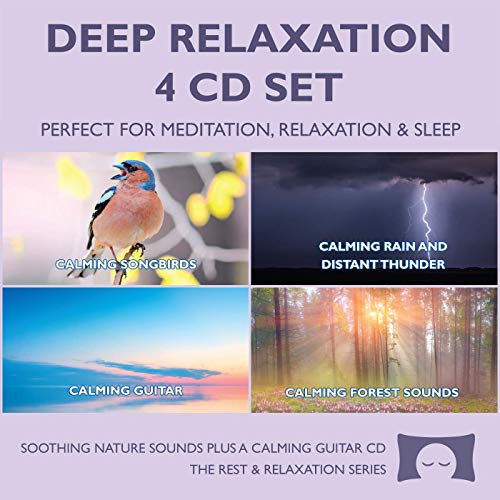
Deep Relaxation Nature Sounds 4 Album Set – for Meditation, Relaxation and Sleep – Nature's Perfect White Noise
Relaxation and Sleep Support: Relax your body and calm your mind with these relaxation and sleep CDs designed…
As an affiliate, we earn on qualifying purchases.
As an affiliate, we earn on qualifying purchases.
Benefits of Listening to Music Before Bed
Listening to music before bed can markedly enhance your ability to fall asleep faster and enjoy a more restful night. Music therapy has been shown to reduce stress and lower cortisol levels, creating a calming environment that promotes sleep. By integrating soothing tunes into your bedtime routine, you reinforce good sleep hygiene, helping your body associate certain sounds with relaxation. This practice can also improve your overall sleep quality, making it easier to stay asleep and wake up feeling refreshed. Additionally, gentle music can distract your mind from racing thoughts, easing anxiety that might otherwise delay sleep onset. Incorporating simple systems into your nightly routine can help establish consistent sleep cues, further supporting healthier sleep patterns. Using relaxation techniques alongside music can enhance these benefits by deepening the sense of calm. Establishing a consistent sleep schedule can also maximize the positive effects of soothing music on your rest. Furthermore, the presence of calming sounds can act as a sleep cue, signaling your body that it’s time to wind down. For example, certain music can influence your brain activity, promoting a state conducive to sleep. Overall, incorporating calming music into your nightly routine supports healthier sleep patterns and contributes to better mental and physical well-being.

Housbay White Noise Machine with 31 Soothing Sounds, 5W Loud Stereo Sound, Auto-Off Timer, Adjustable Volume, Sleep Sound Machine for Baby, Kid, Adult -Wood Grain
【Sleep, Finally】- 31 real nature sounds like white noise, fan sounds, rain, thunder and ocean—recorded from real environments…
As an affiliate, we earn on qualifying purchases.
As an affiliate, we earn on qualifying purchases.
Potential Risks and Drawbacks of Using Music at Night

| Risk | Emotional Impact |
|---|---|
| Music dependency | Feelings of anxiety if music isn’t available |
| Sleep disruption | Frustration from restless nights |
| Reduced natural sleep cues | Confusion about when to sleep |
| Overexposure to sound | Possible auditory fatigue leading to discomfort |
| Potential interference with sleep quality | Can diminish overall restfulness and recovery. Listening to music at inappropriate volumes or durations can also lead to sound intolerance over time, affecting comfort and sleep patterns. |

Sleep Headphones Bluetooth 6.0 Headband, 20H Playtime Headband Headphones with HD Stereo Speakers, Sports Wireless Earphones for Side Sleepers Workout Yoga Travel Meditation, Gifts for Women Men
【3-in-1 Sleep Headphones + Sport Bluetooth Headband + Sleep Mask】Crafted with ultra-soft, breathable fabric and equipped with a…
As an affiliate, we earn on qualifying purchases.
As an affiliate, we earn on qualifying purchases.
Types of Music That May Promote Better Sleep
Choosing the right type of music can considerably enhance your chances of achieving restful sleep. Classical melodies are excellent options because they often feature slow tempos, gentle dynamics, and soothing harmonies that relax your mind. Pieces like soft piano or string compositions can calm racing thoughts and prepare you for rest. Additionally, ambient soundscapes create a calming environment by mimicking natural sounds like flowing water or gentle breezes. These soundscapes reduce stress and help you drift off more easily. Both classical melodies and ambient soundscapes promote a peaceful atmosphere, helping you shift into sleep without abrupt interruptions. Incorporating sleep-friendly music into your bedtime routine can further improve your sleep quality. For example, some studies suggest that the use of calming music can lower cortisol levels, which are associated with stress. Experiment with these types of music to find what best suits your preferences and enhances your sleep quality. Engaging in a consistent bedtime routine that includes relaxing sounds can also cue your body to prepare for sleep more effectively. Creating a calming environment through auditory stimuli can help reinforce your body’s natural sleep signals, making it easier to transition into rest. Using evidence-informed guidance can help you select the most effective auditory environment for restful sleep.
Practical Tips for Incorporating Music Into Your Sleep Routine
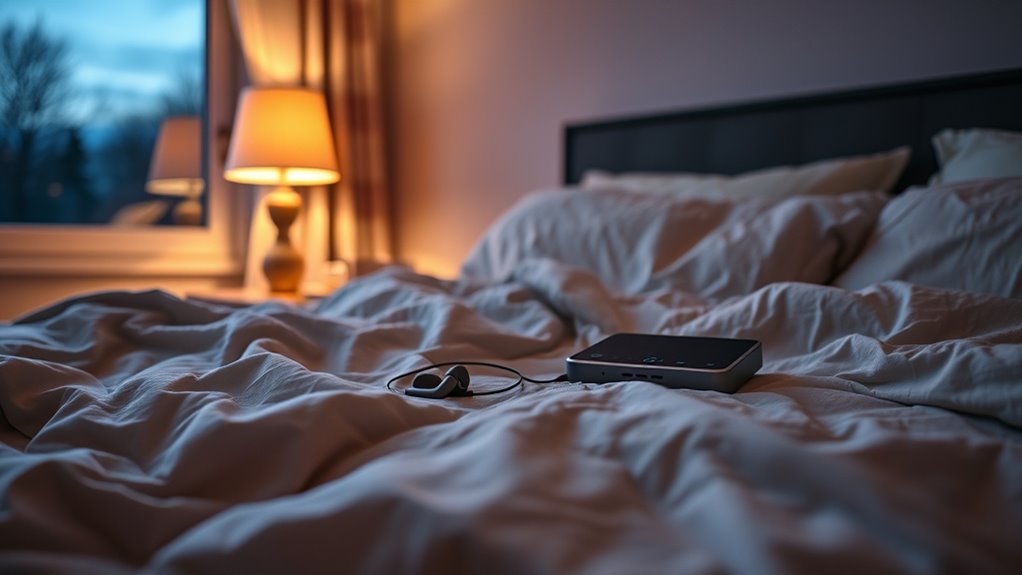
Incorporating music into your bedtime routine can be simple and effective if you follow a few practical tips. Start by choosing calming, slow-tempo music that promotes relaxation, aligning with principles of music therapy. Keep the volume low to avoid disrupting your sleep hygiene. Create a playlist or select one track to minimize distractions and establish consistency. Avoid using music with lyrics if they tend to engage your mind, and opt for instrumental or ambient sounds instead. Establish a specific time before bed to turn on your music, making it a cue for winding down. Remember, the goal is to enhance relaxation without overstimulating your brain. Additionally, selecting appropriate audio equipment can improve sound quality and further promote restful sleep. Using a sound machine or quality speakers can help create a consistent auditory environment that signals your body to relax. Incorporating sleep-friendly soundscapes can also deepen your relaxation and improve sleep quality. Incorporating sound therapy techniques can further enhance the calming effects and support your sleep goals. For added comfort, consider integrating smart home automation to automatically play your chosen sounds at a set time each night, ensuring a seamless transition into sleep. By integrating these tips, you can make music a beneficial part of your sleep routine.
Frequently Asked Questions
Can Music Replace Traditional Sleep Aids Effectively?
Music can be a helpful alternative to traditional sleep aids, especially when used as part of music therapy. You might find soundscapes effectiveness improves your ability to relax and fall asleep naturally. While it may not fully replace medications or other treatments for everyone, incorporating calming tunes into your bedtime routine can promote better sleep quality and reduce reliance on pharmacological aids over time.
How Does Individual Music Preference Affect Sleep Quality?
Your individual music preferences greatly influence sleep quality. When you create personalized playlists with familiar tunes, you’re more likely to relax and drift off easily. Music familiarity calms your mind, reducing stress and anxiety, which improves sleep. Conversely, unfamiliar or disliked music can cause restlessness or distract you. So, choose soothing songs you enjoy, and tailor your playlist to enhance your sleep experience.
Are There Specific Genres More Beneficial for Sleep?
Think of genre analysis as choosing the right key to unlock peaceful sleep. Calming melodies in genres like classical, ambient, or soft acoustic music often soothe your mind, making it easier to drift off. These genres act as gentle waves, guiding you into restful slumber. Experiment with different calming melodies to discover which genre resonates best with your sleep rhythm, turning bedtime into a serene, musical sanctuary.
What Are Signs That Music Is Disrupting Sleep?
If you notice difficulty falling asleep, frequent awakenings, or feeling tired despite sleeping, music might be causing a distraction. These are signs of sleep disturbance linked to music, especially if it’s loud or engaging. You might also experience racing thoughts or find it hard to relax. When music disrupts your natural sleep cycle, it becomes a distraction instead of a helpful aid, indicating it’s negatively impacting your sleep quality.
How Long Should I Listen to Music Before Falling Asleep?
You should aim for an ideal listening time of about 30 minutes before falling asleep. Keep your music duration moderate to prevent overstimulation, which could hinder your ability to drift off. Set a timer or use a playlist with a gentle, calming flow. Listening too long may interfere with your sleep cycle, so stick to this timeframe to enjoy the benefits without risking disruption.
Conclusion
Ultimately, whether music helps or hinders your sleep depends on how you choose and use it. Imagine your mind as a peaceful lake—calm and still when the right tunes drift softly over it. When you select soothing melodies and set a gentle volume, music can become your lullaby, guiding you into restful slumber. But beware of jarring sounds that might disturb your peace. Embrace the right rhythm, and let music be your nightly sanctuary.