

To improve your sleep, set consistent bedtimes and wake-up times to regulate your internal clock. Unplug from screens at least an hour before bed and create a calming pre-sleep routine with relaxing activities like gentle stretches or mindful breathing. Optimize your bedroom with soothing lighting, comfortable bedding, and good air quality. Incorporate gentle movement and avoid heavy meals and caffeine in the evening. Keep going to discover more essential habits for restful sleep.
Key Takeaways
- Maintain consistent sleep and wake times to regulate your internal clock and improve sleep quality.
- Unplug from screens at least an hour before bed and engage in relaxing activities like reading or gentle stretching.
- Create a calming sleep environment with dim lighting, soothing scents, and comfortable bedding.
- Incorporate gentle movement, deep breathing, or mindfulness practices to relax muscles and calm the mind.
- Avoid caffeine after mid-afternoon and finish heavy meals 2-3 hours before bedtime to promote restful sleep.
Set a Consistent Bedtime and Wake-Up Time

Setting a consistent bedtime and wake-up time is essential for improving your sleep quality. When you stick to a regular schedule, your body develops a reliable wake-up routine, making it easier to fall asleep and wake refreshed. Bedtime consistency helps regulate your internal clock, which promotes deeper, more restorative sleep. By going to bed at the same time each night and waking up at the same hour each morning, you reinforce healthy sleep patterns. This consistency reduces the chances of tossing and turning, and helps you feel more alert during the day. Incorporating sleep hygiene practices into your routine can further enhance your sleep quality. Additionally, maintaining a consistent sleep schedule can help your body better anticipate sleep and wake times, leading to more efficient rest. Remember, even on weekends, try to keep your sleep schedule steady. Over time, this habit will enhance your overall sleep quality and boost your energy levels.
Unplug From Screens at Least an Hour Before Bed

To improve your sleep quality, it’s important to unplug from screens at least an hour before bed. Blue light emitted from smartphones, tablets,, and computers can interfere with your melatonin production, making it harder to fall asleep. Staying on social media or binge-watching videos keeps your brain engaged, delaying relaxation. Instead, try reading a book, journaling, or practicing gentle stretches. Turning off screens signals to your body that it’s time to wind down. Establishing this habit reduces blue light exposure and helps your circadian rhythm stay on track. Incorporating light therapy or using amber-tinted glasses in the evening can further support your body’s natural melatonin production. Using sleep-friendly tech like blue light filters or dedicated sleep apps can also promote better rest. Creating a screen-free window before bed is a simple but effective step toward more restful, restorative sleep. Additionally, maintaining a consistent sleep schedule reinforces your body’s natural circadian rhythm, making it easier to fall asleep and wake up refreshed. Being mindful of your blue light exposure in the evening can significantly enhance your sleep quality. Your body will thank you for making this small but impactful change.
Create a Relaxing Pre-Sleep Routine

Creating a relaxing pre-sleep routine signals to your body that it’s time to wind down and prepares you for restful sleep. To do this effectively, consider these steps:
- Light bedtime aromatherapy with calming scents like lavender or chamomile.
- Play calming music selections to relax your mind and body.
- Take a warm bath or do gentle stretches to release tension.
- Dim the lights and avoid screens to reinforce your wind-down signals.
- Incorporate thermal behavior understanding to optimize your bedroom temperature for better sleep quality. Ensuring your bedroom temperature aligns with your body’s thermal regulation needs can significantly enhance sleep comfort and duration. Paying attention to fine rug preservation can also create a cozy and inviting environment that promotes relaxation. Additionally, maintaining proper ventilation can help regulate humidity and air quality, further supporting restful sleep. Being mindful of forage principles, such as airflow and insulation, can aid in creating an ideal sleep setting.
Optimize Your Sleep Environment
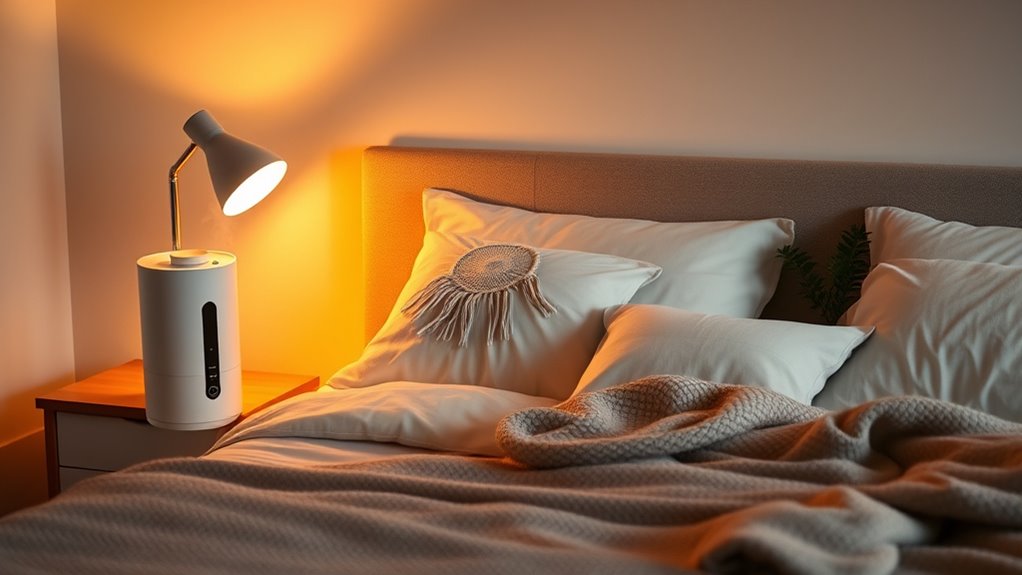
Your sleep environment plays a vital role in turning your relaxing routine into restful sleep. To create an ideal space, focus on lighting, scents, and comfort. Use decorative lighting like dim lamps or fairy lights to set a calming mood. Incorporate soothing bedroom scents, such as lavender or chamomile, to promote relaxation. Confirm your mattress and pillows support restful sleep. Consider the following elements:
| Element | Tips | Benefits |
|---|---|---|
| Decorative lighting | Use warm, dim lights or fairy lights | Reduces overstimulation |
| Bedroom scents | Use essential oils or sprays with calming scents | Enhances relaxation |
| Bedding | Choose breathable, comfortable fabrics | Improves sleep quality |
Creating a clean and well-ventilated sleeping space is also essential for air quality, which can significantly impact your sleep quality and overall health. Ensuring proper ventilation systems help maintain fresh air and reduce indoor pollutants. Incorporating natural ventilation methods can further enhance airflow and contribute to a healthier sleep environment. Additionally, selecting eco-friendly decor options can support sustainability and create a more harmonious space. Regularly maintaining your HVAC filters can help improve overall air quality and support a tranquil sleep sanctuary that signals your body it’s time to unwind.
Incorporate Gentle Stretching or Yoga

Incorporating gentle stretching or yoga into your bedtime routine can considerably enhance your ability to relax and shift seamlessly into sleep. Gentle stretches help release tension, while calming yoga promotes mindfulness and deep relaxation. To get started:
- Perform slow, deep breaths to center yourself.
- Do gentle stretches like neck rolls, shoulder shrugs, or hamstring stretches.
- Engage in calming yoga poses such as child’s pose or legs-up-the-wall.
- Focus on breathing steadily, maintaining a peaceful mindset.
- Using specialized equipment, such as yoga mats or blocks, can help improve your comfort and alignment during these practices. Additionally, understanding yoga principles can deepen your relaxation experience. Incorporating mindfulness techniques can further enhance the calming effects of your routine, similar to techniques used in auditory processing therapies to promote calmness and focus. Practicing these relaxation techniques regularly can help your body associate them with sleep, making it easier to unwind each night.
These activities signal to your body that it’s time to wind down, easing muscle tension and calming your mind. Consistently practicing gentle stretches or calming yoga creates a peaceful transition from wakefulness to restful sleep, making your bedtime more effective and restorative.
Practice Mindfulness or Deep Breathing Exercises
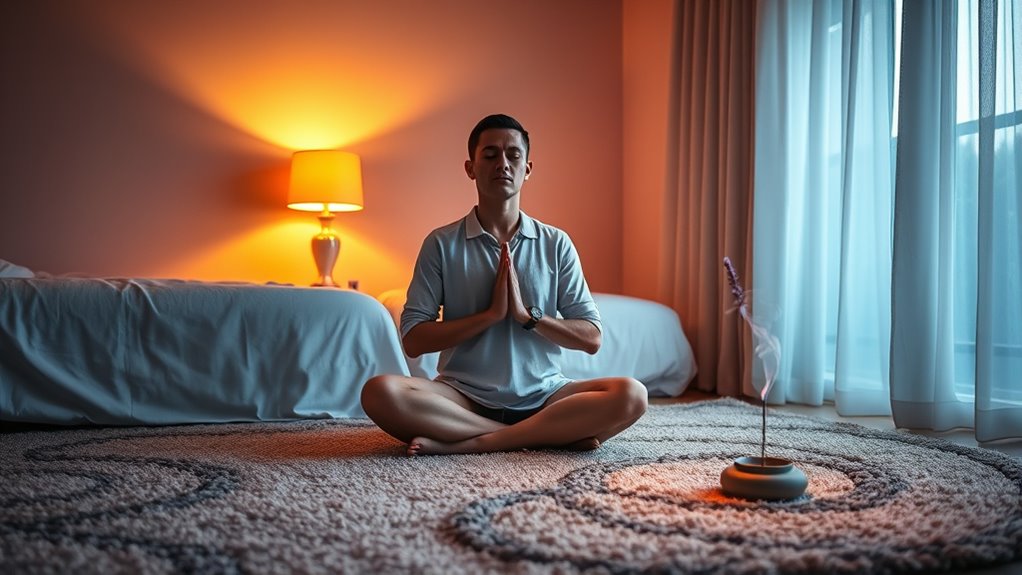
Practicing mindfulness or deep breathing can help lower your anxiety levels, making it easier to unwind. These exercises activate your relaxation response, calming your mind and body. As a result, you’ll fall asleep more quickly and enjoy a more restful night. Incorporating relaxation techniques can further enhance your ability to cultivate calm amidst daily noise.
Reduces Anxiety Levels
When you focus on mindfulness or deep breathing exercises before bed, you actively calm your mind and body, reducing anxiety that can interfere with sleep. Practicing breathing exercises or meditation techniques helps slow your heart rate and quiet racing thoughts. To maximize this effect:
- Take slow, deep breaths, inhaling through your nose and exhaling through your mouth.
- Use guided meditation apps to focus your attention and clear your mind.
- Count your breaths to stay present and prevent your mind from wandering.
- Incorporate progressive muscle relaxation to release tension in your body.
These simple steps lower anxiety levels, making it easier to drift into restful sleep. Consistent practice transforms your bedtime into a calming, anxiety-free routine.
Enhances Relaxation Response
Focusing on mindfulness or deep breathing exercises before bed can considerably boost your body’s relaxation response. These practices activate your parasympathetic nervous system, helping you unwind and release tension. Meditation techniques, like focused breathing, can deepen your sense of calm, especially when paired with aromatherapy benefits, such as lavender or chamomile scents. Incorporating these into your nightly routine creates a soothing environment that signals your body to relax. To illustrate, consider the following benefits:
| Technique | Key Benefit | Example |
|---|---|---|
| Deep breathing | Lowers heart rate | 4-7-8 breathing method |
| Meditation | Reduces stress | Guided mindfulness sessions |
| Aromatherapy benefits | Enhances relaxation | Lavender essential oil |
| Mindfulness | Promotes mental clarity | Body scan meditation |
| Consistency | Reinforces relaxation habits | Daily practice |
Promotes Better Sleep
Engaging in mindfulness or deep breathing exercises before bed can substantially improve your sleep quality. These practices help calm your mind, reducing stress and promoting relaxation. To enhance this effect, consider incorporating dream journaling, which helps process your thoughts and clear mental clutter. Aromatherapy options like lavender or chamomile can further deepen relaxation, creating a soothing environment. Here are four ways to promote better sleep:
- Practice deep breathing exercises to slow your heart rate.
- Write in a dream journal to release lingering worries.
- Use aromatherapy options to create a calming atmosphere.
- Combine mindfulness with gentle stretches for total relaxation.
These habits work together to prepare your mind and body for restful sleep, making your bedtime routine more effective.
Limit Caffeine and Heavy Meals in the Evening

Consuming caffeine late in the day can disrupt your sleep cycle, making it harder to fall asleep and stay restful. Heavy meals before bed can cause discomfort and indigestion, preventing you from winding down properly. By limiting these, you give yourself a better chance for a peaceful, restorative sleep.
Caffeine’s Sleep Disruptions
Since caffeine is a stimulant that can stay in your system for several hours, drinking coffee or tea late in the day can interfere with falling asleep. It may also cause you to wake up feeling restless or anxious. To avoid these disruptions, consider reducing your caffeine intake gradually to prevent withdrawal symptoms. Instead, try caffeine alternatives like herbal tea or water.
Here are four tips to minimize sleep disruptions:
- Limit caffeine consumption after mid-afternoon.
- Replace coffee with decaffeinated or herbal options.
- Watch for signs of caffeine withdrawal if reducing intake.
- Stick to a consistent sleep schedule to help your body adjust.
Heavy Meals and Rest
To promote better sleep, it’s important to avoid heavy meals and caffeine close to bedtime, as both can disrupt your rest. Heavy meals before sleep can impair your digestive health, leading to discomfort, acid reflux, and difficulty falling asleep. Proper meal timing is key—try to finish dinner at least two to three hours before bed to give your digestion time to settle. Consuming lighter, easily digestible foods in the evening helps your body relax and prepares you for restful sleep. Caffeine, even if consumed earlier in the day, can linger and interfere with your ability to fall asleep. By managing your meal size and timing, you support better digestion and create an environment conducive to deep, restorative sleep.
Frequently Asked Questions
How Long Before Bed Should I Stop Using Screens?
You should stop using screens at least 30 to 60 minutes before bed to minimize the impact of bedtime electronics. Excessive screen time can interfere with your melatonin production, making it harder to fall asleep. By setting a cutoff time, you give your body a chance to wind down naturally. Try reading a book or doing relaxation exercises instead, so you can enjoy a more restful sleep.
What Are Some Effective Relaxation Techniques for Sleep?
Imagine your mind is a calm lake, still and reflective. To achieve this, try breathing exercises—inhale deeply, then exhale slowly to reduce stress. Progressive muscle relaxation also helps by tensing and relaxing each muscle group, releasing tension. These techniques activate your parasympathetic nervous system, making it easier to fall asleep. Incorporating them into your nightly routine can transform your restless nights into peaceful, restorative sleep.
How Does Room Temperature Affect Sleep Quality?
Your sleep quality improves when the temperature regulation in your sleep environment is ideal. Keep your room cool, ideally between 60-67°F (15-19°C), to help your body lower its core temperature, which signals readiness for sleep. If your room is too hot or cold, it can disrupt your sleep cycles, leading to restlessness. Adjust your thermostat or use fans and blankets to maintain a comfortable temperature for better sleep.
Can Certain Scents Improve Sleep?
Yes, certain scents can dramatically transform your sleep experience. Aromatherapy benefits include calming scents like lavender, chamomile, and vanilla, which can soothe your mind and relax your body instantly. These scents aren’t just pleasant; they have the power to melt away stress and anxiety, making it easier for you to fall asleep and stay asleep longer. Incorporating calming scents into your bedtime routine can truly revolutionize your sleep quality.
Is It Better to Nap During the Day or Avoid Naps Altogether?
You should avoid detrimental daytime naps if you’re trying to improve your sleep at night. Power nap benefits, like increased alertness and mood, are helpful, but long or late naps can disrupt your nighttime sleep cycle. If you need a quick rest, keep it to 20 minutes early in the day. Otherwise, skipping naps helps guarantee you’re tired enough for restful sleep when it’s time for bed.
Conclusion
By sticking to these seven habits, you’ll set yourself up for truly restful nights. Remember, Rome wasn’t built in a day, so be patient as you develop your new routine. Consistency is key—small changes can lead to big improvements over time. With dedication, you’ll find yourself falling asleep faster and waking up refreshed. Don’t throw in the towel if progress feels slow; persistence is the secret to better sleep and brighter mornings.