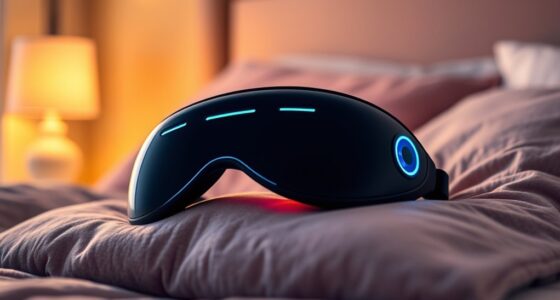
Sleep gadgets can seem helpful, but they often increase your anxiety instead of easing it. Constantly monitoring your sleep and focusing on minor data fluctuations can make you worry more about your rest, disrupting your natural rhythms. Over-relying on these devices may distract you from trusting your body’s cues, leading to worse sleep quality. To find balance and feel more relaxed about your sleep, understand how these gadgets can sometimes do more harm than good if used excessively.
Key Takeaways
- Excessive reliance on sleep gadgets can increase anxiety by obsessively tracking minor fluctuations.
- Constant monitoring may shift focus from natural sleep cues to data, heightening stress.
- Overanalyzing sleep metrics can lead to worry and diminish trust in the body’s natural rhythms.
- Gadget-induced worry can interfere with relaxation, making it harder to fall asleep naturally.
- Dependency on technology may disrupt routines, reducing overall sleep quality and creating a cycle of stress.
The Rise of Sleep Gadgets and Their Promises
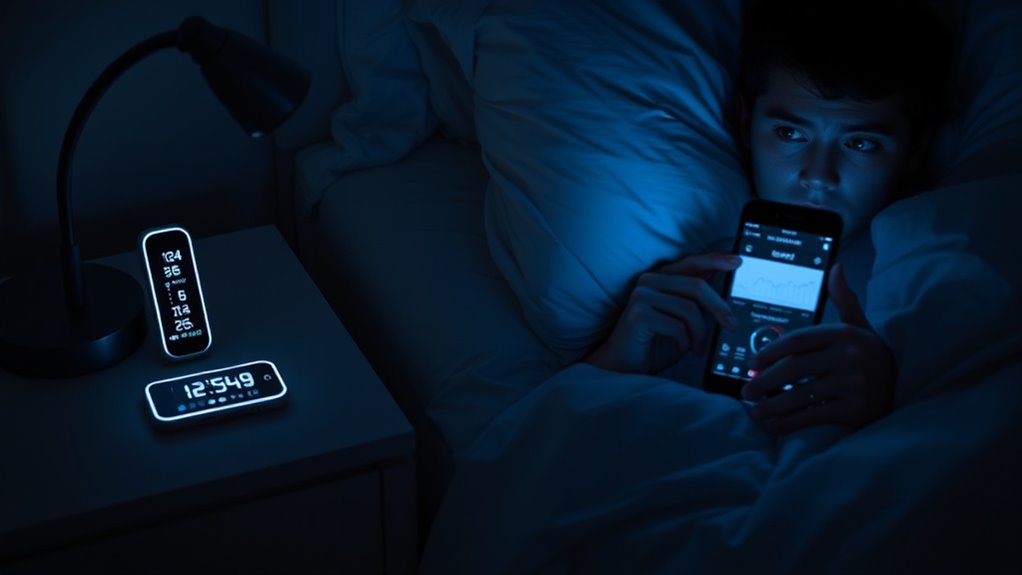
In recent years, sleep gadgets have surged in popularity, promising to improve your rest with advanced technology. These devices claim to enhance sleep quality by monitoring your patterns, providing personalized insights, and even offering soothing sounds or light adjustments. Many people turn to these gadgets seeking better rest and reassurance, hoping technology will solve sleep issues. However, this trend can lead to gadget dependency, where you rely heavily on devices to fall asleep or feel rested. Instead of naturally trusting your body’s cues, you might become overly focused on data or alerts, which can inadvertently increase anxiety about sleep quality. While these gadgets can be helpful, it’s essential to balance their use and remember that good sleep ultimately depends on healthy habits, not just technology. Additionally, over-reliance on sleep monitoring devices may contribute to increased stress rather than relief, as users become fixated on metrics rather than relaxation. Recognizing the importance of healthy sleep habits and understanding that natural sleep cues exist can help prevent this dependency and promote better overall rest. Being aware of how technology influences sleep perception is also key to maintaining a healthy relationship with sleep gadgets. Developing an awareness of bodily cues for sleep can help you trust your natural rhythms instead of relying solely on external devices.
How Sleep Trackers Measure Your Rest

Sleep trackers use a variety of sensors and algorithms to monitor your rest, translating physical signals into data about your sleep patterns. They analyze movement, heart rate, and even breathing to gauge sleep stages and quality. As you wear a device or place sensors in your environment, it collects information that can be compared with your dream journaling or sleep environment for better insights. Understanding how sleep tracking works can help you interpret the data more effectively and reduce unnecessary worry. Clear knowledge of passive voice detection can assist you in recognizing and correcting ambiguous statements in your writing. Here’s how they work: 1. Movement sensors detect restlessness and wakefulness. 2. Heart rate monitors identify sleep stages. 3. Breathing sensors track consistency and disruptions. 4. Data is processed into sleep scores and trends. Additionally, sensor calibration can influence the accuracy of the measurements, which may lead to overinterpretation, causing users to become overly fixated on minor fluctuations. The data accuracy of these devices can vary, which may contribute to confusion or misinterpretation. While these details can help you improve your sleep, they also shape your perception—sometimes causing more worry if results seem off or inconsistent.
The Psychological Impact of Continuous Sleep Monitoring
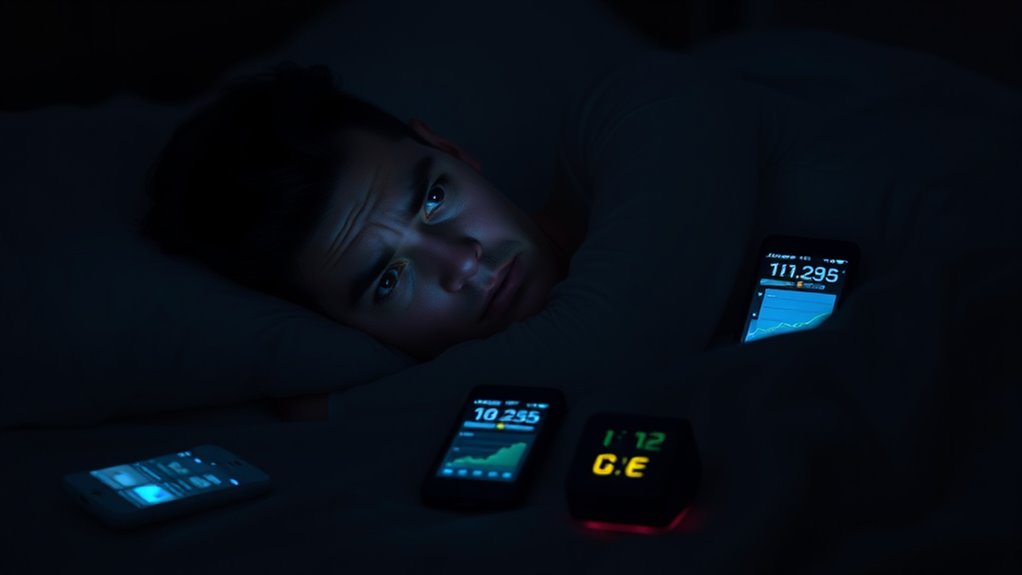
Constantly tracking your sleep can cause anxiety as you become overwhelmed by data you don’t fully understand. You might start obsessing over every metric, turning sleep into a source of stress instead of rest. This psychological toll can interfere with your ability to relax and get quality sleep. For example, focusing too much on sleep monitoring can heighten stress levels and hinder actual rest. Understanding how sleep systems and ear wax odor can help interpret data more objectively may reduce feelings of anxiety. Recognizing the importance of simple, practical routines and clear systems can also help minimize the mental clutter that contributes to sleep-related stress, especially as the rise of Haute Couture influences modern design aesthetics and comfort considerations.
Anxiety From Data Overload
Monitoring your sleep continuously might seem helpful at first, but it can also lead to increased anxiety as you become obsessed with every data point. Constantly checking your stats might cause you to worry about sleep deprivation or whether you’re meeting ideal sleep patterns. This tech dependency can make you feel powerless if your data shows less-than-perfect nights. To avoid this trap:
- You start questioning your sleep quality unnecessarily.
- You become fixated on small fluctuations instead of overall rest.
- Anxiety about sleep increases, leading to more wakefulness.
- Your focus shifts from restful sleep to data perfection, fueling stress.
- Relying excessively on sleep tracking can diminish your ability to tune into your body’s natural cues, which are often more accurate indicators of rest than device data.
- Over time, this may also influence your sleep environment, making it harder to establish a truly restful setting.
- Recognizing the importance of sleep quality over quantity is essential to prevent obsessive monitoring from undermining your sleep health.
- Being aware of psychological impacts can help you maintain a healthier perspective on sleep data and reduce anxiety.
This cycle can worsen sleep issues instead of improving them. Instead of empowering you, excessive data collection may heighten your sleep-related anxiety, creating a harmful feedback loop.
Obsession With Sleep Metrics
When you become fixated on your sleep metrics, it’s easy to let numbers define your well-being, often leading to compulsive checking and obsessive thoughts. This sleep obsession can distort your perception of a good night’s rest, making you hyperaware of every fluctuation. Metrics fixation fuels anxiety, as you start to interpret minor variations as signs of poor health or sleep failure. Constantly monitoring your sleep data can create a cycle where you rely on numbers instead of listening to your body’s natural signals. Over time, this obsession diminishes your trust in your sleep quality, increasing stress and disrupting your ability to relax before bed. Recognizing this pattern is key to breaking free from the trap of sleep metrics fixation and restoring a healthier sleep mindset. Additionally, best anime movies can provide a calming distraction and help reduce stress, promoting better sleep quality. Understanding the science behind sound healing and incorporating calming sounds into your bedtime routine may further alleviate anxiety and improve your overall sleep experience. Developing mindfulness practices can also help shift focus away from numbers and foster a more intuitive approach to sleep, reducing sleep-related anxiety and enhancing overall well-being.
When Data Becomes a Source of Anxiety
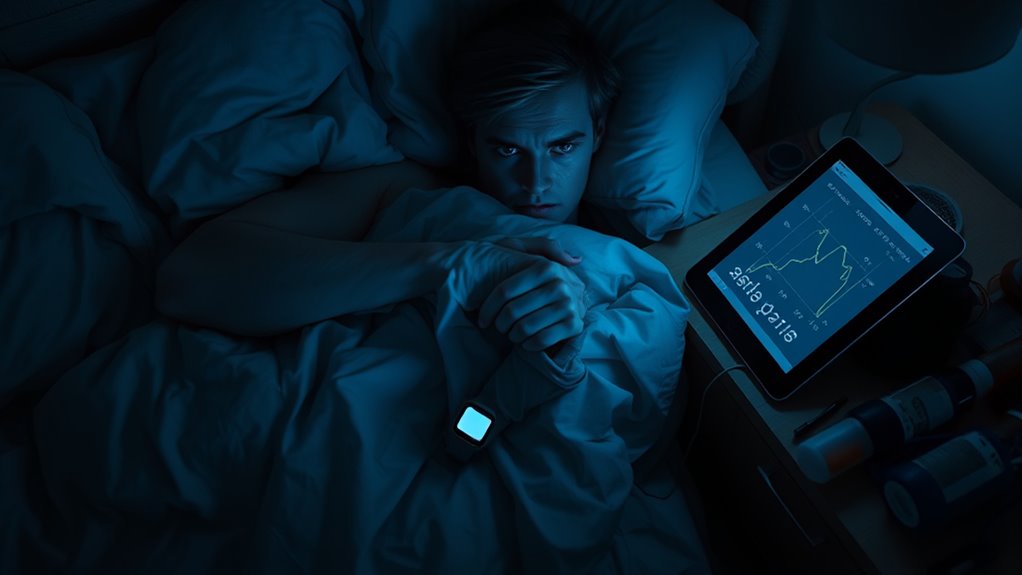
As sleep tracking devices gather more data about your nightly patterns, they can inadvertently turn into a source of stress rather than relief. Instead of helping, they fuel sleep anxiety and data obsession. You might start to worry about every little fluctuation, thinking it signals a problem. To manage this, consider these steps:
- Limit your checking frequency to avoid constant focus on stats.
- Recognize that natural sleep variation is normal, not a warning sign.
- Avoid overanalyzing data, especially if it causes worry.
- Focus on overall trends rather than daily fluctuations.
The Paradox of Sleep Optimization Devices

Sleep optimization devices promise to improve your rest, but they often create a paradox: the more you rely on them, the more your sleep quality can suffer. You might find yourself caught in a cycle of tech dependency, where constant monitoring leads to increased sleep distraction and anxiety. Instead of relaxing, you become fixated on data, which can interfere with natural sleep cues. This reliance can make you hyper-aware of every sleep detail, disrupting your ability to unwind. To help visualize this, consider the table below:
| Benefit | Risk | Impact |
|---|---|---|
| Better sleep tracking | Sleep distraction | Reduced sleep quality |
| Personalized insights | Tech dependency | Increased anxiety |
| Sleep awareness | Over-monitoring | Less restful sleep |
Be mindful of how these devices influence your sleep habits.
Over-Reliance on Technology and Sleep Quality

Relying heavily on sleep technology can turn into a double-edged sword, often diminishing the very benefits it’s meant to provide. When you become too dependent on gadgets, you risk increasing sleep deprivation and fostering tech dependency, which can worsen sleep issues. Here’s how:
- You may obsess over sleep scores, causing stress instead of relaxation.
- Over-monitoring can lead to anxiety, making it harder to fall asleep naturally.
- Relying solely on tech might cause you to ignore natural cues for sleep and wakefulness.
- Excessive use can interfere with wind-down routines, disrupting your sleep environment.
This over-reliance can trap you in a cycle where gadgets hinder, rather than help, your sleep quality. Balancing tech use is key to preventing sleep deprivation and maintaining healthy sleep habits.
Recognizing When Sleep Tech Is Doing More Harm Than Good

While sleep technology can be a helpful tool, it’s important to recognize when it’s doing more harm than good. If you find yourself obsessively checking your sleep data or feeling anxious about your sleep patterns, it may be time to reassess. Notice if your bedtime routines become more about monitoring than relaxing, or if your sleep environment is becoming cluttered with gadgets that heighten stress. When technology starts to cause worry or disrupt your ability to unwind, it’s a sign it’s doing more harm. Pay attention to how you feel before and after using your sleep devices. If they increase your anxiety or make it harder to fall asleep naturally, consider reducing your reliance on them to restore balance.
Strategies for a Healthy Sleep Routine Without Excessive Monitoring

To develop a healthy sleep routine without falling into the trap of excessive monitoring, focus on establishing consistent habits that promote relaxation and consistency. Start by setting a fixed bedtime and wake-up time each day. Second, incorporate relaxation techniques like mindful breathing to calm your mind before sleep. Third, create a calming environment by dimming lights and reducing noise. Fourth, avoid screens at least an hour before bed to prevent overstimulation. These simple steps help build a natural rhythm without relying on gadgets. Practicing mindfulness and relaxation techniques regularly can reduce sleep anxiety and foster better habits. Remember, consistency and calmness are key to a healthy sleep routine that isn’t driven by constant monitoring or gadgets.
Frequently Asked Questions
Can Sleep Gadgets Replace Traditional Sleep Assessments by Professionals?
Sleep gadgets can’t fully replace professional sleep assessments because of their limitations. While gadgets offer convenient, at-home insights, they often lack the accuracy and thorough data that professionals gather through detailed evaluations like polysomnography. You might get helpful information, but for serious sleep issues, relying solely on gadgets can lead to missed diagnoses. Professional sleep assessments remain essential for accurate diagnosis and effective treatment.
Do Sleep Tracking Devices Accurately Reflect True Sleep Quality?
Sleep tracking devices often give a misleading picture, like a blurry snapshot of your sleep cycle. While they provide useful data, their accuracy isn’t perfect, and they can’t fully reflect true sleep quality. You might wake up feeling rested, but the device’s data accuracy could suggest otherwise. Remember, these gadgets are helpful guides but shouldn’t replace professional sleep assessments for a complete understanding of your sleep health.
How Do Sleep Gadgets Influence Mental Health and Sleep Confidence?
Sleep gadgets can influence your mental health and sleep confidence by fostering tech dependency, making you overly reliant on devices for validation. This can lead to anxiety amplification if your gadget shows less-than-ideal sleep stats, causing stress and worry. Instead of improving your sleep, these gadgets might undermine your confidence, making you more anxious about sleep quality. It’s better to listen to your body and develop healthy sleep habits without obsessing over data.
Are There Risks of Becoming Dependent on Sleep Technology?
Yes, there’s a dependence risk with sleep technology. You might find yourself relying on gadgets to fall asleep, making it harder to sleep naturally without them. This gadget reliance can create anxiety if devices aren’t available, worsening sleep problems instead of solving them. To avoid dependence risks, it’s best to use sleep tech as a helpful tool rather than a crutch, and practice healthy sleep habits alongside it.
What Are Signs That Sleep Gadgets Are Harming Rather Than Helping Sleep?
If you notice that overreliance on gadgets leads to increased anxiety or false sleep improvement, it’s a sign they’re harming your sleep. You might feel more stressed about your sleep quality or find yourself obsessively checking data. Additionally, your sleep patterns may become inconsistent or worse despite using the devices. If gadgets cause you to focus excessively on sleep, rather than relaxing, it’s time to reassess their usefulness and try more natural sleep strategies.
Conclusion
While sleep gadgets promise better rest, they can inadvertently increase anxiety and disrupt your natural sleep patterns. Instead of relying solely on technology, trust your body’s signals and establish calming routines. You might argue that data empowers you, but over-monitoring can do more harm than good. Embrace a balanced approach, blending mindful habits with limited tech use, to genuinely improve your sleep without the stress of constant tracking. After all, restful nights often come from simplicity, not screens.