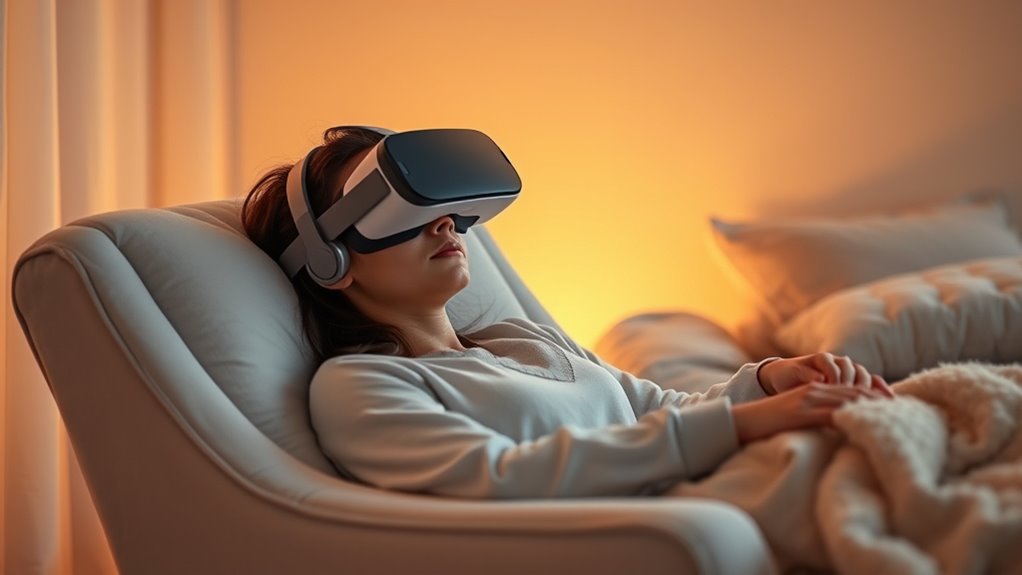
Virtual reality can help you relax and fall asleep by immersing you in calming environments like beaches, forests, or serene landscapes. It reduces stress, blocks out distractions, and engages your senses for deeper relaxation. Using VR for a few minutes before bed can lower your heart rate and ease anxiety, making it easier to drift off. To discover how to make the most of VR for restful sleep, keep exploring these innovative techniques.
Key Takeaways
- VR creates immersive, calming environments that reduce stress and distract from worries, aiding relaxation before sleep.
- It promotes relaxation techniques like guided meditation and sensory engagement, helping users unwind more effectively.
- Virtual nature scenes and soothing visuals can lower heart rate and cortisol levels, supporting better sleep onset.
- VR helps block out external distractions and sensory stimuli, creating a conducive environment for falling asleep.
- When used responsibly with short sessions, VR can enhance overall sleep quality and mental well-being.
How Virtual Reality Creates Immersive Relaxation Environments
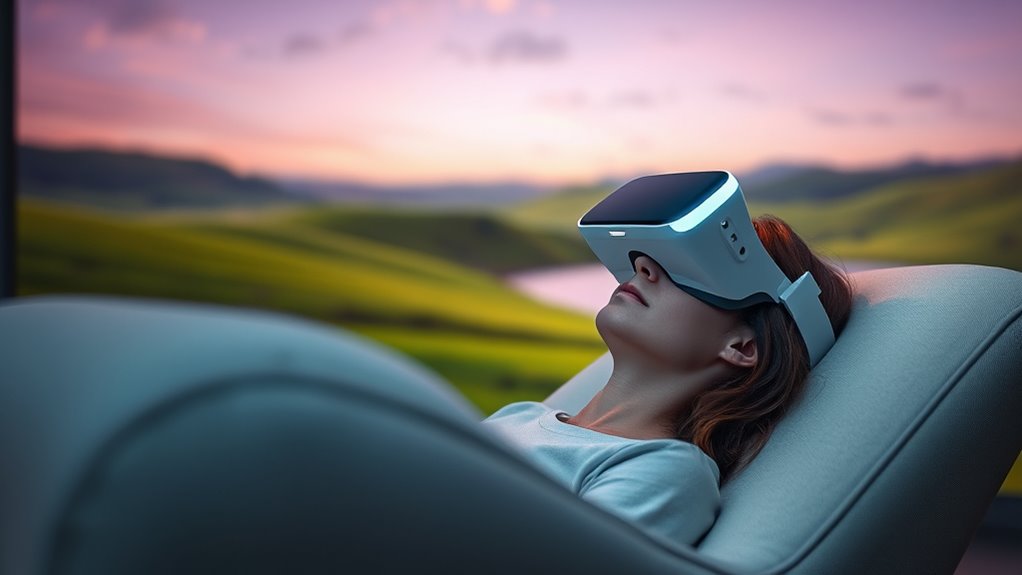
Virtual reality creates immersive relaxation environments by transporting you to calming, lifelike settings that engage your senses fully. These experiences can mimic peaceful beaches, serene forests, or quiet mountain retreats, helping you unwind and reduce stress. However, as you explore VR relaxation tools, it’s vital to contemplate virtual reality ethics, particularly regarding user privacy. Developers collect data to personalize your experience, but safeguarding your personal information is paramount. Awareness of how your data is used and protected ensures you can enjoy these environments without concerns about privacy breaches. Additionally, considering the role of air purification in your overall well-being can enhance the benefits of relaxation, especially in enclosed spaces. Ensuring energy efficiency in your VR devices can also contribute to more sustainable usage and reduce environmental impact. Understanding the importance of color accuracy in creating realistic virtual environments can further improve the immersive experience. Incorporating high-quality soil for virtual environments can enhance the sensory realism in simulated outdoor scenes, making relaxation experiences more authentic. Paying attention to device safety is crucial to prevent discomfort or harm during extended VR sessions. By addressing both the immersive qualities of VR and the significance of user privacy, you can confidently use virtual reality as an effective and responsible way to relax.
The Science Behind VR and Stress Reduction
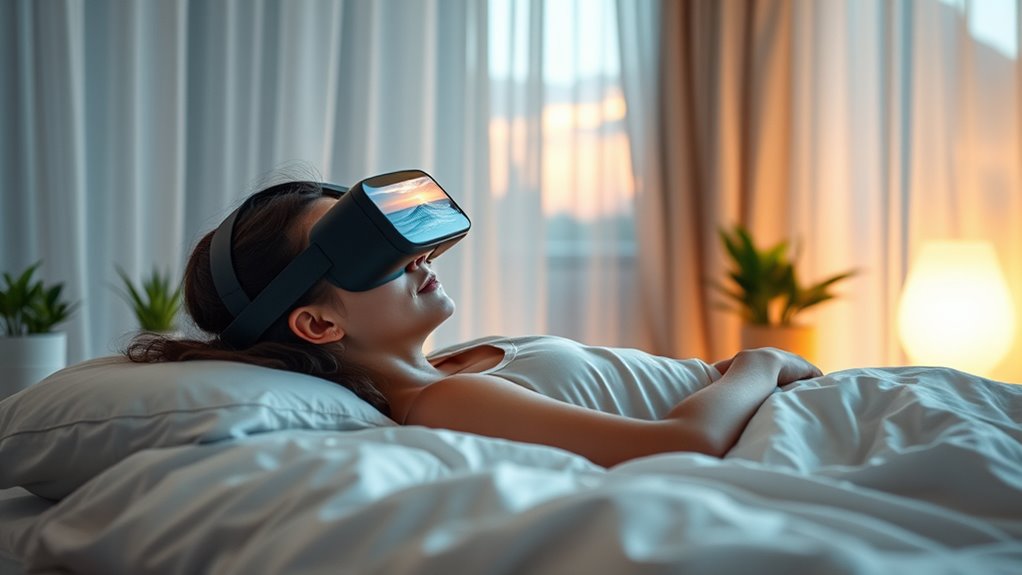
Research shows that immersive VR experiences can profoundly reduce stress by activating the body’s relaxation responses. When you enter a calming Virtual Reality environment, your brain responds by lowering cortisol levels and slowing your heart rate. This stress reduction occurs because VR engages your senses and diverts your focus from everyday worries, promoting a deep sense of calm. Scientific studies indicate that Virtual Reality can influence the autonomic nervous system, encouraging parasympathetic activity associated with relaxation. By simulating peaceful landscapes or soothing scenarios, VR helps you break free from stress triggers and fosters mental tranquility. Additionally, AI-driven research in this field is continually expanding our understanding of how VR can be optimized for relaxation and mental health benefits. Emerging biofeedback techniques are also enhancing VR’s effectiveness in stress management, making it a more personalized and powerful tool. The integration of neuroscience insights is further advancing the development of VR environments tailored for relaxation. This scientific understanding explains why VR is becoming a valuable tool for stress management and relaxation, offering a controlled, immersive way to calm your mind and body effectively. Moreover, understanding the autonomic nervous system helps explain how VR can modulate physiological responses to stress. As technology evolves, personalized VR experiences are increasingly being designed to suit individual relaxation needs, further improving their effectiveness.
Benefits of Using VR for Sleep Improvement

Using VR for sleep improvement offers a powerful way to relax your mind and body before bedtime. Virtual reality therapy creates immersive environments that promote calmness and reduce anxiety, making it easier to drift off. Sensory deprivation features in some VR experiences help block out distracting stimuli, allowing you to focus solely on peaceful visuals and sounds. This targeted approach can lower stress levels, slow your heart rate, and prepare your body for sleep. Unlike traditional methods, VR provides a controlled setting that adapts to your needs, enhancing relaxation. By engaging your senses in calming scenarios, VR helps establish a bedtime routine that signals your brain it’s time to rest. Additionally, some VR devices incorporate biofeedback to monitor your physiological responses and tailor the experience for maximum relaxation. Incorporating relaxation techniques within VR environments can further amplify its sleep-inducing effects. Recent studies suggest that virtual environments designed specifically for sleep can significantly improve sleep quality and duration. Furthermore, integrating natural sounds and visuals into VR experiences can enhance the overall calming effect. Research indicates that personalized virtual settings can optimize relaxation by addressing individual preferences and responses. Overall, it’s a promising tool for those seeking natural sleep improvement.
Different Types of VR Content for Relaxation
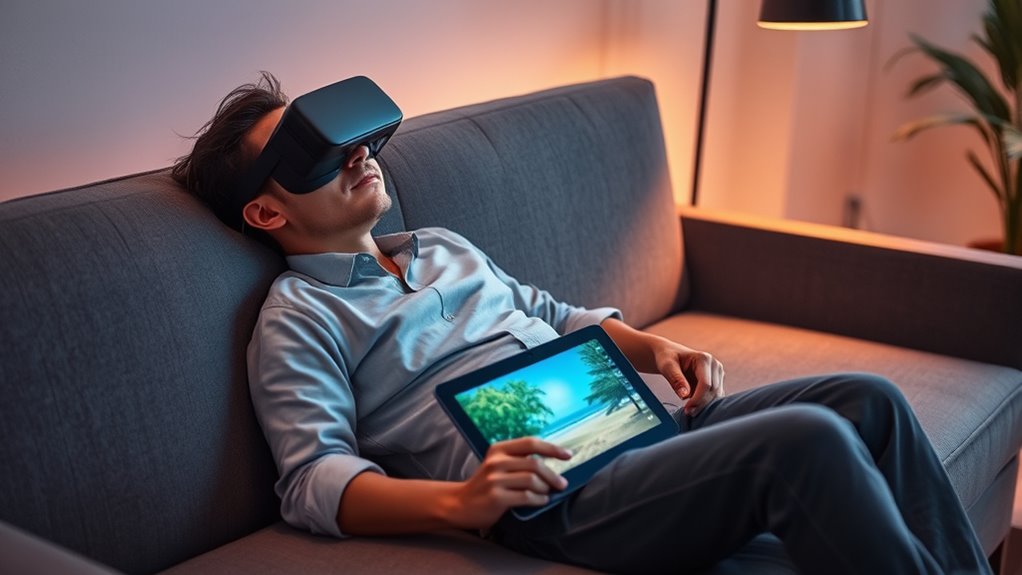
There are many types of VR content designed specifically to help you relax, each offering unique ways to soothe your mind and body. When you put on your VR headset, you can explore different calming visuals that promote tranquility. Here are three common options:
- Virtual nature walks through lush forests or tranquil beaches, helping you feel immersed in peaceful environments. These experiences can leverage evidence-based insights to effectively reduce stress. Additionally, some VR environments incorporate elements of the Tooth Fairy’s Tale such as gentle, enchanting scenes, which can evoke feelings of wonder and comfort. Incorporating sensory engagement helps deepen relaxation and make the experience more effective. To enhance these experiences, integrating battery technologies can ensure your device remains powered for longer, allowing for uninterrupted relaxation sessions. Using optimized hardware can also improve comfort and reduce distractions during your calming VR sessions.
- Guided meditation scenes with serene landscapes and gentle sounds to calm your mind.
- Soothing abstract visuals with slow-moving patterns and soft colors that reduce stress and promote relaxation.
These experiences are designed to engage your senses without overwhelming them, making it easier to unwind and prepare for sleep. The variety ensures you’ll find something that personally helps you relax effectively.
Tips for Incorporating VR Into Your Nighttime Routine

Integrating VR into your nighttime routine can be be a simple and effective way to unwind before bed. Start by choosing calming virtual reality art or immersive VR gaming experiences designed for relaxation. Keep sessions short, around 10-15 minutes, to prevent overstimulation. Make sure your VR setup is comfortable, with a well-lit, clutter-free space. Use relaxing visuals and sounds to create a soothing environment that signals your brain it’s time to wind down. Consider setting a regular schedule, so your mind associates VR sessions with relaxation. Avoid intense gaming right before sleep, and instead focus on gentle experiences that promote calmness. Incorporating sleep hygiene techniques and other relaxation methods can enhance the calming effects of your VR sessions. Creating a relaxing environment with minimal distractions can further improve your ability to unwind. Establishing a consistent bedtime routine can help your body recognize when it’s time to prepare for restful sleep. With consistency, these small adjustments can help you establish a peaceful nightly ritual that prepares you for restful sleep.
Potential Challenges and Limitations of VR Sleep Aids
While VR sleep aids show promise, you might face technical issues like equipment discomfort or glitches that disrupt your relaxation. Additionally, there’s limited long-term research to confirm their safety and effectiveness over time. These challenges mean you should approach VR sleep tools with caution and stay informed about new developments.
Technical Hurdles and Discomforts
Despite the promising potential of VR sleep aids, several technical hurdles can hinder your comfort and effectiveness. First, haptic feedback, while immersive, can become overwhelming or inconsistent, causing discomfort rather than relaxation. Second, prolonged use may lead to eye strain, as screens sit close to your eyes and produce intense visuals. Third, hardware limitations like bulky headsets can cause physical discomfort, making it hard to relax fully. Additionally, motion sickness can occur if the VR content isn’t perfectly synchronized with your movements. These issues can distract you from falling asleep and reduce the overall benefits. Overcoming these hurdles requires ongoing improvements in hardware design, visual technology, and sensory feedback systems to ensure a smoother, more comfortable experience.
Limited Long-Term Data
Although VR sleep aids show promise, there’s limited long-term data to confirm their safety and effectiveness over time. Researchers haven’t yet thoroughly studied the long term effects of prolonged VR use for sleep, making it hard to predict potential risks. This gap highlights research limitations that leave questions about whether VR might cause dependency, eye strain, or disrupted sleep cycles after extended use. To better understand these concerns, consider this overview:
| Concern | Current Knowledge | Future Needs |
|---|---|---|
| Long term effects | Insufficient data | Longitudinal studies needed |
| Safety | Limited understanding | Extended safety assessments |
| Effectiveness | Short-term results promising | Long-term efficacy research |
| User experience | Variability in comfort and response | Broader user feedback |
Comparing VR Relaxation Techniques to Traditional Methods
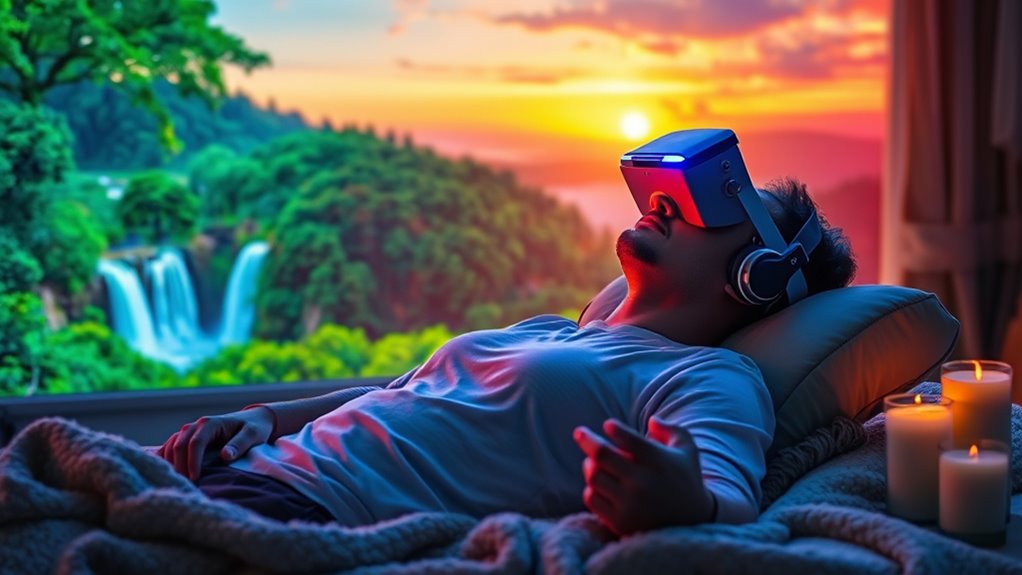
VR relaxation offers an immersive experience that can enhance your sense of calm beyond traditional methods. It’s also more accessible and convenient, allowing you to relax anytime and anywhere. But you’ll want to contemplate how effective VR is compared to calm techniques like deep breathing or meditation.
Immersive Experience Benefits
Immersive experiences offered by virtual reality can considerably enhance relaxation by engaging your senses more fully than traditional methods. VR creates a sense of presence, allowing you to benefit from techniques like brainwave entrainment, which promotes deeper relaxation. It also offers sensory deprivation, blocking out distractions that hinder sleep. In comparison to conventional methods, VR provides:
- Fully immersive environments that distract from stressors
- Customizable experiences tailored to your relaxation needs
- Enhanced sensory engagement, heightening calmness and reducing anxiety
This heightened immersion amplifies the calming effects, making it easier for your mind to unwind. VR’s ability to simulate tranquil settings and incorporate sensory manipulation supports a more profound, effective relaxation experience than traditional techniques alone.
Accessibility and Convenience
While immersive experiences considerably enhance relaxation, their accessibility and convenience play a vital role in how easily you can incorporate them into your routine. Virtual reality offers quick, immersive environments that can simulate mindfulness meditation or sensory deprivation, often requiring less setup than traditional methods like yoga or guided sessions. VR headsets are becoming more portable and user-friendly, allowing you to access relaxation experiences anywhere, anytime. Unlike visiting a meditation class or spa, VR eliminates travel time and scheduling conflicts, making relaxation more immediate. However, some devices can be costly or bulky, and not everyone has easy access to the necessary technology. Overall, VR provides a convenient alternative that fits seamlessly into busy lifestyles, making relaxation more accessible.
Effectiveness Compared to Calm Techniques
Compared to traditional relaxation techniques like meditation, deep breathing, or yoga, virtual reality can provide a more engaging and immersive experience that may enhance relaxation for some individuals. VR offers a sensory-rich environment that can heighten your mindfulness meditation or aromatherapy benefits by immersing you in calming landscapes or soothing sounds.
Consider these advantages:
- Enhanced focus — VR minimizes distractions, making mindfulness meditation more effective.
- Sensory stimulation — Virtual environments amplify aromatherapy benefits through visual and auditory cues.
- Personalization — VR programs can adapt to your preferences, creating tailored relaxation experiences.
While traditional methods work well, VR’s immersive nature can deepen your relaxation, especially if you struggle with focus or need a more engaging approach.
Safety Considerations When Using VR for Sleep

Using VR for sleep can offer benefits, but it’s vital to prioritize safety to avoid potential risks. First, ensure your VR hardware fits comfortably and is used in a safe, clutter-free environment. Poor fit or uncomfortable devices can cause strain or discomfort, impacting your sleep quality. Always follow manufacturer guidelines for device use, including recommended session lengths. Pay attention to user safety by taking regular breaks to prevent eye strain or dizziness. If you experience headaches, nausea, or disorientation, stop using VR immediately. It’s also wise to consult with a healthcare professional if you have pre-existing conditions like epilepsy or vision problems. Properly managing VR hardware and being mindful of your physical responses helps maximize safety and the benefits of using VR for sleep.
Future Developments in VR Technology for Sleep and Relaxation
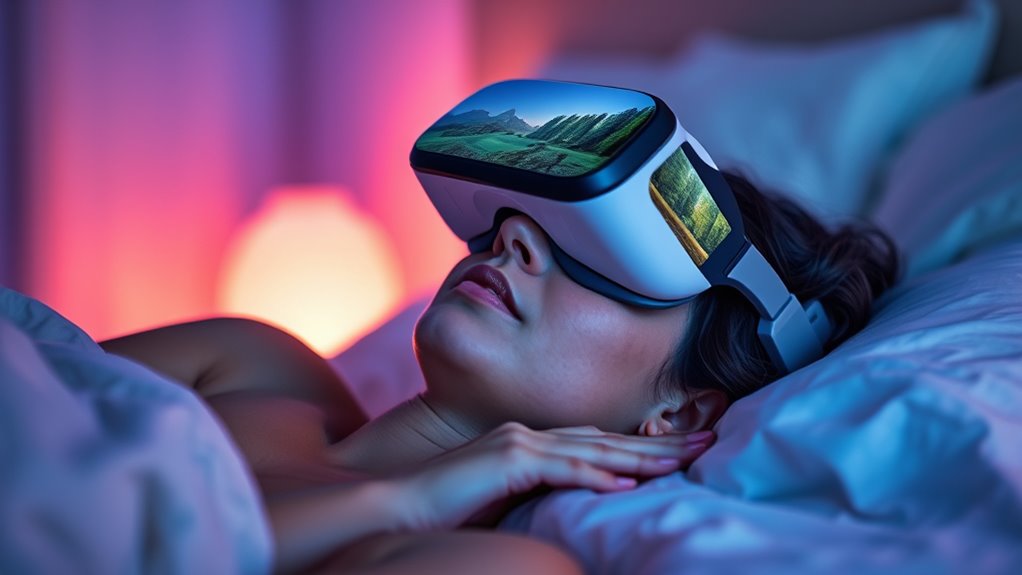
Advancements in VR technology are poised to revolutionize how we approach sleep and relaxation. Future developments like neural interfaces could allow direct brain communication, creating more immersive and personalized experiences. Haptic feedback will enhance sensations, making virtual environments feel more real and calming. Here’s what to expect:
VR advancements will personalize relaxation through neural interfaces and immersive sensations, transforming sleep and stress relief experiences.
- Neural interfaces—streamlining relaxation by syncing virtual content directly with your brain’s signals.
- Enhanced haptic feedback—providing tactile sensations that mimic calming textures or gentle touches.
- Adaptive environments—customizing virtual scenes based on your mood or sleep patterns for superlative relaxation.
These innovations could make VR a powerful tool for easing anxiety, improving sleep quality, and fostering deeper relaxation, all tailored to your unique needs.
Frequently Asked Questions
Can VR Cause Motion Sickness During Relaxation Sessions?
Yes, VR can cause motion sickness during relaxation sessions. You might experience visual discomfort from the rapid or mismatched movements between what you see and feel. This disconnect can lead to nausea, dizziness, or headaches. To minimize these effects, choose calming, slow-moving content, take regular breaks, and guarantee your VR device fits properly. Listening to your body helps prevent motion sickness and makes your relaxation experience more enjoyable.
How Long Should a Typical VR Relaxation Session Last?
Think of your VR relaxation session as a gentle river cruise; too long, and you risk fatigue, too short, and you might miss the calming scenery. For ideal timing, aim for 15 to 30 minutes, allowing your mind to unwind without overexposure. Adjust session duration based on your comfort, listening to your body’s signals. Shorter, consistent sessions can enhance relaxation and help you fall asleep more naturally.
Is VR Suitable for Children or Elderly Users?
VR can be suitable for children and the elderly if you prioritize safety and accessibility. For kids, guarantee child safety by choosing age-appropriate content and supervising use. For seniors, focus on elderly accessibility features like easy-to-navigate controls and comfortable headsets. Always consult healthcare professionals before use, especially for those with health concerns. By addressing these factors, you can help both age groups enjoy VR experiences safely and comfortably.
Are There Any Side Effects From Prolonged VR Use for Sleep?
Yes, prolonged VR use can cause side effects like VR fatigue and visual discomfort. You might notice eye strain, headaches, or dizziness after extended sessions. To avoid these issues, take regular breaks and limit your VR time. If you experience persistent discomfort, it’s best to decrease usage and consult a healthcare professional. Staying mindful of your body’s signals helps ensure a safer, more relaxing VR experience.
How Does VR Compare to Meditation or Mindfulness Apps?
Virtual reality benefits far surpass those of mindfulness applications, offering immersive worlds that can instantly transport you to tranquil landscapes. Unlike meditation, VR provides a multisensory experience that deeply relaxes your mind and body, making it easier to fall asleep. While mindfulness apps promote mental clarity, VR immerses you into calming environments, making it a powerful tool for relaxation. Together, they can complement each other for ideal sleep and stress relief.
Conclusion
Virtual reality can transform your relaxation routine, offering immersive environments that soothe your mind and promote better sleep. By creating calming experiences, reducing stress, and enhancing your bedtime ritual, VR opens new doors to restful nights. Embrace the potential, explore different content, and incorporate VR thoughtfully into your evenings. With innovation and mindful use, VR can become your partner in relaxation and a pathway to truly peaceful, restorative sleep.