
If allergies disrupt your sleep, focus on hypoallergenic bedding and breathable mattress covers to block dust mites, pet dander, and mold. Regularly wash your pillows, bedding, and plush toys in hot water, and replace old items promptly. Enhance air quality with HEPA filters and air purifiers, and guarantee proper ventilation. Adding indoor plants can also help filter toxins. Keep pet areas separate and maintain low humidity for a healthier, allergy-free sleep space—discover more tips to improve your nights.
Key Takeaways
- Use hypoallergenic mattress covers and wash bedding weekly in hot water to reduce dust mites and pet allergens.
- Install HEPA air purifiers and maintain HVAC filters to trap airborne allergens and improve indoor air quality.
- Keep pets out of bedrooms and groom them regularly to minimize pet dander and dander-related allergy symptoms.
- Incorporate indoor plants like snake plants or peace lilies to naturally filter toxins and boost air moisture.
- Ensure proper ventilation with exhaust fans and sealed windows to disperse allergens and promote cleaner sleep environments.
Identifying Common Allergens in Your Bedroom

Have you ever wondered what might be lurking in your bedroom that triggers allergies and disrupts your sleep? Dust mites are tiny creatures that thrive in bedding, pillows, and carpets, feeding on dead skin cells. They’re a common culprit behind allergy symptoms like sneezing, nasal congestion, and itchy eyes. Pet allergens are another hidden threat; proteins found in pet dander, saliva, and urine can settle on your bedding and furniture, triggering allergic reactions. Even if you don’t have pets in your room, pet allergens can still be present, carried in from other parts of your home or on clothing. Identifying these allergens is essential to improving your sleep quality. Regular cleaning, reducing clutter, and managing humidity help minimize dust mites and pet allergens, creating a healthier sleeping environment. Using hypoallergenic bedding can further reduce exposure and promote better sleep for allergy sufferers. Additionally, implementing air purification solutions can significantly decrease airborne allergens in your bedroom. Incorporating HVAC filtration systems can also enhance air quality by trapping smaller particles more effectively, further aiding allergy management. To further improve indoor air quality, sealed windows can prevent outdoor allergens from entering your sleeping space. Using air purifiers, which can target and remove these airborne particles more effectively, is also highly recommended.
Choosing Hypoallergenic Bedding and Mattress Covers
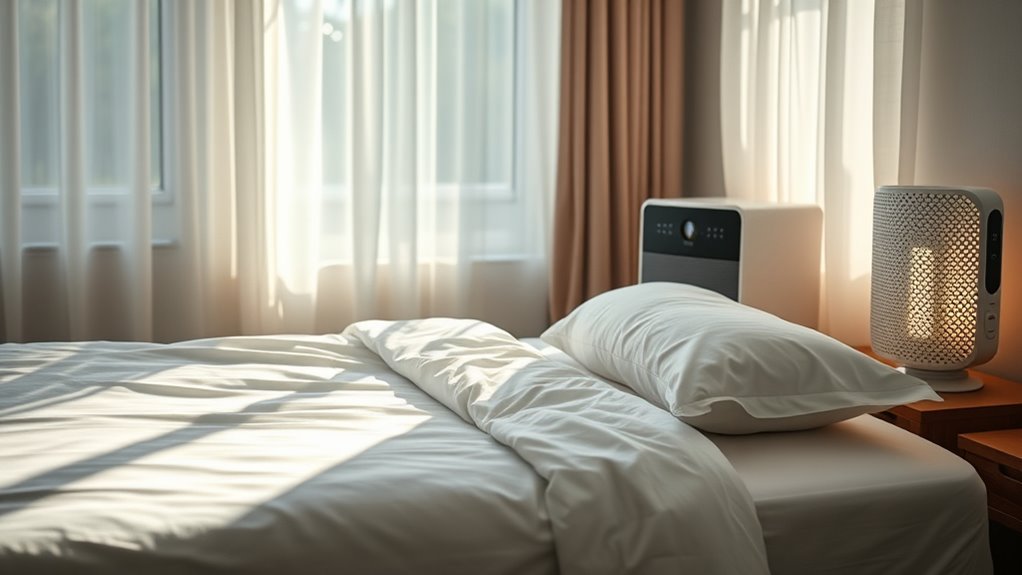
Choosing hypoallergenic bedding and mattress covers is a smart step toward reducing allergens in your sleep environment. Look for bedding made from hypoallergenic fabrics, which resist dust mites, mold, and pet dander. These fabrics are designed to prevent allergens from settling into your bedding, making them ideal for allergy sufferers. Pair your bedding with breathable mattress covers, which promote airflow and help regulate temperature, reducing moisture buildup that can foster mold and dust mites. Ensure your covers fit snugly to prevent allergens from slipping inside. By selecting these products, you create a barrier that minimizes exposure to common allergens, helping you breathe easier and enjoy more restful sleep. Additionally, choosing airflow‑and‑ventilation in your sleep environment can help you better understand how airflow and ventilation impact allergen buildup. Incorporating proper airflow practices can significantly improve your overall sleep quality and allergy management. Proper ventilation reduces humidity levels, which is crucial for mold prevention and maintaining a healthier sleeping space. Maintaining good ventilation also helps disperse airborne allergens, further reducing the risk of allergy symptoms during sleep.
Regular Washing and Maintenance of Bedding Items

To reduce allergens, wash your pillows weekly using hot water. This helps eliminate dust mites and other irritants that can build up over time. Don’t forget to replace old bedding regularly to keep your sleep environment fresh and allergy-free. Incorporating regular bedding maintenance routines can further improve your sleep quality and reduce allergy symptoms. Additionally, choosing hypoallergenic bedding materials can provide an extra layer of protection against allergens. Using natural air filtration devices can also help improve indoor air quality and diminish airborne allergens in your sleeping area. Proper bedding hygiene practices are essential to prevent the accumulation of allergens that can compromise your sleep, especially in environments with high airborne allergens.
Wash Pillows Weekly
Regularly washing your pillows is essential for maintaining a healthy sleep environment, especially if you suffer from allergies. Proper pillow hygiene helps remove dust mites, allergens, and bacteria that can accumulate over time. Depending on your bedding materials, frequency of washing can vary, but weekly cleaning is generally recommended to prevent allergen buildup. Use a gentle cycle suited to your pillow type and avoid harsh detergents that can leave residues. Make sure to thoroughly dry your pillows afterward to prevent mold and mildew growth. Keeping your pillows clean not only improves sleep quality but also reduces allergy symptoms. Incorporating regular washing into your routine ensures your pillows stay fresh, supportive, and safe for restful sleep. Additionally, choosing hypoallergenic bedding materials can further minimize allergen accumulation and improve overall sleep comfort. Regular maintenance of bedding items, including air filtration systems, can further enhance your sleep environment by reducing airborne allergens. Implementing proper cleaning practices for your bedding can significantly diminish allergen presence and promote better respiratory health. To maximize effectiveness, consider using allergy-proof covers on your pillows and bedding. Maintaining a clean sleep space is especially important for those with sensitivities, as it helps reduce exposure to airborne allergens.
Use Hot Water
Using hot water when washing your bedding is one of the most effective ways to eliminate dust mites, bacteria, and allergens that can trigger allergy symptoms. Washing at temperatures of at least 130°F (54°C) destroys these irritants efficiently. Regularly using hot water is especially important if you’ve recently undergone allergy testing, as your sensitivity may be heightened. Keep in mind that hot water can degrade some fabrics, so check care labels first. To enhance your cleaning routine, consider pairing hot water washes with allergen-proof covers. Here’s a quick overview:
| Benefit | Explanation |
|---|---|
| Eliminates dust mites | Hot water kills dust mites embedded in bedding |
| Reduces bacteria | High temperatures sanitize bedding |
| Improves allergy control | Less allergens in your sleep environment |
| Maintains hygiene | Ensures bedding stays fresh and clean |
Additionally, selecting appropriate laundry detergents designed for allergy sufferers can further improve your results. Regularly washing bedding in hot water also helps prevent the buildup of allergenic substances, ensuring a healthier sleep environment. Incorporating energy-efficient washing machines can help reduce energy consumption while maintaining effective cleaning. Utilizing proper washing cycles can optimize the cleaning process and protect your fabrics from damage.
Replace Old Bedding
Replacing old bedding is essential for maintaining a healthy sleep environment, especially if you suffer from allergies. Over time, bedding collects dust mites, which are a common allergen that can worsen allergy symptoms and disrupt your sleep. Regularly replacing worn-out pillows, comforters, and sheets helps reduce dust mite buildup and minimizes exposure. If you have chemical sensitivities, consider choosing hypoallergenic or chemical-free bedding options to avoid irritation. Washing your bedding weekly in hot water kills dust mites and removes allergens, but replacing old items guarantees you’re not using bedding that has deteriorated or accumulated allergens over the years. By updating your bedding regularly, you create a cleaner, healthier space that promotes better sleep and reduces allergy flare-ups.
Implementing Air Purifiers With HEPA Filters
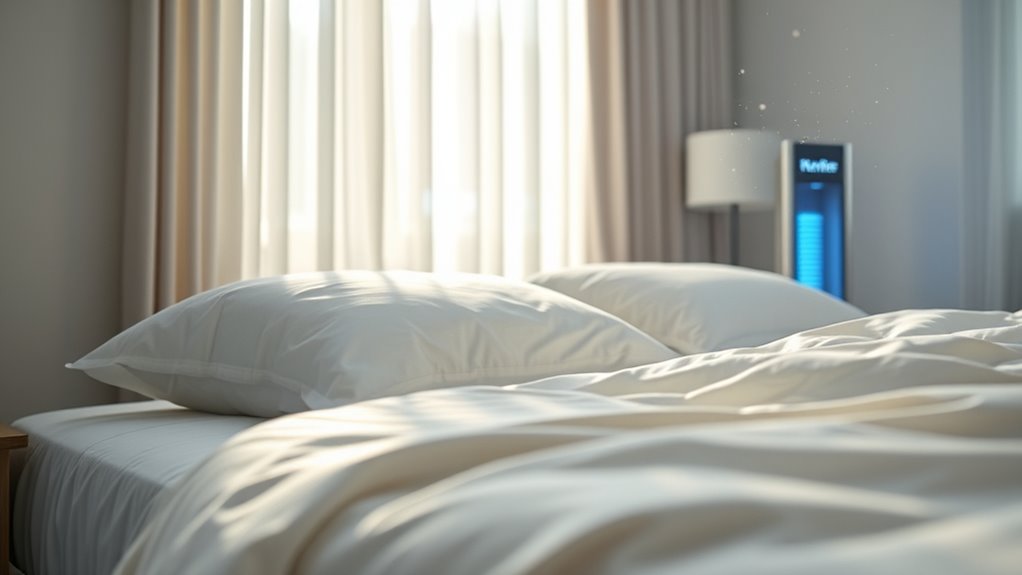
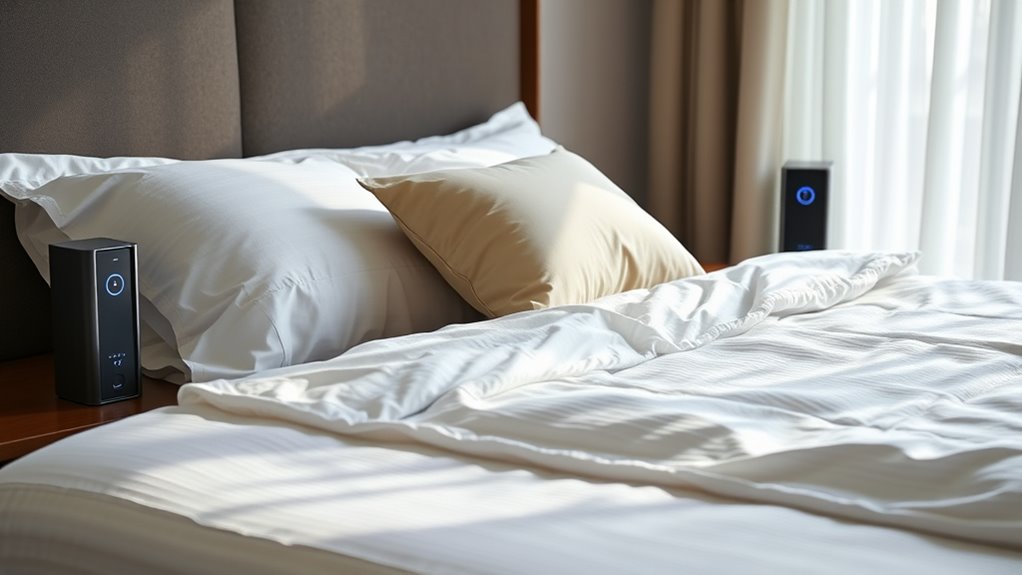
Implementing air purifiers with HEPA filters can substantially reduce airborne allergens that disturb your sleep. These devices trap dust mites, pet dander, pollen, and other particles that trigger allergy symptoms. One of the key air purifier benefits is improving indoor air quality, helping you breathe easier during the night. To keep your purifier working effectively, regular HEPA filter maintenance is essential; check filters monthly and replace them as recommended by the manufacturer. Proper maintenance guarantees maximum allergen removal and prevents mold or bacteria buildup. Using an air purifier with a HEPA filter creates a cleaner sleeping environment, reducing allergy symptoms and enhancing sleep quality. Invest in a quality unit and stay consistent with filter upkeep for the best results.
Using Ventilation Systems to Improve Indoor Air Quality

To enhance indoor air quality and reduce allergy triggers, proper ventilation plays a vital role. Using ventilation systems effectively can improve airflow efficiency and remove allergens like dust, pollen, and mold spores. Regular ventilation maintenance guarantees your system functions effectively and prevents the buildup of contaminants. To maximize benefits, consider these tips:
- Schedule routine inspections and filter changes
- Ensure proper duct sealing to prevent leaks
- Use exhaust fans in bathrooms and kitchens
- Balance airflow between rooms for even circulation
- Keep vents unobstructed for ideal performance
Incorporating Plants and Natural Air Cleaners
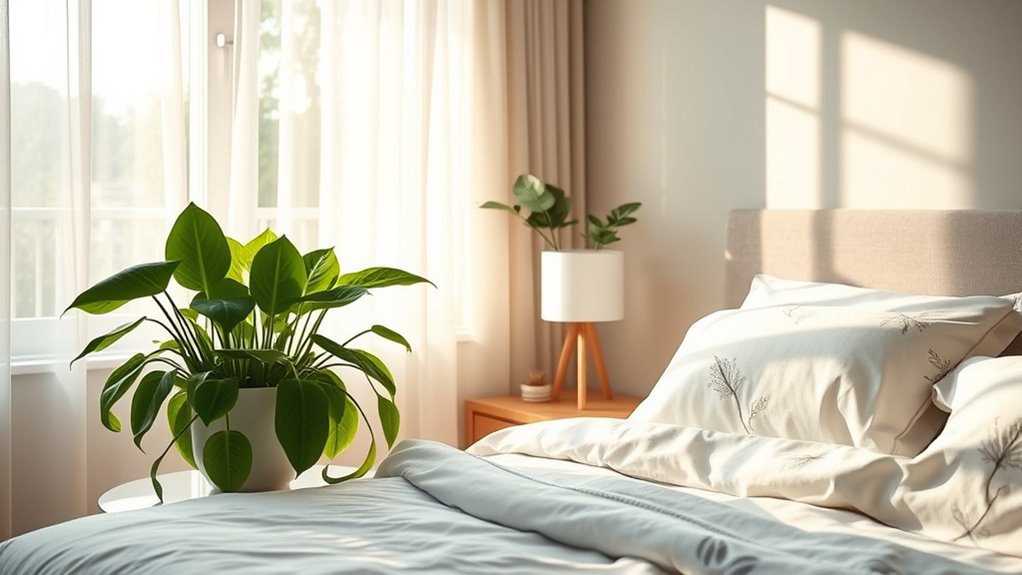
In addition to effective ventilation, introducing certain plants and natural air cleaners can further improve indoor air quality and reduce allergy triggers. Indoor plant benefits include filtering airborne toxins and increasing humidity, which can help alleviate allergy symptoms. Choose plants like snake plants, spider plants, or peace lilies, known for their natural air purifier options. These plants actively remove common indoor pollutants, creating a healthier environment. Incorporating greenery not only enhances air quality but also adds a calming aesthetic to your space. Just verify you select low-maintenance options suited for indoor conditions and keep them free of mold and dust. By integrating these natural elements, you support cleaner air and create a more comfortable, allergy-friendly bedroom environment.
Strategies for Reducing Pet Dander and Dust Accumulation
Regularly grooming your pets and bathing them frequently can considerably reduce the amount of pet hair and dander they shed into your environment. This simple step cuts down on allergens that settle on surfaces and become airborne. To further minimize dust mites and pet hair buildup, consider these strategies:
Groom and bathe pets regularly to reduce pet hair and dander in your home.
- Use high-efficiency particulate air (HEPA) filters in your HVAC system
- Wash bedding, curtains, and plush toys weekly in hot water
- Vacuum carpets and upholstery regularly with a HEPA-filter vacuum
- Keep pets out of bedrooms and sleeping areas
- Maintain low humidity levels to inhibit dust mite proliferation
Tips for Creating an Allergy-Friendly Sleep Environment
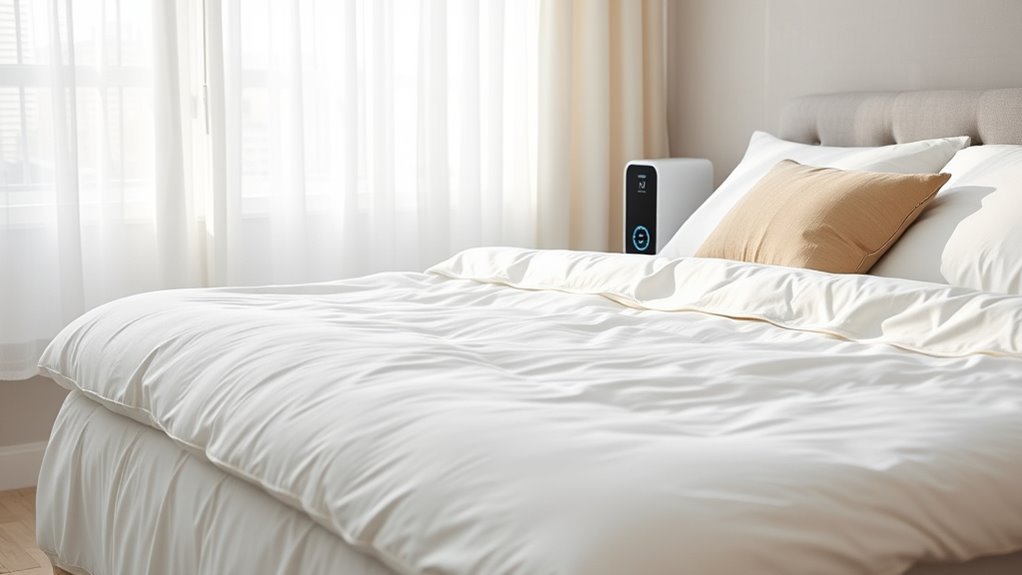
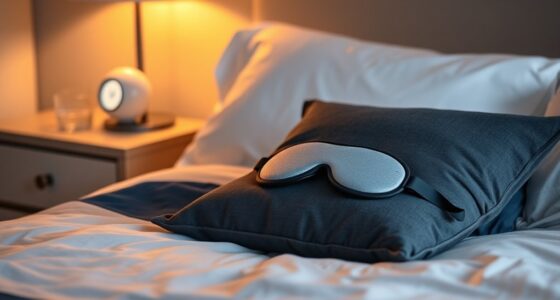
Creating an allergy-friendly sleep environment involves taking deliberate steps to minimize airborne allergens and irritants in your bedroom. Start by regularly washing bedding in hot water and using allergen-proof covers on pillows and mattresses. Keep pets out of your bedroom to reduce dander, and vacuum frequently with a HEPA filter. Using a sleep mask can block out dust and pollen particles, helping you breathe easier at night. Keep windows closed during high pollen seasons and consider installing air purifiers with HEPA filters to improve air quality. If allergies persist, taking allergy medication before bed can lessen symptoms and promote better sleep. These steps create a cleaner, healthier space, allowing you to rest more soundly and wake up refreshed.
Frequently Asked Questions
How Do I Identify Hidden Allergens in My Bedding and Furniture?
You can identify hidden allergens in your bedding and furniture by inspecting for dust mites and pet dander, which are common culprits. Look for signs like fine dust, skin flakes, or musty smells. Use a flashlight to spot dust mites in mattress seams, and consider allergen testing kits for a more precise diagnosis. Regularly cleaning and using allergen-proof covers helps reduce these hidden allergens and improve your sleep quality.
Are There Specific Materials Best Suited for Allergy-Proof Bedding?
For allergy-proof bedding, go for gentle, hypoallergenic fabrics like tightly woven cotton or silk, which block dust mites and allergens. These materials act as effective barriers, preventing irritation and allergy flare-ups. Look for bedding labeled “dust mite barrier” or “allergy-proof” to guarantee maximum protection. Choosing the right materials creates a cozy, clean environment, helping you sleep soundly without allergy aggravation.
What Are the Most Effective Ways to Prevent Allergen Buildup Over Time?
To prevent allergen buildup over time, use allergy-proof mattress covers to block dust mites and allergens effectively. Regular dusting of your bedroom surfaces helps keep allergens at bay. Wash bedding weekly in hot water, and vacuum carpets and upholstery frequently with a HEPA filter vacuum. Maintain good airflow with air purifiers, and keep humidity low to reduce mold. These steps create a healthier sleeping environment and reduce allergy symptoms.
Can Certain Household Cleaning Products Worsen Allergy Symptoms?
Yes, certain household cleaning products can worsen allergy symptoms. Cleaning chemicals often contain strong fragrances and harsh ingredients that can trigger your allergen responses. Instead, opt for natural or fragrance-free cleaning solutions, and guarantee good ventilation during and after cleaning. This way, you reduce allergen triggers in your environment and avoid aggravating your allergy symptoms, helping you breathe easier and sleep better.
How Do I Maintain Air Purifiers for Optimal Allergy Relief?
You might think your air purifier runs fine without maintenance, but neglecting it can diminish its allergy relief. Regular air purifier maintenance is essential—check your filter replacement schedule and replace filters every 3 to 6 months, or as recommended. Keep the unit clean, and ensure it’s operating efficiently. This way, you’ll maximize its ability to remove allergens, providing you with cleaner, healthier air and better sleep.
Conclusion
By tackling allergens head-on, you’re building a fortress of clean air where restful sleep can thrive. Think of your bedroom as a delicate symphony—each measure you take fine-tunes the environment for harmony and comfort. With consistent effort and smart choices, you’ll turn your space into a sanctuary, free from the chaos of allergens. Rest assured, these small steps will help you reclaim peaceful nights and wake up refreshed, ready to face the day.