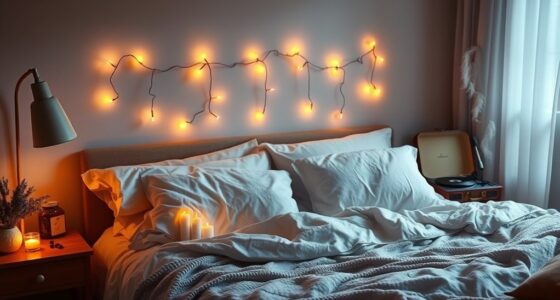
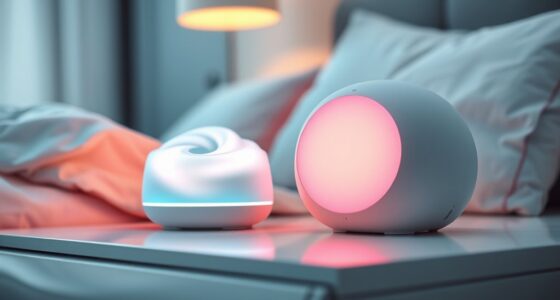
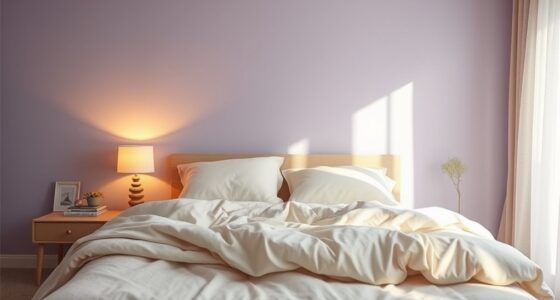
To improve your sleep with smart lighting, use warm, amber or red hues in the evening, as these promote melatonin production and help you relax. During the day, switch to cooler, blue-enriched lights to boost alertness and support your circadian rhythm. Avoid bright, blue light from screens before bed. By adjusting your lighting accordingly, you can create a sleep-friendly environment—keep exploring to learn more about optimizing your lighting for better rest.
Key Takeaways
- Warm, amber, or red lighting in the evening promotes melatonin production and helps you relax for better sleep.
- Cooler, blue-rich lights during the day boost alertness and reinforce your circadian rhythm.
- Avoid exposure to bright, blue-enriched light from screens at least one hour before bedtime.
- Use adjustable smart lighting to gradually dim or shift to warmer tones as bedtime approaches.
- Automated lighting schedules mimicking natural light cycles support healthier sleep patterns.
The Science Behind Light and Sleep Cycles

Light plays an essential role in regulating your sleep cycles because it influences your body’s internal clock, known as the circadian rhythm. This rhythm helps determine when you feel awake or sleepy by responding to changes in light exposure. When you’re exposed to natural light during the day, it keeps your circadian rhythm aligned, promoting alertness. As evening approaches, reduced light signals your body to prepare for sleep. Bright or blue light, however, can cause melatonin suppression, a hormone responsible for making you feel sleepy. When melatonin levels drop prematurely, falling asleep can become harder, and sleep quality may suffer. Additionally, understanding this connection supports the use of light management techniques to optimize sleep hygiene and overall restfulness. Properly managing exposure to different light wavelengths can further enhance your sleep quality. For example, blue light filtering glasses can block blue wavelengths and support melatonin production in the evening, promoting better sleep. Furthermore, incorporating smart lighting systems that adjust color temperature throughout the day can help maintain your circadian rhythm naturally.
How Different Colors of Light Affect Restfulness

Different colors of light can substantially influence how easily you rest and fall asleep. The color temperature, which determines whether light appears warm or cool, affects your circadian rhythm. Cooler, blue-rich lights promote alertness, making it harder to relax, especially with high light intensity. Conversely, warmer tones, like amber or red, encourage melatonin production, signaling your body that it’s time to wind down. The impact depends on both color and brightness, with brighter lights generally being more stimulating. To optimize your sleep environment, consider these effects:
- Blue light with high color temperature and high light intensity reduces melatonin.
- Red or amber light with low color temperature and low light intensity supports relaxation.
- Bright, cool lights hinder your ability to unwind.
- Soft, warm lights facilitate better sleep readiness.
- Incorporating appropriate lighting choices can enhance your circadian rhythm and improve sleep quality.
- Light spectrum plays a crucial role in regulating your body’s internal clock, influencing how quickly you can fall asleep.
- Understanding the spectral composition of your lighting can help you select options that promote better sleep and overall health.
- Utilizing dimmer controls allows you to adjust light levels gradually, aiding your body’s transition to sleep.
- Emerging research indicates that specialized lighting designs tailored to human circadian biology can further optimize sleep patterns.
Setting Up Your Smart Lighting for Optimal Sleep
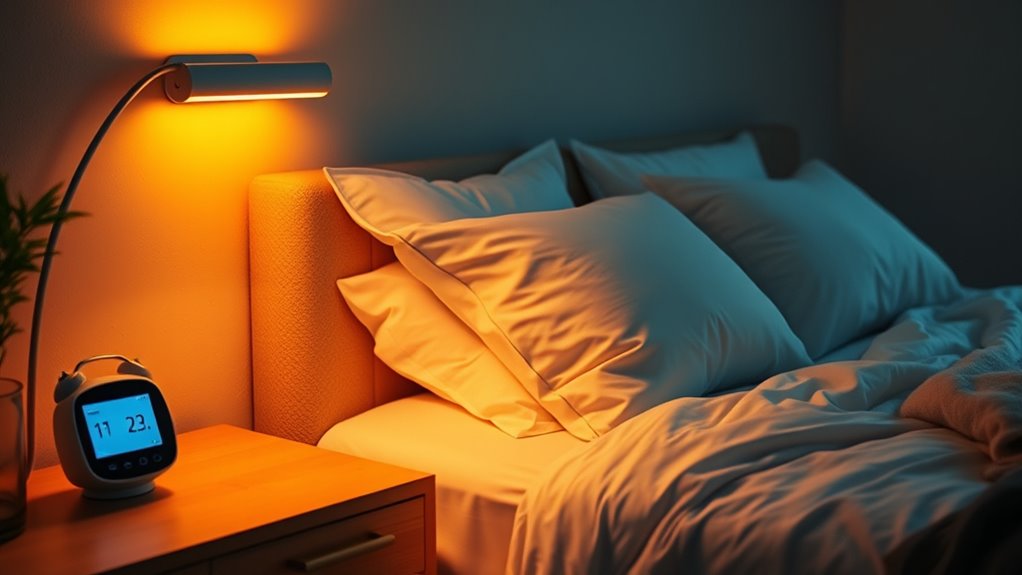
To set up your smart lighting for better sleep, start by choosing fixtures that allow you to control both color temperature and brightness easily. Adjusting the color temperature helps you mimic natural light cycles, reducing disruptive light exposure before bedtime. Aim for warmer tones in the evening, around 2700K to 3000K, to promote relaxation. During the day, increase brightness and opt for cooler, blue-enriched light to boost alertness. Set schedules or use automation to gradually shift light settings as bedtime approaches. Limiting light exposure to blue and bright light before sleep minimizes melatonin suppression. Understanding light distribution and how different color temperatures influence your circadian rhythm can further optimize your setup for restorative sleep. Incorporating Free Floating design principles can also help create a calming environment free of clutter and distractions, supporting better sleep hygiene. Additionally, considering light spectrum and its effect on melatonin production can help fine-tune your lighting choices for optimal sleep quality.
Practical Tips for Using Light to Improve Sleep Quality
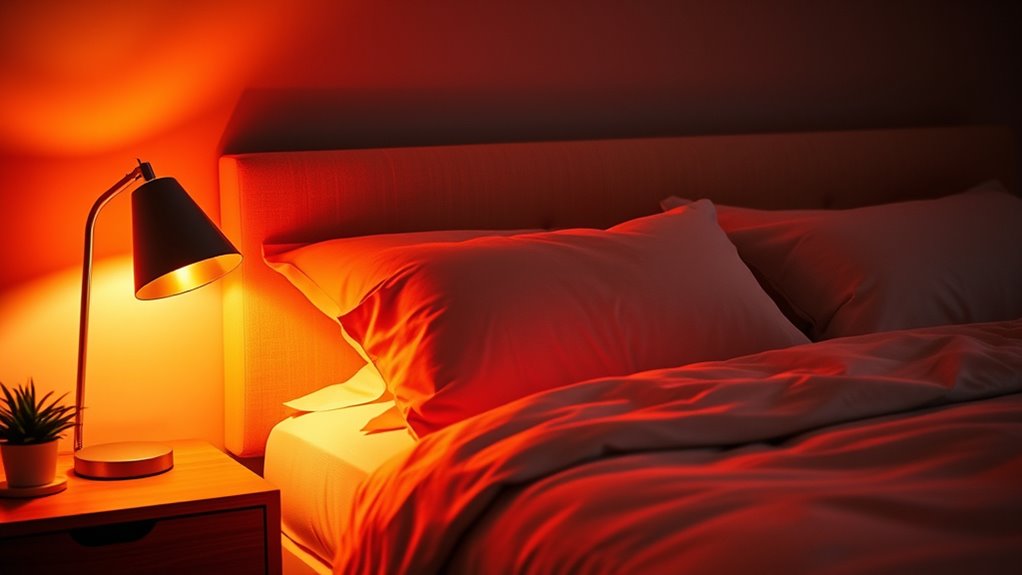
Once you’ve set up your smart lighting to support your natural sleep cycle, applying practical strategies can further enhance your sleep quality. Use light therapy in the evening with warm, dim lights to signal your body to wind down and boost melatonin production. During the day, expose yourself to bright, blue-enriched light to reinforce your circadian rhythms and boost alertness. Avoid blue light from screens an hour before bedtime, as it can disrupt your sleep cycle. Consider using timers or automation to gradually dim lights at night. Regularly monitor your sleep patterns and adjust lighting settings accordingly. Incorporating light exposure timing into your routine can help optimize your circadian rhythm and improve overall sleep quality. Additionally, understanding light color temperature can assist in selecting the most beneficial lighting for different times of day.
Future Trends in Sleep-Enhancing Lighting Technology
Emerging innovations in sleep-enhancing lighting technology are set to revolutionize how you optimize your sleep environment. Future trends focus on reducing light pollution and supporting your circadian rhythms, helping you sleep better. Smart lighting systems will adapt dynamically, mimicking natural sunlight patterns to lessen disruption. These advancements will include sensors that detect your sleep cycle and adjust light intensity and color accordingly. Additionally, new materials and designs will minimize light spill, ensuring your environment remains dark at night. The goal is to create personalized, health-conscious lighting solutions that promote melatonin production and stabilize your sleep-wake cycle. Understanding smart lighting technology can help you make informed choices for your sleep environment. Here’s a quick overview of upcoming trends:
| Innovation | Benefit | Impact |
|---|---|---|
| Circadian rhythm syncing tech | Supports natural sleep patterns | Improves sleep quality |
| Light pollution reduction | Less stray light during sleep | Enhances melatonin production |
| Dynamic color adjustment | Mimics natural daylight cycle | Regulates circadian rhythms |
| Smart sensors | Personalized lighting based on activity | Boosts sleep efficiency |
| Energy-efficient LEDs | Reduces environmental impact | Promotes sustainable tech |
A new development in lighting customization will allow users to tailor their environment more precisely to their sleep needs, further enhancing the effectiveness of these innovations.
Frequently Asked Questions
Can Exposure to Natural Light During the Day Improve Sleep Quality?
Yes, exposure to natural sunlight during the day can markedly improve your sleep quality. Sunlight exposure helps regulate your circadian rhythm, signaling your body when it’s time to wake and sleep. By spending time outdoors or near windows, you reinforce this natural cycle, making it easier to fall asleep at night and wake refreshed. Incorporate regular sunlight exposure into your daily routine for better overall sleep health.
How Does Screen Time Before Bed Influence Sleep Patterns?
You might notice that screen time before bed often leads to sleep disruption. When you scroll or watch screens, the blue light suppresses melatonin production, making it harder to fall asleep. This delay can shorten your sleep duration and reduce sleep quality. To improve your sleep, try reducing screen time an hour before bed or use blue light filters. Small changes can help reset your sleep patterns and promote restful nights.
Are There Any Health Risks Associated With Using Blue Light at Night?
Using blue light at night can pose health risks, like eye strain and circadian disruption. Blue light suppresses melatonin, making it harder for you to fall asleep and disrupting your sleep cycle. Prolonged exposure may also cause eye fatigue and discomfort. To protect your health, limit blue light exposure before bed, use blue light filters, or switch to warmer, sleep-friendly lighting options in the evening.
Can Adjusting Bedroom Lighting Help With Insomnia or Sleep Disorders?
Adjusting your bedroom lighting can considerably help with insomnia or sleep disorders. You can use lighting automation to gradually dim lights as bedtime approaches, creating a calming sleep environment. Opt for warm, amber hues that promote relaxation and melatonin production. By customizing your lighting setup, you make it easier to fall asleep and stay asleep, ultimately improving your overall sleep quality and health.
What Are the Best Practices for Transitioning Light Settings Overnight?
Think of your night as a gentle river flowing toward rest. To keep it smooth, use dimming strategies that gradually lower your lights, mimicking sunset’s calming fade. Set scheduled lighting to ease your progression, starting with soft, warm hues and dimming slowly as bedtime nears. This gentle shift signals your body it’s time to unwind, helping you drift into sleep naturally and peacefully.
Conclusion
By choosing the right light color for your evening, you can markedly improve your sleep quality. For example, switching to warm, dim lighting an hour before bed helped Sarah fall asleep faster and wake up refreshed. Small changes like this make a big difference over time. So, experiment with your smart lighting setup and see how it transforms your nights—better sleep could be just a color change away.