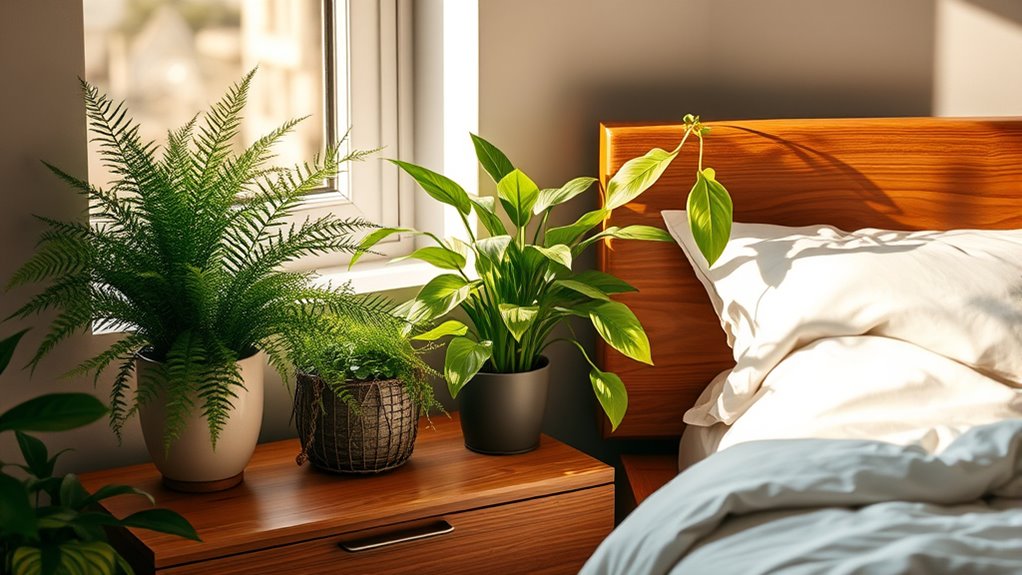

Houseplants can boost your sleep by naturally filtering indoor air and increasing oxygen levels, creating a healthier environment. They also promote relaxation and reduce stress through calming greenery and soothing scents. Choosing the right plants, like snake plants or lavender, supports better humidity and toxin removal, enhancing sleep quality. Maintaining healthy, well-placed plants is key, and if you keep exploring, you’ll discover simple steps to turn your space into a restful haven.
Key Takeaways
- Houseplants improve indoor air quality by filtering toxins and increasing oxygen levels, promoting healthier sleep environments.
- The calming presence and lush greenery of houseplants reduce stress and enhance mental relaxation before bedtime.
- Certain plants, like lavender and aloe vera, release soothing scents that can aid in falling asleep.
- Proper plant care and placement optimize air circulation and humidity, supporting restful sleep.
- Incorporating houseplants creates a tranquil, inviting bedroom atmosphere that encourages deeper, more restorative sleep.
How Houseplants Enhance Air Quality and Promote Better Sleep

Since they naturally filter the air around you, houseplants can considerably improve indoor air quality, creating a healthier environment for sleep. To maximize their benefits, follow simple plant care tips like avoiding overwatering and ensuring proper light. Healthy, thriving plants are better at removing toxins and increasing oxygen levels. When arranging your houseplants, consider decorative plant arrangements that not only look appealing but also optimize air circulation. Grouping plants with similar care needs makes maintenance easier and keeps them healthier. Incorporating a variety of plants, such as snake plants or pothos, can enhance air purification even further. Additionally, understanding the impact of contrast ratio in interior lighting can help create a calming sleep environment that complements the air quality improvements from your plants. Proper air circulation is also vital, as it helps disperse purified air evenly throughout your space. Maintaining optimal humidity levels is also essential, as it can prevent dry air and support plant health, further contributing to a restful atmosphere. Being mindful of ventilation can prevent stale air buildup and improve overall air quality, which is crucial for sleep quality and overall well-being. Remember, well-maintained houseplants contribute to cleaner air, which can lead to deeper, more restful sleep by reducing indoor pollutants and creating a calming atmosphere.
The Calming Effects of Houseplants on Stress and Relaxation
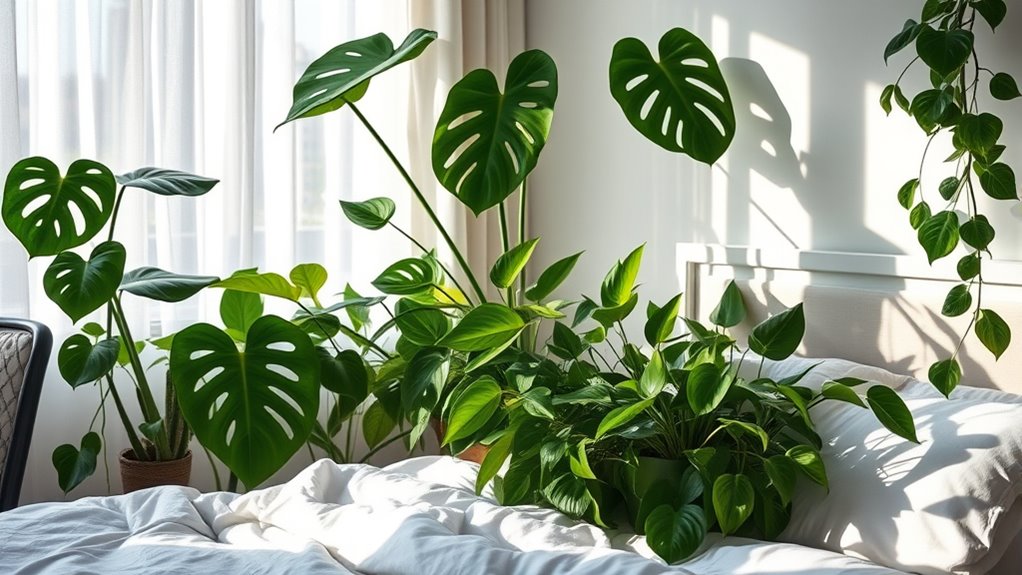
Houseplants have a natural ability to create a calming environment that reduces stress and promotes relaxation. This effect is rooted in plant psychology, which shows that greenery can positively influence your mood and mental well-being. The aesthetic benefits of houseplants enhance your space visually, making it more inviting and soothing. When you surround yourself with lush foliage, your brain associates these plants with tranquility and comfort. Taking care of houseplants also encourages mindfulness, helping you focus on the present moment rather than worries. This connection between nature and mental health fosters a sense of calm, lowering cortisol levels and easing tension. Additionally, some houseplants improve air quality, contributing to a healthier and more relaxing environment. Proper plant care techniques can further enhance these benefits by ensuring your plants thrive and continue to promote well-being. Engaging in mindful plant care can amplify stress reduction and create a deeper sense of relaxation. Research also suggests that greenery and natural elements can boost overall happiness and emotional resilience, especially when combined with natural surroundings. As a result, incorporating houseplants into your environment can be a simple yet powerful way to support relaxation and reduce stress daily.
Choosing the Right Plants for Sleep Support
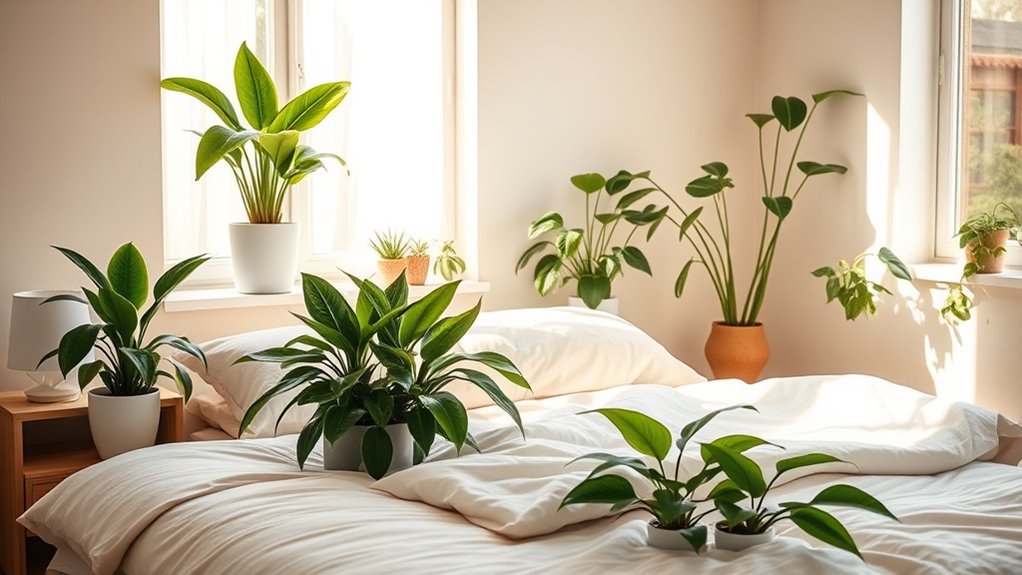
Choosing the right plants for sleep support involves selecting species known for their air-purifying qualities and calming presence. Look for plants like snake plants, lavender, or aloe vera, which help improve indoor humidity and create a relaxing environment. These plants not only filter toxins but also release soothing scents that promote restful sleep. When choosing your plants, consider their maintenance needs; opt for low-maintenance varieties if you’re new to plant care. Proper plant maintenance ensures your houseplants stay healthy, continue purifying the air, and maintain their calming effects. Additionally, selecting plants with air-purifying qualities can further enhance indoor air quality, supporting better sleep. Incorporating plants that naturally emit relaxing scents can contribute to a tranquil atmosphere conducive to restful nights. Choosing plants with low-maintenance requirements can make caring for them more manageable and ensure their continued benefits. Remember, a well-chosen plant that fits your lifestyle and environment can profoundly enhance your sleep environment, making your bedroom a peaceful sanctuary.
Frequently Asked Questions
Can Houseplants Help With Sleep Disorders Like Insomnia?
Yes, houseplants can help with sleep disorders like insomnia by improving your sleep environment and offering plant therapy. They increase air quality, reduce stress, and create a calming atmosphere, making it easier for you to relax at night. Incorporate plants like lavender or snake plants into your bedroom to enhance your sleep quality naturally. Their presence can promote tranquility, helping you fall asleep faster and enjoy deeper, more restful sleep.
Do Certain Houseplants Produce More Oxygen at Night?
Yes, certain houseplants produce more oxygen at night through plant oxygenation and nocturnal respiration. Plants like the snake plant and aloe vera continue to absorb carbon dioxide and release oxygen during darkness, improving air quality while you sleep. By choosing these plants, you enhance your sleep environment naturally, benefiting from their ongoing nocturnal respiration. This can help you breathe easier and wake up feeling more refreshed.
How Often Should I Water Houseplants for Optimal Sleep Benefits?
You should water your houseplants when the top inch of soil feels dry, typically every 1-2 weeks. This watering frequency supports plant health and guarantees they thrive without overwatering, which can harm them and reduce their air-purifying benefits. Proper watering helps sustain healthy growth, so you can enjoy the relaxation and air quality improvements that contribute to better sleep. Always adjust based on your specific plant’s needs and environment.
Are There Any Risks of Allergies From Sleeping Near Houseplants?
Yes, sleeping near houseplants can pose allergy risks if you have plant allergies or pet sensitivities. You might experience sneezing, congestion, or skin irritation, especially with plants that produce pollen or release strong scents. If you or your pets have known allergies, choose hypoallergenic plants like pothos or snake plants, and keep plants clean to minimize dust and mold. Always watch for any allergic reactions to guarantee safe, restful sleep.
Can Houseplants Improve Sleep Quality in Bedrooms With Poor Ventilation?
Imagine it’s the 18th century, and you’re seeking better sleep. You can indeed improve sleep quality in poorly ventilated bedrooms by strategically placing houseplants near air circulation sources. Proper plant placement can boost humidity and filter toxins, creating a healthier environment. Make certain your plants aren’t blocking vents or windows, and choose species that thrive in low airflow. This simple step transforms your space into a more restful sanctuary.
Conclusion
Bringing houseplants into your space can genuinely boost air quality and help you unwind. While they might not be a miracle cure, their calming presence and natural benefits make a difference. As you care for them, you create a peaceful environment that encourages relaxation and better sleep. So, why not fill your home with greenery? It’s a simple step toward improved rest, blending nature’s soothing touch with your nightly routine.