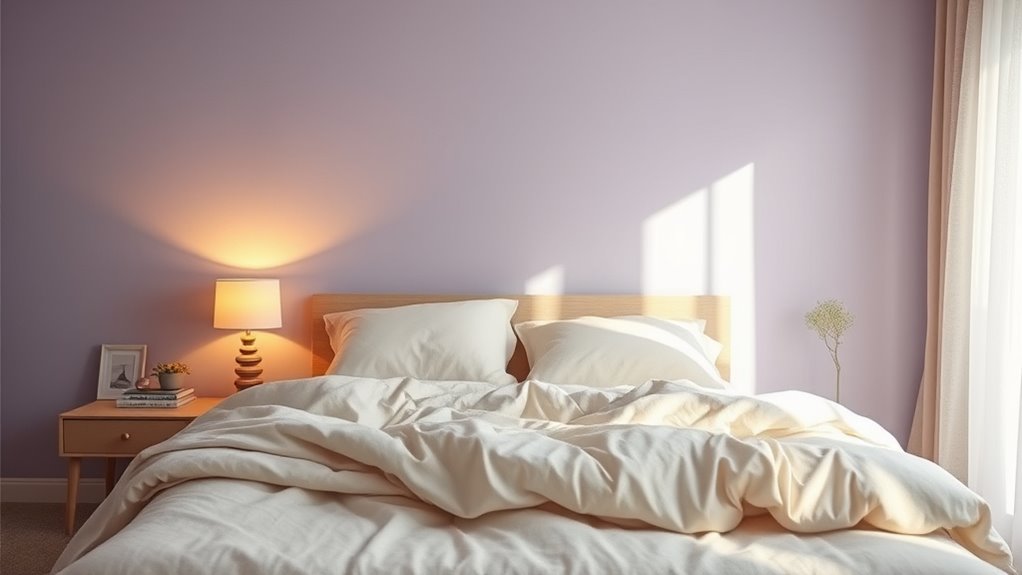

Choosing calming wall and light colors can considerably improve your sleep quality. Soft blues, greens, and warm neutrals on walls create a tranquil vibe, while warm, dimmable lighting enhances relaxation and promotes melatonin production. Bright or cool-toned lights, especially blue hues, can disrupt sleep. By selecting the right combination, you create a soothing environment. To discover the best options and how to optimize your space for restful sleep, keep exploring.
Key Takeaways
- Wall colors like muted blues, greens, and neutrals promote relaxation and improve sleep quality.
- Soft, warm lighting with lower brightness enhances the calming effect of bedroom colors.
- Light color and finish choices can influence room ambiance, affecting sleep comfort and clutter perception.
- Proper combination of soothing wall hues and gentle lighting reduces stimulation and supports circadian rhythms.
- Avoid bright or harsh lighting, and select wall and light colors that work together to create a restful environment.
The Psychology of Color and Its Effect on Sleep

Colors influence your mood and can profoundly affect how well you sleep. Through color therapy, you can intentionally select hues that promote relaxation and calmness. Different colors evoke specific emotional responses—soft blues and greens often induce tranquility, making it easier to unwind after a long day. Conversely, bright or intense colors like red or orange might increase alertness or stress, disrupting your sleep cycle. Understanding the psychology of color helps you create a bedroom environment that supports restful sleep. By choosing calming shades, you can foster a serene atmosphere that encourages your mind and body to relax. Additionally, incorporating multi-functional gear such as adjustable lighting options can help tailor the environment to support better sleep quality. Recognizing how color psychology impacts sleep can guide you in making more mindful choices for your bedroom design. Moreover, paying attention to visual cues in your surroundings can further enhance relaxation and sleep readiness. For example, incorporating ambient lighting can help set a soothing mood that promotes restful sleep. Creating an environment that balances natural elements with calming hues can further improve your sleep quality and overall well-being. Remember, your emotional responses to color are powerful; selecting the right palette can positively influence your sleep quality and overall well-being.
Popular Bedroom Wall Colors and Their Sleep Benefits

Choosing the right wall colors can markedly enhance your sleep quality, as certain shades create a calming environment that promotes relaxation. Popular bedroom color trends favor soft, muted hues like pale blue, lavender, and gentle greens, which have proven soothing effects. These colors can help reduce stress and prepare your mind for restful sleep. When selecting paint finish options, matte or eggshell finishes are ideal because they minimize glare and create a soft, cozy atmosphere. Bright or glossy finishes may reflect light and disrupt your sleep environment. By choosing calming colors with appropriate finishes, you craft a serene space that encourages relaxation and deep rest, making your bedroom a true retreat for rejuvenation.
How Light Colors Influence Relaxation and Restfulness
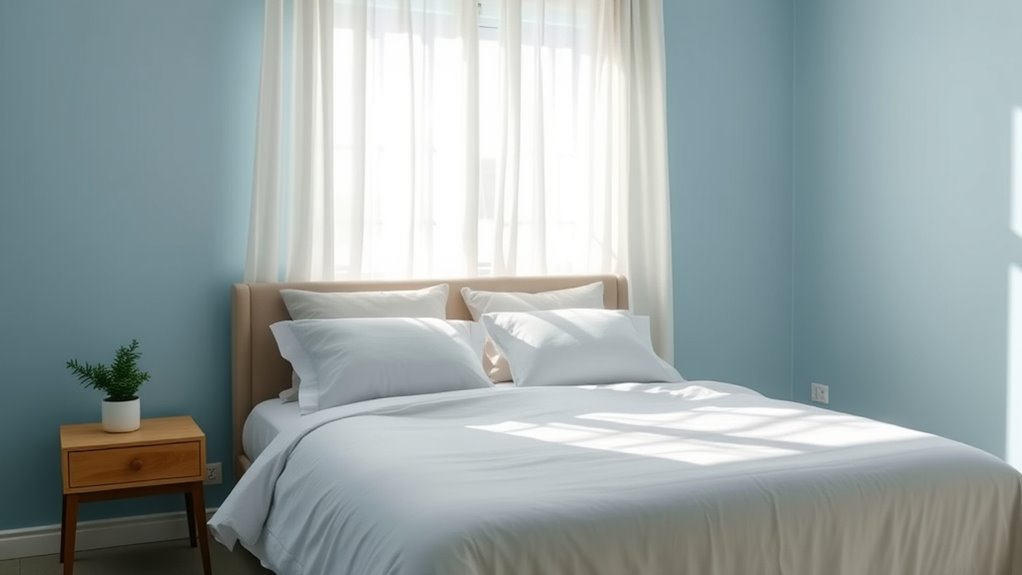
Light shades help create a calm and soothing atmosphere, making it easier for you to relax. Bright colors, on the other hand, can interfere with your sleep by affecting melatonin production. Understanding how these hues influence your rest can help you choose the best colors for your bedroom. Additionally, selecting colors that maximize your bedroom’s potential can enhance your overall sleep quality and comfort. Incorporating light therapy techniques can also support your circadian rhythm and improve sleep patterns. Being mindful of indoor air quality when choosing paint or decor can further promote a healthier sleep environment. Furthermore, understanding lighting conditions and how they impact your room can help you create an optimal sleep setting. Considering the effects of color psychology can also guide you in selecting hues that promote relaxation and reduce stress.
Light Shades Promote Calm
Soft, light shades can create a peaceful atmosphere that encourages relaxation before bedtime. These hues help reduce stress and promote calmness, making it easier to unwind. When choosing your bedroom decor, consider light colors for walls and accents to foster a serene environment. The paint finish also matters; matte or eggshell finishes minimize glare, enhancing a soft, cozy feel. Light shades like pastel blues, gentle greens, or soft neutrals reflect natural light, making your space feel open and airy. They help your mind relax, signaling it’s time to rest. To maximize calm, incorporate elements like:
- Soft, muted tones
- Smooth, matte paint finishes
- Minimal contrasting colors
- Natural light integration
Additionally, incorporating color psychology principles can enhance the calming effect of your bedroom colors. These choices support restful sleep and a tranquil bedroom ambiance, especially when you select shades known for their stress-reducing properties. For example, choosing hues with research-backed calming effects can further improve your sleep quality. Furthermore, integrating sound healing science by using calming sounds or frequencies can complement the visual tranquility and deepen relaxation. Incorporating light therapy techniques can also help regulate your circadian rhythm, promoting better sleep patterns and overall restfulness.
Brightness Affects Melatonin
Since melatonin production is essential for restful sleep, the brightness of your bedroom colors can substantially influence how well your body relaxes at night. Light colors and high brightness levels can suppress melatonin, making it harder to fall asleep. Darker, muted tones support a soothing sleep environment aligned with color psychology principles that promote calmness. To understand this better, consider the table below:
| Brightness Level | Typical Colors | Effect on Melatonin |
|---|---|---|
| High | Bright whites, pastels | Suppresses |
| Moderate | Soft blues, greys | Neutral |
| Low | Deep blues, charcoal | Enhances |
| Very Low | Dark navy, black | Maximizes rest |
| Medium | Warm neutrals, taupe | Balanced |
Additionally, lighting conditions play a crucial role in creating an optimal sleep environment, as they can either reinforce or counteract the effects of wall color on melatonin production. Moreover, incorporating dimmable lighting can help adjust light intensity to support natural sleep cycles.
The Impact of Dark vs. Light Walls on Sleep Quality
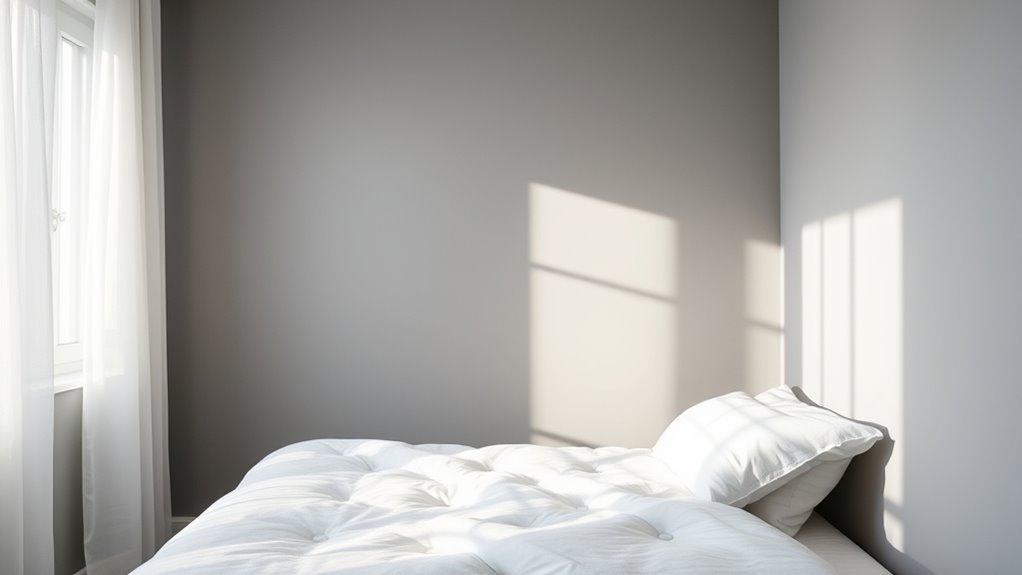
The color of your bedroom walls can profoundly influence your sleep quality, with dark and light shades affecting your environment in different ways. Dark walls, often aligned with bedroom color psychology, create a cozy, calming retreat that minimizes distractions and reduces external light. Conversely, light walls can make a room feel more open and airy but may reflect more light, potentially disrupting sleep if not balanced with proper lighting. Wall color trends show a shift toward muted, soothing hues for better sleep. Consider these points:
- Dark walls improve sleep by reducing light and creating a calming atmosphere.
- Light walls boost brightness but may require blackout curtains for ideal sleep.
- Both choices influence mood and sleep quality based on personal preferences.
- Your choice should align with your sleep habits and bedroom environment.
- Proper ventilation considerations can further enhance sleep quality by maintaining a comfortable atmosphere.
- Incorporating soundproofing techniques can also help create a more restful sleep environment, especially in noisy areas.
- Additionally, optimizing bedroom layout can reduce clutter and promote relaxation, contributing to better sleep.
- Adjusting digital environment settings to limit screen time and reduce blue light exposure can support healthier sleep routines.
Choosing the Right Lighting to Complement Wall Colors
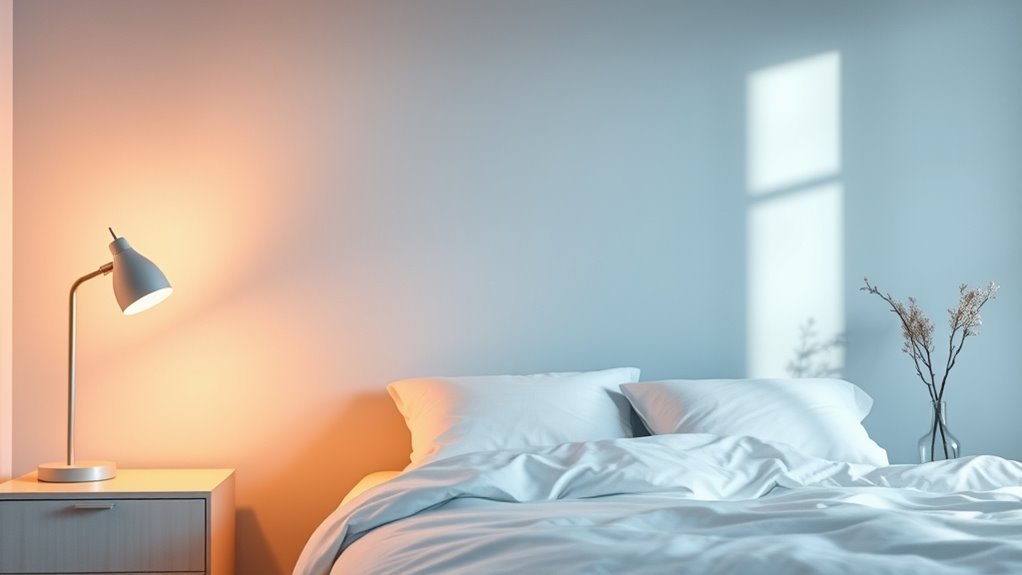
The right lighting can enhance your wall colors and improve your sleep environment. You should consider how light temperature influences mood and sleep quality, with warmer tones creating a cozy feel. Layered lighting strategies, combining different brightness levels and fixtures, help you achieve a calming space that complements your wall choices. Additionally, integrating adaptive lighting that adjusts based on circadian rhythms can further optimize your sleep environment and overall comfort. Incorporating sleep-friendly lighting techniques can also support your natural sleep-wake cycle and promote better rest.
Light Temperature Effects
Choosing the right lighting temperature is essential to enhance your bedroom’s wall colors and create a calming environment. Warm light, around 2700K, softens colors and boosts comfort, while cooler light, around 5000K, makes colors appear more vivid. Proper lighting placement helps highlight wall tones without overwhelming the space or reducing color saturation. When selecting bulbs, consider how the temperature influences the overall mood and color perception. Avoid harsh, bluish hues that can disrupt relaxation. Instead, opt for lighting that complements your wall colors to promote restful sleep. To visualize ideas:
- Use warm light for muted or pastel walls
- Cool light for accentuating bold, saturated colors
- Place lights strategically to avoid glare
- Dimmer switches to adjust warmth and intensity
Brightness and Mood
Lighting brightness considerably influences the mood of your bedroom and how your wall colors are perceived. Bright lighting can energize a space with bold bedroom paint, making colors pop and feel lively. Conversely, softer, dimmer light creates a calming atmosphere, ideal for sleep. When choosing a light bulb, consider your desired ambiance: warm white bulbs enhance cozy, relaxing tones, while cool white bulbs can make colors appear sharper and more vibrant. Dimming switches give you control, allowing you to adjust brightness based on your mood or time of day. Proper lighting guarantees your wall colors complement your overall bedroom aesthetic, ultimately supporting your sleep environment. Keep in mind that the right light level can transform your space from stimulating to soothing effortlessly.
Layered Lighting Strategies
To create a balanced and soothing bedroom environment, layering different types of lighting is essential. Proper lighting enhances your bedroom decor and complements wall colors, making your space feel calm and inviting. Consider combining ambient, task, and accent lighting to achieve this. For example, soft overhead lights set the mood, bedside lamps provide task lighting for reading, and accent lights highlight artwork or furniture details. Your furniture arrangement influences how light spreads, so place lights to avoid harsh shadows or glare. This layering allows you to adjust brightness levels for different activities and times of day. By thoughtfully choosing and positioning lighting, you create a harmonious atmosphere that supports restful sleep and enhances your bedroom’s overall aesthetic.
The Role of Warm and Cool Light in Bedroom Comfort

Warm and cool lighting play essential roles in shaping your bedroom’s comfort and sleep quality. Warm light creates a cozy, relaxing atmosphere that aligns with positive color psychology, helping you unwind at night. Cool light, on the other hand, can energize you during the day but may interfere with your sleep if used improperly before bed. Modern lighting technology offers adjustable options, allowing you to switch between warm and cool tones to match your needs. By understanding how different light colors influence mood and perception, you can design a space that promotes restful sleep. Proper lighting choices subtly influence your comfort, making your bedroom a sanctuary for relaxation and restorative rest.
Color Temperature and Its Effect on Melatonin Production
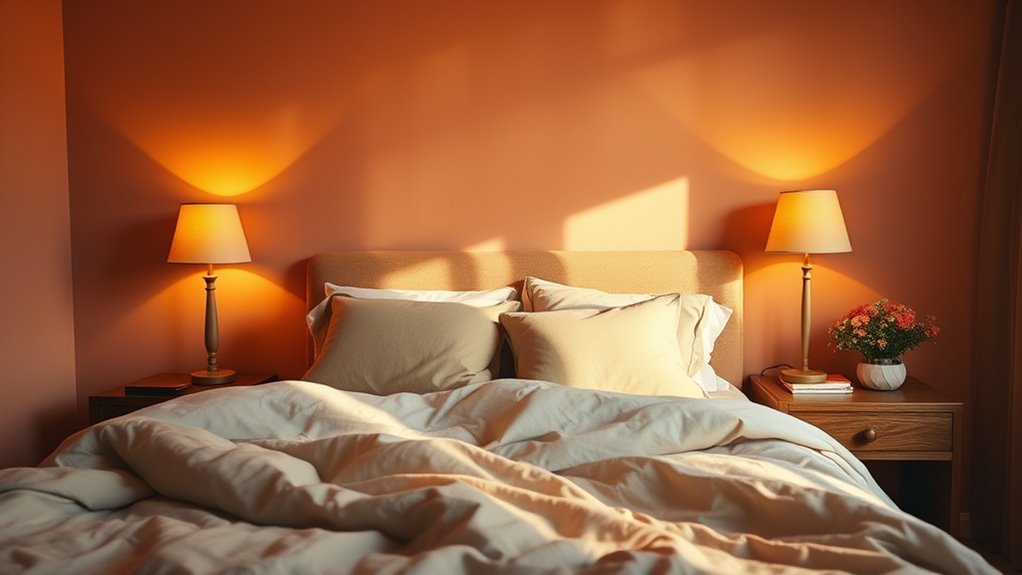
Since your body’s production of melatonin is highly sensitive to light, the color temperature of your bedroom lighting can considerably impact your sleep quality. Cooler color temperatures (above 5000K) emit bluish light, which suppresses melatonin production and makes it harder to fall asleep. Warmer color temperatures (around 2700K-3000K) produce a cozy, amber glow that encourages melatonin release, promoting restful sleep. To optimize your bedroom environment, consider these points:
- Use warm-colored bulbs in the evening
- Avoid bright, blue-toned lighting before bedtime
- Dim lights as you prepare for sleep
- Choose adjustable lighting for flexibility
Tips for Combining Wall and Light Colors for a Restful Environment

You want your bedroom to feel calm and inviting, so start by harmonizing your wall and light colors. Choose soothing shades that complement each other to create a unified, restful space. A well-coordinated color scheme can markedly enhance your sleep environment.
Harmonize Wall and Light
How can you create a peaceful bedroom environment? Start by harmonizing your wall and light colors. Choose wall paint shades that complement your light fixtures, ensuring the colors work together smoothly. To enhance wall paint durability, opt for high-quality paint that withstands daily wear. When installing light fixtures, consider warm, soft lighting to promote relaxation. Here are some ideas to help:
- Select wall colors that match or gently contrast with your light fixture finishes
- Use dimmable lights for adjustable ambiance
- Avoid harsh, bright bulbs that disrupt sleep
- Coordinate wall and light colors to evoke calm and serenity
Use Soothing Color Schemes
Choosing soothing color schemes involves pairing gentle wall colors with soft lighting to create a calm and inviting space. Focus on bedroom decor that promotes relaxation, such as muted blues, soft greens, or warm neutrals. These colors work well with various wall textures, like matte or subtle finishes, enhancing a cozy atmosphere. Keep lighting low and warm to complement your wall colors and reinforce a restful environment. Avoid harsh or overly bright lights that can disrupt sleep. When selecting wall and light colors, aim for harmony; for example, light beige walls with warm amber lighting. This combination helps your mind unwind at night and encourages restful sleep. By thoughtfully combining wall and lighting choices, you craft a tranquil space perfect for restorative sleep.
Common Mistakes to Avoid When Selecting Bedroom Colors and Lighting
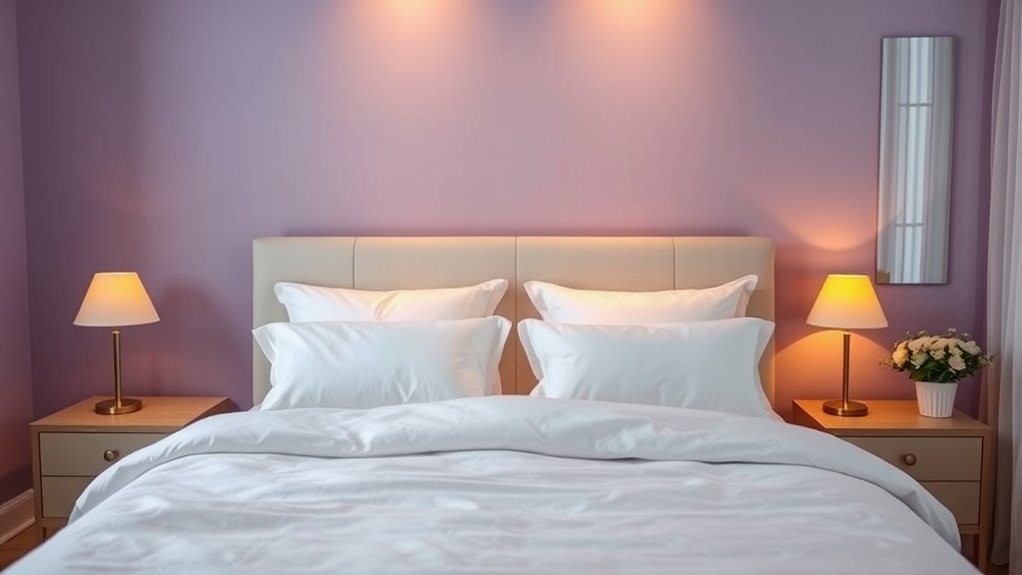
Selecting the right bedroom colors and lighting isn’t just about personal preference; it’s about creating a restful environment. Avoid common mistakes that can disrupt sleep quality. First, choose overly bright or harsh lighting, which can be stimulating. Second, ignore the impact of wall textures and finishes, as rough or shiny surfaces can influence mood and light reflection. Third, select colors that clash with your bedroom furniture, making the space feel chaotic rather than calming. Ultimately, neglect to consider how your lighting interacts with wall colors, potentially making a soothing color appear dull or overwhelming. To prevent these issues, opt for soft, muted tones, gentle lighting options, and harmonious wall textures that complement your furniture and promote relaxation.
Practical Advice for Creating a Sleep-Friendly Bedroom Atmosphere
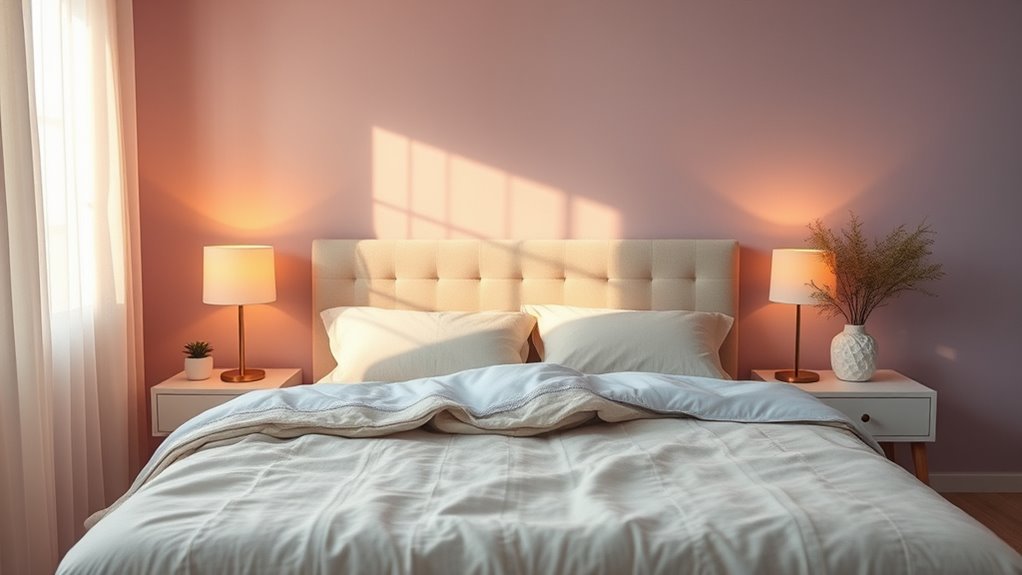
Creating a sleep-friendly bedroom atmosphere starts with mindful design choices that promote relaxation and rest. Focus on calming bedroom decor, such as soft bedding, minimal clutter, and soothing textures, to create a tranquil environment. Stay current with color trends by choosing wall colors like muted blues or gentle neutrals that foster serenity. Keep lighting soft and adjustable, avoiding harsh overhead lights, to support your circadian rhythm. Incorporate natural elements, like plants or wood accents, to enhance comfort. Limit electronic devices and avoid loud patterns or bold hues that can stimulate your mind. By balancing these design principles, you craft a space that encourages restful sleep and relaxation, making your bedroom a true sanctuary for restorative nights.
Frequently Asked Questions
Can Specific Wall Colors Trigger Anxiety or Promote Relaxation Before Sleep?
Yes, specific wall colors can trigger anxiety or promote relaxation before sleep through color psychology. Warm tones like reds or bright yellows may heighten your emotional response, causing restlessness or stress. Conversely, cool and muted shades like blues or soft greens tend to calm your mind, fostering relaxation. You can choose wall colors that align with your desired emotional response, helping you unwind and prepare for restful sleep.
How Do Natural Versus Artificial Light Sources Affect Bedroom Color Impact?
Natural lighting enhances your bedroom’s colors, making them appear softer and more inviting, which promotes relaxation. In contrast, artificial lighting can alter these hues, sometimes creating harsh or cool tones that disrupt your calm mood. You should consider how natural light floods your space during the day and switch to warm, dim artificial lights at night to preserve the soothing effect of your chosen wall colors, ensuring better sleep quality.
Are There Cultural Differences in Color Preferences for Sleep Environments?
Cultural differences influence your color preferences for sleep environments through symbolism and regional tastes. For example, in some cultures, calming blues symbolize tranquility, while in others, earthy tones promote comfort. Your regional preferences shape what feels restful and familiar, affecting your choice of wall or light colors. Understanding these cultural nuances can help you create a sleep space that resonates personally and enhances your overall rest experience.
What Are the Long-Term Effects of Certain Wall and Light Colors on Sleep Quality?
Certain wall and light colors can have long-term effects on your sleep quality, influenced by color psychology. Calm, muted tones like blue or green promote relaxation, helping you fall asleep faster and enjoy deeper sleep. Bright or stimulating colors may disrupt your sleep environment, leading to restless nights over time. Consistently choosing soothing hues creates a sleep-friendly environment that supports your overall sleep health and well-being.
How Does Bedroom Color Choice Influence Sleep Disorders Like Insomnia?
Your bedroom color choice acts like a calming lullaby or a restless storm, directly impacting insomnia. Using color psychology, soft hues like blues and greens create a soothing sleep environment, easing anxiety and reducing sleep disorders. Bright or harsh colors can stir your mind, making it harder to unwind. When you choose calming shades, you set the stage for restful sleep, helping you break free from the cycle of insomnia.
Conclusion
Choosing the right wall and light colors can transform your bedroom into a sanctuary of restful sleep. Think of your space as a cozy nest—calm, inviting, and perfectly tuned for relaxation. By selecting soothing hues and appropriate lighting, you create an environment that naturally signals your body to unwind. Remember, just like a gentle lullaby, the right colors and lights set the perfect mood for a night of deep, restorative sleep.