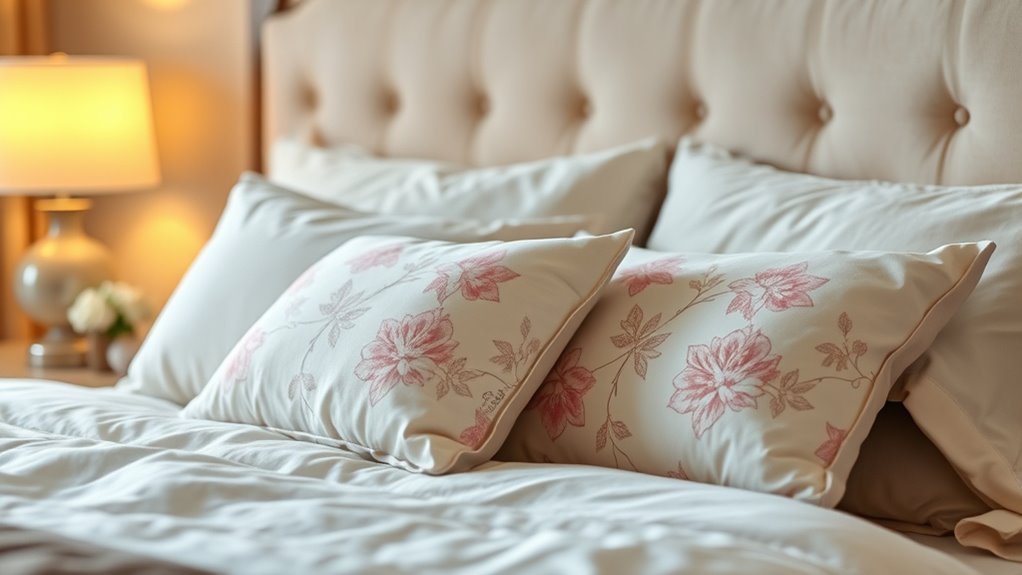

Scented pillows and aromatherapy bedding can truly boost your sleep by creating a calming environment that signals your brain to unwind. Using soothing essential oils like lavender or chamomile helps reduce anxiety, lower heart rate, and promote relaxation throughout the night. When incorporated into your bedding, these aromas maintain a peaceful atmosphere and can even lessen nighttime awakenings. Discover how these sensory tools can transform your sleep experience as you explore more ways to enhance your rest.
Key Takeaways
- Aromatherapy bedding creates a calming sleep environment that signals the brain to relax, promoting better sleep quality.
- Infused pillows release continuous, gentle aromas like lavender or chamomile, helping reduce anxiety and nighttime awakenings.
- Using high-quality, properly diluted essential oils in bedding can enhance relaxation and establish a soothing nightly routine.
- Consistent exposure to calming scents can help the brain associate aromas with sleep cues, improving overall sleep patterns.
- While individual preferences vary, many find scented pillows and aromatherapy bedding effective in promoting deeper, more restful sleep.

If you’re looking to enhance your sleep experience, scented pillows and aromatherapy bedding offer a simple yet effective solution. One of the key ways they work is by creating a calming sleep environment that signals your brain it’s time to unwind. Using essential oil blends in your bedding can subtly influence your mood and relaxation levels, helping you drift off more easily. These blends often include ingredients like lavender, chamomile, or eucalyptus, which are known for their soothing properties. When incorporated into your bedding, these scents become a gentle part of your nightly routine, promoting a peaceful atmosphere that encourages restful sleep.
Your sleep environment plays a vital role in how well you rest. By integrating scented pillows and aromatherapy bedding, you can tailor this environment to better suit your needs. For example, a pillow infused with lavender essential oils can provide a continuous, gentle aroma that helps reduce anxiety and lower heart rate, making it easier to fall asleep. Meanwhile, aromatherapy bedding that carries the scent throughout the night ensures a consistent calming presence. This continuous exposure to relaxing aromas can reduce nighttime awakenings and improve overall sleep quality.
Infused with lavender, pillows and bedding create a calming environment that promotes restful, uninterrupted sleep.
When selecting essential oil blends for your bedding, choose those designed specifically for sleep. These blends often combine multiple calming scents that work synergistically to enhance relaxation. You might opt for a pre-made pillow spray or create your own mixture with a few drops of essential oils on your pillowcase or bedding. The key is to use high-quality, pure oils, as synthetic fragrances may not offer the same benefits and could even disrupt your sleep. Additionally, avoid applying essential oils directly to your skin unless they’re properly diluted, as some can cause irritation.
Using aromatherapy bedding isn’t just about scent; it’s about establishing a sensory routine that tells your brain it’s time to relax. Over time, your mind associates these calming aromas with sleep, helping to cue your body to unwind more quickly each night. The consistency of this routine can markedly improve your sleep pattern, especially if you struggle with stress or racing thoughts. Just remember, everyone’s preferences are different, so experiment with different essential oil blends to find what resonates most with you. Incorporating essential oils for sleep can further enhance the calming effects and support your nightly routine.
Frequently Asked Questions
Are Scented Pillows Safe for Allergy Sufferers?
Scented pillows can be safe for allergy sufferers if you choose hypoallergenic options with low scent intensity. You should check labels carefully to verify they don’t contain allergens or strong fragrances that might trigger reactions. It’s best to test a small area first and opt for natural scents like lavender or chamomile. Always consult with your doctor if you’re unsure, and prioritize products designed specifically for sensitive skin and allergies.
How Long Do the Scents Last on Pillows?
Like a fading sunset, your pillow’s scent diminishes over time. Typically, pillow fragrance longevity lasts about a week to two, depending on the scent’s strength and pillow use. Scent retention duration varies with washing, exposure to air, and material. To keep the aroma fresh longer, consider reapplying essential oils or using pillow sprays. Remember, the more you nurture your scent, the longer it stays, creating a calming atmosphere for restful nights.
Can Aromatherapy Bedding Cause Skin Irritation?
Aromatherapy bedding can cause skin irritation if you’re sensitive to fragrances or have chemical sensitivities. The essential oils or artificial fragrances in these products might trigger allergic reactions or dermatitis. To reduce risks, check for hypoallergenic options and avoid heavily scented bedding. If you notice itching, redness, or irritation, discontinue use and consult a dermatologist. Always test new products on a small skin area first to prevent adverse reactions.
Do Different Scents Have Different Sleep Benefits?
Yes, different scents offer unique sleep benefits. Lavender relaxation helps calm your mind and reduces anxiety, making it easier to fall asleep. Citrus energizers, on the other hand, boost alertness and can be great for mornings or when you need a pick-me-up. You can choose scents based on your needs; lavender promotes relaxation, while citrus invigorates, helping you tailor your sleep environment for better rest.
Are Scented Pillows Suitable for Children or Pets?
Scented pillows aren’t suitable for children or pets because of safety concerns. You should prioritize child safety and pet safety by avoiding strong or potentially harmful fragrances, which might cause allergic reactions or irritation. Keep scented pillows out of reach, and opt for unscented, hypoallergenic bedding instead. Protecting their health and well-being is more important than adding aromatherapy allure, ensuring everyone sleeps soundly and safely.
Conclusion
So, do scented pillows and aromatherapy bedding truly help you sleep? The evidence is promising but not definitive. Next time you try them, you might discover a secret to better rest—or simply enjoy a calming bedtime ritual. Could this be the key you’ve been missing? The answer might just lie in your next sleep, waiting to be uncovered. Don’t wait too long—your perfect night’s sleep could be closer than you think.