Having houseplants in your bedroom can improve your sleep by enhancing air quality and creating a calming environment. Plants like snake plants and lavender filter toxins and release oxygen, making it easier to breathe. They also bring a sense of tranquility, reduce stress, and promote relaxation. If you want to discover which plants are best for your space and how to care for them, there’s more to explore about creating the ultimate sleep-friendly oasis.
Key Takeaways
- Houseplants improve indoor air quality by filtering toxins and releasing oxygen, promoting healthier breathing during sleep.
- Certain plants like lavender and snake plants release calming scents and oxygen at night, enhancing relaxation and sleep quality.
- Greenery reduces stress and anxiety, creating a tranquil environment that supports better mental well-being and sleep.
- Proper placement and care of houseplants ensure they effectively purify air without causing allergies or disturbances.
- Incorporating houseplants into bedroom routines can boost emotional comfort, leading to more restful and restorative sleep.
How Houseplants Improve Indoor Air Quality

Houseplants actively improve indoor air quality by absorbing pollutants and releasing oxygen. However, it’s essential to be aware of plant allergies, which can cause respiratory issues for sensitive individuals. Some people might experience sneezing, itchy eyes, or congestion when exposed to certain plants. Additionally, plant toxicity is a concern if you have pets or children, as some houseplants can be harmful if ingested. Choosing non-toxic plants helps prevent accidental poisoning and keeps your indoor environment safe. While houseplants can filter airborne toxins like formaldehyde and benzene, understanding their potential risks guarantees you enjoy cleaner air without unintended side effects. Proper plant selection and placement allow you to benefit from improved air quality while minimizing allergy and toxicity concerns. Incorporating energy-efficient houseplants supported by sustainable cultivation practices can further enhance your indoor environment’s health benefits. Selecting plants with low-allergen potential can also help reduce allergy risks for sensitive individuals.
The Science Behind Plants and Air Purification

Plants improve indoor air quality not just by absorbing pollutants but through specific biological processes that actively remove toxins from the air. This involves plant physiology, where leaves, roots, and microorganisms work together to filter and detoxify air particles. During photosynthesis, plants convert carbon dioxide into oxygen, reducing indoor pollutants. Additionally, air filtration occurs as tiny pores in leaves, called stomata, absorb volatile organic compounds (VOCs) and other toxins. The roots and soil microbiomes further break down airborne chemicals, enhancing purification. Understanding plant biology helps explain how these natural processes contribute to cleaner indoor air. Moreover, plant respiration plays a role in maintaining optimal oxygen levels, further supporting a healthier environment. Recent studies also highlight the importance of microbial interactions in soil that boost the air-cleaning capabilities of houseplants. This complex biological activity underscores how plant health directly influences their ability to purify indoor air effectively. Furthermore, the overall plant vitality impacts the efficiency of these biological cleaning mechanisms.
Common Houseplants That Enhance Sleep Environments

If you want to create a sleep-friendly environment, choosing the right houseplants can make a significant difference. Plants like the snake plant, aloe vera, and peace lily are known for their air purification qualities, helping filter toxins and improve indoor air quality. These plants not only clean the air but also offer psychological benefits, such as reducing stress and promoting calmness. The snake plant, in particular, releases oxygen at night, supporting better breathing during sleep. Additionally, some plants like the peace lily and aloe vera are compatible with low-maintenance care, making them suitable for bedroom environments. The peace lily adds moisture to the air, which can ease respiratory discomfort. Aloe vera, besides its air-purifying properties, has a soothing presence that can help you relax before bed. Incorporating these common houseplants into your bedroom can foster a more restful, healthier sleep environment. Indoor air quality improvements can further enhance your sleep quality and overall well-being. Additionally, selecting plants with air purification qualities can maximize their positive impact on your sleeping space. Incorporating plants with natural air filters can further optimize your bedroom’s atmosphere for restful sleep. Studies also highlight that plant presence can reduce ambient noise and create a tranquil environment conducive to sleep.
The Psychological Effects of Greenery in Your Bedroom

Adding greenery to your bedroom can considerably boost your mental well-being by creating a calming and inviting space. Greenery enhances visual comfort, making your environment more pleasant and less stressful. It also promotes emotional well-being by fostering a sense of connection with nature, even indoors. Here are three ways plants influence your psychological health: 1. They improve mood, reducing feelings of anxiety and depression. 2. They create a tranquil atmosphere, helping you relax before sleep. 3. They boost your overall sense of well-being by adding a touch of natural beauty. Incorporating mindfulness techniques alongside plants can further enhance these psychological benefits, creating a more restful and rejuvenating sleep environment. Moreover, engaging with nature-inspired activities can deepen your connection to these benefits, fostering a greater sense of inner peace. Developing a daily routine involving plant care can also reinforce feelings of responsibility and calmness, further supporting your mental health. Paying attention to indoor air quality by choosing the right plants can also optimize the calming effects and improve overall health.
How Plants Can Reduce Stress and Anxiety
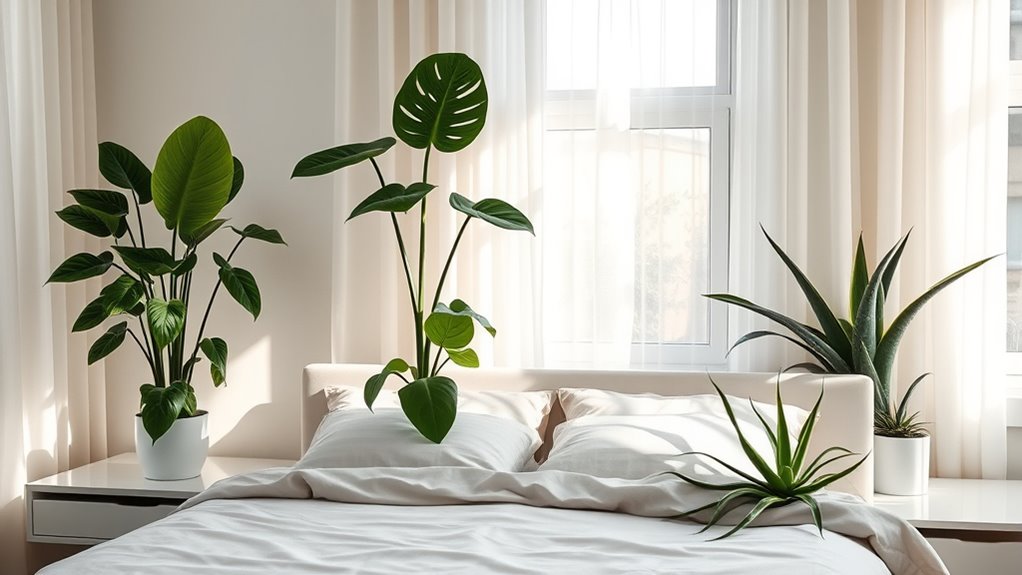
When you surround yourself with greenery, you create an environment that naturally fosters relaxation and reduces stress. Plants offer photosynthesis benefits, converting carbon dioxide into oxygen and improving air quality, which helps calm your mind. The presence of greenery has been linked to stress reduction because it provides a soothing visual cue that promotes a sense of peace. Taking care of houseplants can also give you a sense of accomplishment, further easing anxiety. The natural beauty of plants encourages mindfulness, helping you stay present and focused. Research shows that being around plants lowers cortisol levels, the hormone associated with stress. Using effective filtration and pump protection ensures your plants receive clean, healthy air, which enhances their air-purifying benefits. Additionally, incorporating air quality improvement techniques can optimize the environment for your plants and your well-being. Understanding the air purification process can help you choose the right plants and maintenance practices to maximize their benefits. Creating a healthy indoor environment not only benefits your plants but also enhances your overall mental health and relaxation. Incorporating indoor plants into your bedroom can also help to humidify the air, which may improve sleep quality. By integrating houseplants into your space, you create a calming atmosphere that supports mental well-being and relaxation.
Best Placement for Houseplants to Promote Restful Sleep
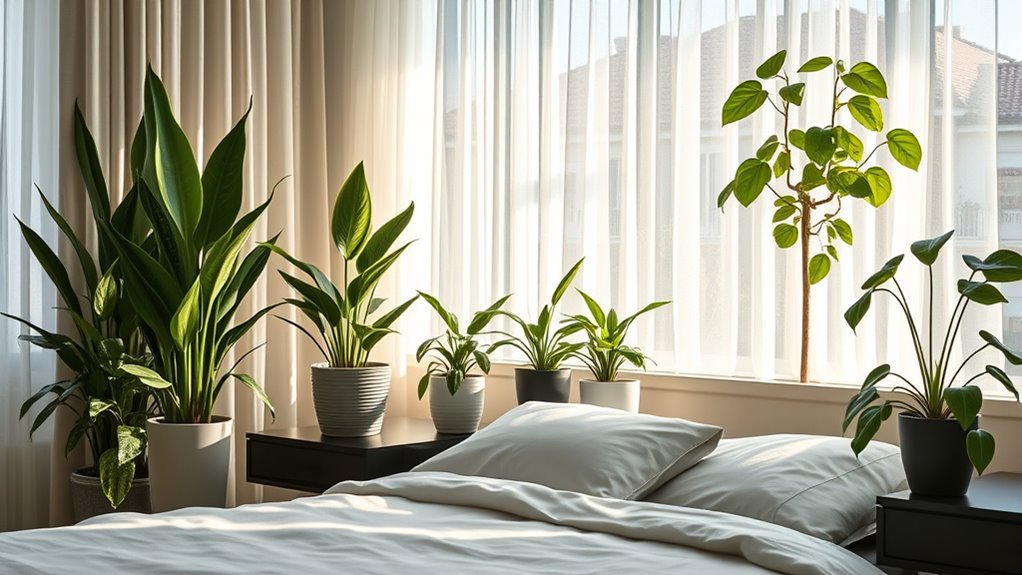
To promote restful sleep with houseplants, placement matters just as much as the choice of plant. Proper plant placement can enhance air quality and complement your bedroom aesthetics. Consider these tips:
Proper plant placement enhances air quality and complements bedroom decor for better sleep.
- Place plants near windows or light sources to ensure they thrive without overcrowding your space.
- Keep plants at a comfortable distance from your bed to avoid any disturbance or clutter.
- Use plant stands or shelves to integrate greenery seamlessly into your bedroom’s design, creating a calming environment.
- Incorporate air quality improvements into your space by strategically positioning plants to maximize their filtration benefits. Additionally, understanding the cost‑of‑ownership of your houseplants can help you choose low-maintenance options that continue to improve your air quality over time.
Strategic placement not only improves airflow and relaxation but also maintains your bedroom’s visual harmony. By thoughtfully positioning your houseplants, you can maximize their benefits while enhancing your bedroom aesthetics for a more restful sleep.
Potential Allergens and Considerations When Choosing Plants

When selecting houseplants, you should be aware of common allergen sources that could trigger sensitivities or respiratory issues. Some plants also pose toxicity risks to pets, so it’s important to choose varieties safe for your animals. Considering these factors helps you enjoy plants without compromising your health or your pets’ safety.
Common Allergen Sources
Many common houseplants can trigger allergies due to their pollen, mold spores, or sap. These plant allergens can become allergy triggers, especially if you’re sensitive. When choosing plants for your bedroom, be aware of potential allergen sources.
Consider these common allergen sources:
- Flowering plants – Their pollen can cause allergy triggers and worsen symptoms.
- Mold-prone plants – Overwatering or poor drainage can lead to mold growth, releasing spores into the air.
- Plants with milky sap – Sap can cause skin irritation or allergic reactions in sensitive individuals.
Toxicity Risks to Pets
Certain houseplants can pose serious health risks to your pets due to their toxicity or potential to cause allergic reactions. If you’re concerned about pet safety, you need to be aware of toxicity risks associated with popular indoor plants. Many common houseplants, like lilies, dieffenbachia, and pothos, can cause poisoning if ingested by cats or dogs. Even plants that seem harmless might trigger allergic reactions or gastrointestinal issues. To protect your pets, research plants thoroughly before bringing them home. Keep toxic plants out of reach, or opt for pet-safe alternatives. Prioritizing pet safety ensures that your houseplants enhance your space without putting your furry friends at risk. Always consult a veterinarian if you’re unsure about a plant’s safety.
Tips for Caring for Bedroom Houseplants
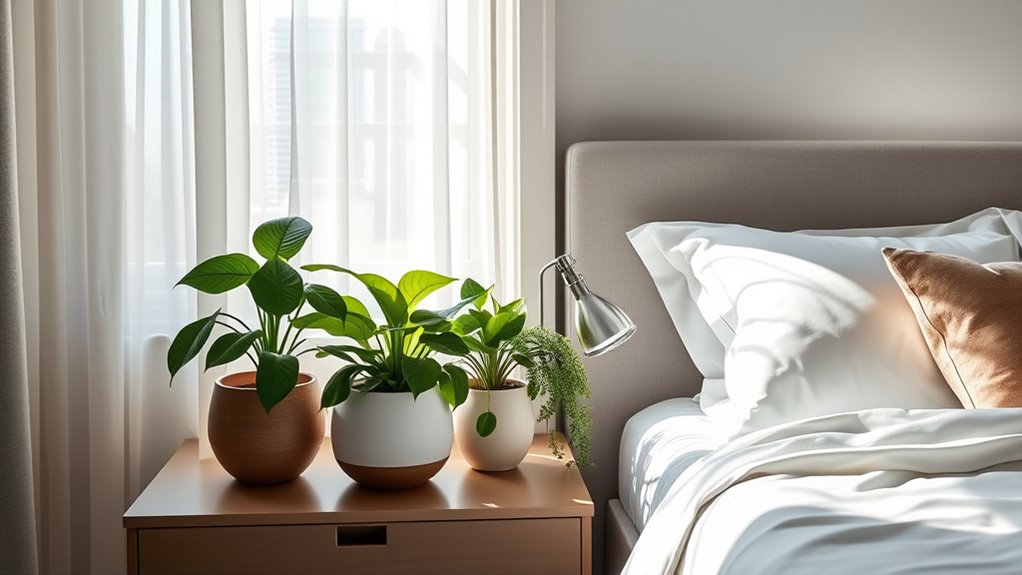
To keep your bedroom houseplants healthy, start by choosing easy-care varieties that thrive with minimal effort. Proper watering is key—water when the top inch of soil feels dry, and avoid overdoing it. With the right plants and watering habits, your bedroom will stay lush and peaceful.
Choosing Easy-Care Plants
Choosing easy-care plants can make maintaining bedroom greenery simpler and more enjoyable. You’ll want plants that thrive with minimal fuss, like succulent arrangements or air purifying herbs, which are perfect for busy or novice plant owners. To keep your plants healthy, consider these tips:
- Opt for low-maintenance options like snake plants or pothos, which tolerate low light and irregular watering.
- Incorporate succulents or cacti, which require infrequent watering and add visual interest.
- Use air purifying herbs such as basil or mint, which not only beautify your space but also improve air quality with little effort.
These choices help you enjoy the benefits of houseplants without the stress of complex care routines.
Proper Watering Techniques
Proper watering is key to keeping your bedroom houseplants healthy and thriving. Developing good watering habits ensures the right moisture levels, preventing both overwatering and underwatering. Check the top inch of soil regularly; if it feels dry, it’s time to water. When you do, water thoroughly until excess drains out the bottom, ensuring even moisture distribution. Avoid letting plants sit in standing water, which can lead to root rot. Adjust your watering frequency based on factors like the season, plant type, and humidity levels in your room. Remember, consistency is essential—consistent moisture levels promote healthy growth and help your plants absorb nutrients effectively. With attentive watering habits, your houseplants will stay lush, vibrant, and contribute positively to your bedroom environment.
Combining Houseplants With Other Sleep-Enhancing Practices

While houseplants can boost your sleep environment, combining them with other sleep-friendly practices can enhance their benefits even further. To maximize your bedroom, consider these tips:
Enhance sleep by caring for plants, maintaining humidity, and establishing calming routines.
- Maintain proper plant watering to ensure healthy growth, which supports ideal air quality and humidity.
- Use a humidifier or regularly water plants to keep bedroom humidity levels balanced, helping you breathe easier.
- Establish a calming bedtime routine, such as dimming lights and avoiding screens, to reinforce relaxation alongside your plants.
Real-Life Experiences and Scientific Studies on Plants and Sleep

Many people report better sleep after adding certain houseplants to their bedrooms, and scientific studies support these benefits. Research highlights how plants like snake plants and lavender can improve air quality and promote relaxation. Exploring these real-life experiences and studies can help you choose the best plants for your sleep environment.
Personal Sleep Improvements
Growing houseplants has become a popular way for people to improve their sleep quality, backed by both personal stories and scientific research. Many find that plants enhance plant aesthetics in their bedrooms, creating a calming environment that promotes relaxation. You might notice better sleep after adding a few greenery pieces, especially when taking care of plant maintenance becomes part of your nightly routine. Here are some personal improvements others have shared:
- Reduced stress levels, leading to deeper sleep.
- Enhanced room ambiance, making it easier to unwind.
- A sense of accomplishment from caring for your plants, boosting overall well-being.
Scientific Research Findings
Scientific studies corroborate the personal benefits of houseplants by revealing their positive effects on sleep quality. Research shows that healthy plant growth enhances air purification, reducing pollutants that can disrupt rest. This scientific evidence supports the idea that plants not only improve air quality but also foster a calming environment conducive to better sleep. Additionally, the presence of lush greenery boosts botanical aesthetics, creating a tranquil space that encourages relaxation and stress relief. Studies indicate that bedrooms with well-maintained houseplants can lead to deeper, more restorative sleep. The combination of cleaner air and natural beauty contributes to a healthier sleep environment. These findings confirm that incorporating houseplants into your bedroom isn’t just about decoration—it’s a scientifically-backed way to improve your sleep quality.
Common Plant Choices
If you’re considering adding houseplants to your bedroom, some species stand out for their sleep-promoting benefits, backed by both personal experience and scientific research. These plant varieties not only improve air quality but also complement various decorative styles.
- Snake Plant: Known for its low maintenance and air-purifying qualities, it fits modern or minimalist decor.
- Areca Palm: Adds a tropical touch and humidity, suitable for boho or natural interiors.
- Lavender: Its soothing scent and delicate appearance enhance relaxation in rustic or shabby chic styles.
Choosing the right plant varieties depends on your preferred decorative style, making your bedroom both beautiful and conducive to restful sleep.
Frequently Asked Questions
Can Certain Houseplants Improve Sleep for People With Allergies?
Certain houseplants can improve sleep for allergy sufferers, but you should choose carefully. Some plants, like aloe vera or snake plants, are non-toxic and pet-safe, reducing allergy triggers and improving air quality. Avoid toxic plants that could cause plant toxicity or harm your pets. By selecting safe, low-allergen plants, you create a healthier, more relaxing environment that helps you breathe easier and sleep better.
Are There Specific Plant Species That Release Sleep-Promoting Scents Naturally?
Yes, certain plants release sleep-promoting scents naturally. Fragrant herbs like lavender, chamomile, and jasmine emit calming aromas that can help you relax before bed. You can also use essential oils derived from these plants for a similar effect. Incorporating these into your bedroom environment, whether through potted plants or diffusers, might improve your sleep quality and create a more peaceful atmosphere.
How Often Should I Water My Bedroom Plants to Maximize Sleep Benefits?
If you want your bedroom plants to boost sleep benefits, water them about once a week, but adjust based on their needs. For example, a study found that a pothos thriving with proper watering showed improved air quality and relaxation. Maintaining consistent watering frequency keeps your plant healthy, ensuring it continues to purify the air and promote better sleep. Always check soil moisture to avoid over- or under-watering.
Do Artificial Plants Have Any Impact on Sleep Quality Compared to Real Ones?
Artificial plants don’t improve sleep quality like real greenery does because they lack air-purifying benefits and natural scent. While artificial plant benefits include low maintenance and lasting appearance, they don’t contribute to better air quality or relaxation. When comparing real vs. fake greenery, real plants help improve your sleep environment by releasing oxygen and reducing stress, making them a better choice for enhancing your bedroom’s calming atmosphere.
Can Overwatering Houseplants Negatively Affect Bedroom Air Quality?
Overwatering your houseplants can negatively affect your bedroom air quality by promoting plant mold and soil bacteria growth. Excess moisture creates a damp environment, encouraging mold spores to develop, which can worsen allergies or respiratory issues. Additionally, soil bacteria thrive in overly moist soil, releasing unpleasant odors and potentially compromising air purity. To protect your sleep, water your plants properly and make certain good ventilation to prevent mold and bacteria buildup.
Conclusion
So, could adding houseplants to your bedroom be the secret to better sleep? With their ability to improve air quality, boost relaxation, and reduce stress, plants might just transform your nighttime routine. But remember, choosing the right plants and caring for them properly is key. Are you ready to bring a touch of nature into your bedroom and see if it helps you rest easier? Your greener, calmer sleep space awaits!