
If you’re trying to decide whether to keep your bedroom door open or closed for better sleep and ventilation, an open door tends to improve airflow and helps regulate temperature and humidity, making your sleep environment more comfortable. It can prevent stale air buildup and boost ventilation, which might enhance sleep quality. However, if privacy or noise reduction is a priority, closing the door could be better. To discover how to balance these factors effectively, keep exploring the options.
Key Takeaways
- Open doors enhance airflow and ventilation, leading to fresher air and better temperature regulation.
- Closed doors improve privacy and noise reduction, creating a more secluded sleeping environment.
- Open doors help prevent stuffiness and humidity buildup, potentially improving sleep quality.
- Closed doors can trap heat and humidity, possibly causing discomfort during warmer months.
- Adjusting door position based on temperature, privacy needs, and airflow can optimize sleep comfort.

Have you ever wondered whether leaving your bedroom door open or closed makes a difference? It’s a common question, especially when considering sleep quality and ventilation. The choice impacts airflow patterns considerably. When your door is open, air moves more freely throughout the room and into adjacent spaces. This can help prevent stale air from lingering, ensuring a fresher environment and potentially better sleep. Conversely, keeping the door closed tends to restrict airflow, which might lead to pockets of stale air, especially if your HVAC system isn’t strong or well-balanced. Proper airflow is essential for maintaining a comfortable temperature and reducing indoor pollutants, so understanding how your door position influences this can help you optimize your sleep environment. Additionally, the placement of vents and air circulation systems in your home can significantly influence how effective either choice is in maintaining fresh air and a comfortable climate.
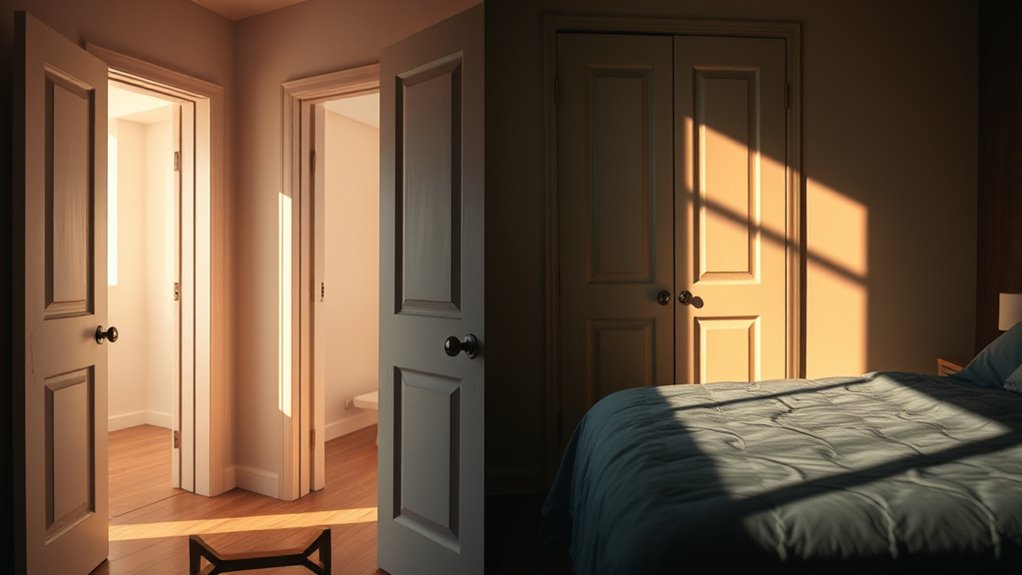
Leaving your bedroom door open promotes fresh airflow and better sleep, while keeping it closed restricts ventilation and privacy.
However, privacy concerns often come into play when deciding whether to keep your door open or closed. If privacy is a priority—say, you don’t want others to see or hear you—the door closed is usually the better choice. It creates a barrier that minimizes distractions and noise, helping you relax or sleep undisturbed. On the other hand, an open door can make your bedroom feel more open and connected to the rest of the house, which might be desirable during the day or if you want to feel less isolated. Still, this openness can compromise your privacy, especially if you share your living space or have visitors around. It’s a balancing act between achieving ideal airflow for ventilation and maintaining the privacy you need. Tailoring your door position to your specific needs can help create a more restful and functional space.
From a ventilation perspective, leaving the door open can be beneficial if you’re trying to cool down or circulate fresh air, especially in warmer months or when using fans. It allows air to flow more naturally, which can help regulate temperature and reduce stuffiness. Closed doors, however, may trap heat or humidity, making the room feel warmer or more humid if the air isn’t moving well. This can interfere with sleep, particularly if you’re sensitive to temperature fluctuations or humidity levels. If you prefer a cooler, well-ventilated space, keeping the door open might be the better option, provided privacy isn’t an issue. For optimal airflow, consider using airflow management techniques like fans or vents to enhance circulation regardless of your door choice.
Ultimately, the decision comes down to your priorities. If airflow and ventilation are your main concerns and privacy isn’t an issue, leaving the door open can be advantageous. But if privacy and noise reduction are more important, keeping it closed makes sense. Consider your living situation, comfort needs, and sleep habits to find the right balance. Adjusting the door position based on the time of day or your specific needs can help you create a sleep environment that’s both comfortable and private.
Frequently Asked Questions
How Does Door Position Affect Noise Levels in the Bedroom?
Closing your bedroom door improves sound insulation, reducing noise from outside and creating a quieter environment for sleep. If privacy concerns are important, keeping the door closed helps isolate sound and maintains your privacy. An open door allows more noise to flow in or out, which can disturb your rest. So, for better sleep and privacy, closing your door is generally the better choice to minimize noise disruptions.
Can Keeping the Door Open Improve Air Quality Significantly?
Think of your bedroom as a breathless garden waiting to bloom. Keeping the door open allows fresh air to dance in, boosting air circulation and sweeping away stale odors. This simple act can transform your space into a vibrant oasis, improving air quality markedly. By letting air flow freely, you not only breathe easier but also create a healthier environment that promotes restful sleep and overall well-being.
Does a Closed Door Prevent the Spread of Allergens?
Yes, a closed door can help prevent the spread of airborne allergens. When you keep your door shut, door seals work to limit airflow, reducing allergens from moving between rooms. This containment is especially helpful if someone has allergies or asthma. By sealing the space, you create a barrier that minimizes allergen circulation, making your bedroom a safer, more allergen-controlled environment.
How Does Door Position Influence Humidity and Mold Growth?
Ever considered how your door position affects humidity control and mold prevention? Keeping your door closed helps maintain consistent humidity levels, reducing excess moisture that promotes mold growth. Open doors can lead to fluctuating humidity, increasing mold risk. To protect your space, keep the door closed during high humidity periods, ensuring better mold prevention and ideal humidity balance. Isn’t your health worth controlling your bedroom environment?
Are There Safety Concerns With Leaving the Bedroom Door Open Overnight?
Leaving your bedroom door open overnight can raise fire safety concerns, as it may slow down fire suppression and delay evacuation. You might also face privacy issues, especially if others share your home. While an open door improves ventilation, it’s important to take into account these safety risks and privacy concerns. You should weigh the benefits of better airflow against potential hazards and decide what feels safest and most comfortable for you.
Conclusion
Ultimately, whether you keep your bedroom door open or closed depends on your priorities. If better sleep quality is your goal, closing the door may help reduce noise and maintain privacy. Conversely, an open door can improve ventilation, promoting fresher air. Notably, a study found that bedrooms with better airflow often lead to more restful sleep, highlighting the importance of proper ventilation. Consider your comfort and sleep needs when making your choice.